Burning, gritty eyes that worsen late in the day are not always caused by a lack of tears. For many people, the problem is poor-quality tears caused by meibomian gland dysfunction. So, can IPL improve meibomian glands? For the right patient, intense pulsed light treatment can improve the environment around these glands, support healthier oil flow, and reduce symptoms of evaporative dry eye.
The key is setting realistic expectations. IPL is not a cosmetic shortcut or a one-size-fits-all answer to dry eye. It is a medically guided treatment that works best after a comprehensive dry eye evaluation identifies the source of your symptoms.
What Meibomian Glands Do for Your Eyes
Meibomian glands are tiny oil-producing glands located along the edges of the upper and lower eyelids. Their job is to release meibum, an oil that forms the outer layer of the tear film. This oily layer slows tear evaporation and helps tears spread smoothly across the surface of the eye.
When the glands become blocked, inflamed, or produce thick, poor-quality oil, tears evaporate too quickly. That can leave eyes feeling dry, red, watery, tired, itchy, or sensitive to light. Vision may fluctuate, especially while reading, using a computer, or driving.
This condition is called meibomian gland dysfunction, often shortened to MGD. It is one of the most common causes of evaporative dry eye. Rosacea, eyelid inflammation, contact lens wear, hormonal changes, certain medications, screen use, and aging can all contribute.
Can IPL Improve Meibomian Glands and Dry Eye Symptoms?
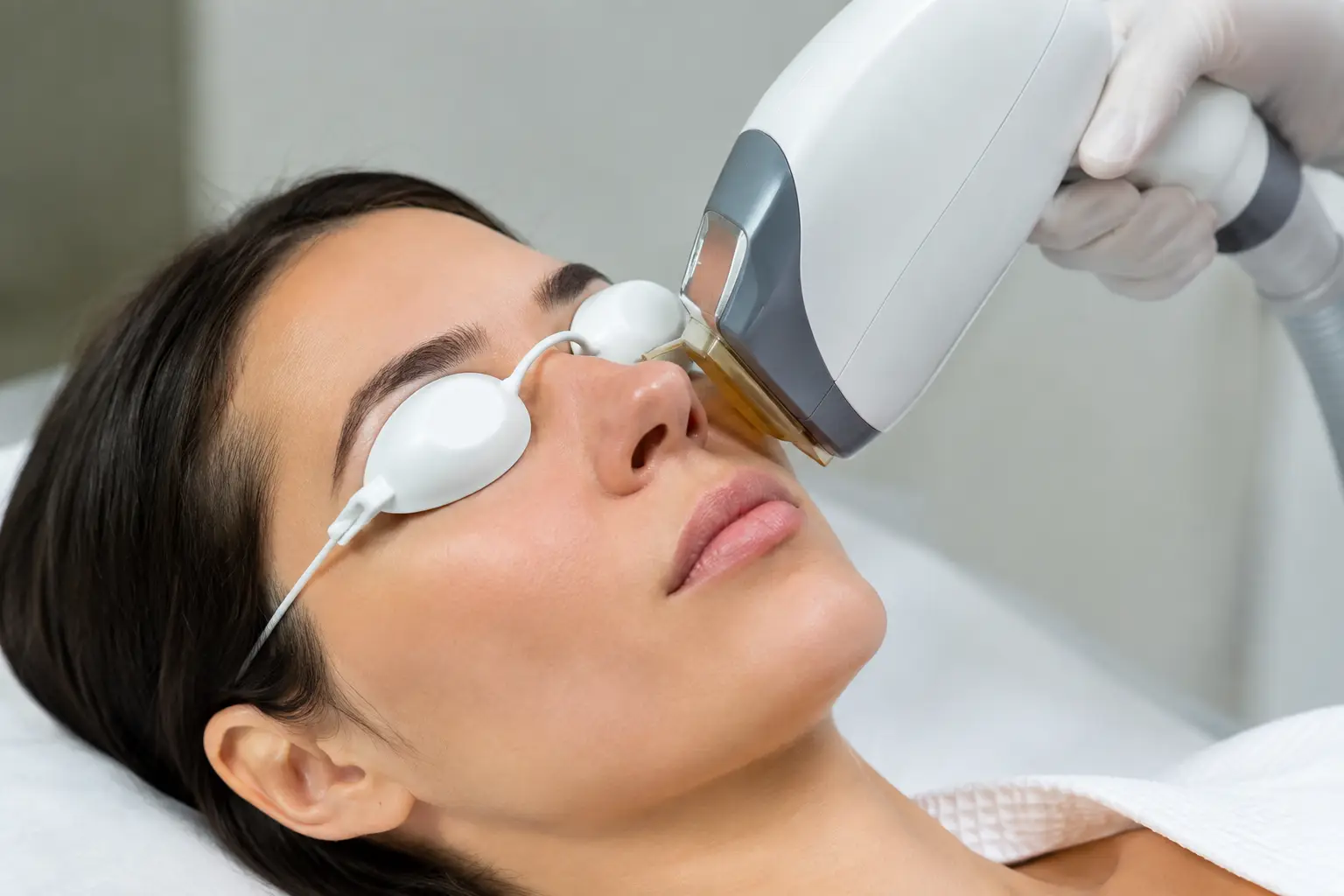
IPL may help improve meibomian gland function, particularly when inflammation and abnormal blood vessels along the eyelid margins are part of the problem. During treatment, controlled pulses of broad-spectrum light are applied to the skin around the eyes. Protective shields are used to keep the eyes safe.
The light energy targets superficial blood vessels that can fuel eyelid inflammation. By reducing this inflammatory activity, IPL may help calm the tissues surrounding the glands. Heat from the treatment can also soften thickened meibum, making it easier for a doctor to express blocked gland material afterward.
Patients may notice less burning, redness, foreign-body sensation, and fluctuating vision as their tear film becomes more stable. Some also experience fewer recurring styes or chalazia when blocked glands are a recurring issue.
However, IPL does not guarantee that every damaged gland will recover. If a gland has significantly atrophied, meaning it has been lost or severely shortened over time, treatment cannot reliably restore it. The goal is usually to preserve functioning glands, improve oil quality and flow, reduce inflammation, and make the ocular surface more comfortable.
Why treatment is usually a series
Meibomian gland dysfunction typically develops over months or years. One IPL session may offer some improvement, but treatment is commonly performed as a series of sessions spaced several weeks apart. Your eye doctor will recommend a schedule based on your symptoms, eyelid findings, gland imaging, skin type, and response to care.
Maintenance treatments may be appropriate for some patients, especially those with chronic rosacea-related inflammation or symptoms that return over time. The right frequency is personal. It should be based on follow-up findings, not a predetermined package alone.
What Happens During an IPL Dry Eye Appointment
A proper dry eye assessment comes first. Your optometrist may evaluate your tear film, eyelid margins, blink pattern, corneal surface, and the quality of oil expressed from the meibomian glands. Advanced imaging may be used to assess gland structure and identify signs of dropout.
During IPL treatment, a cooling gel is applied to the treatment area. Your provider delivers brief flashes of light to carefully selected areas of skin near the eyelids. The process is generally quick. Many patients describe a mild snapping or warming sensation rather than pain.
After the light treatment, the doctor may perform meibomian gland expression. This involves applying controlled pressure to the eyelids to clear softened oil and debris from the gland openings. Expression can be uncomfortable for some patients, but it is often an important part of treatment because it helps remove material that is obstructing the glands.
You may be advised to avoid direct sun exposure and use sun protection after treatment. Your care team will provide instructions tailored to your skin and eye health history.
Who May Be a Good Candidate for IPL?
IPL is often considered for people with evaporative dry eye caused by MGD, particularly when standard home care has not provided enough relief. It can be especially helpful when eyelid inflammation, facial rosacea, visible lid-margin blood vessels, or recurrent blocked glands are present.
It may also be an option for people who rely heavily on artificial tears but still struggle with discomfort. Drops can soothe the eye surface, but they do not always address the inflammation and gland blockage driving the problem.
That said, not everyone is a candidate. Certain skin conditions, medications that increase light sensitivity, active skin infections, pregnancy considerations, and eye conditions may affect whether IPL is appropriate. Skin tone and pigment also matter because treatment settings need to be selected carefully for safety.
A thorough consultation is the right place to discuss your health history, medications, prior procedures, and treatment goals. Dry eye can have more than one cause, including aqueous tear deficiency, allergy, incomplete blinking, corneal disease, or autoimmune conditions. IPL may be one part of care rather than the entire plan.
IPL Works Best as Part of a Dry Eye Plan
The best results usually come from treating the whole condition, not just one symptom. Depending on the findings from your exam, your doctor may combine IPL with warm compresses, lid hygiene, prescription anti-inflammatory treatment, lubricating drops, dietary guidance, or in-office therapies.
Daily habits also make a difference. Taking regular screen breaks, blinking fully, managing indoor air flow, removing eye makeup thoroughly, and following a recommended lid-care routine can help protect treatment results. Contact lens wearers may need adjustments to their lens material, replacement schedule, or wearing time while the ocular surface heals.
This is why an individualized plan matters. Two people can both have dry, irritated eyes but need very different treatment approaches. One may have oily gland secretions that respond well to heat and expression, while another may have significant gland loss and need a stronger focus on tear supplementation and inflammation control.
What Results Can You Realistically Expect?
Some people notice improvement after the first or second session, while others experience a more gradual change across the treatment series. Better comfort, less redness, fewer episodes of blurred vision, and reduced dependence on artificial tears are common goals.
Results vary because MGD varies. Symptoms may improve more than gland structure, especially when longstanding gland damage is present. Consistent home care and follow-up visits can influence how long the benefits last.
IPL should not be viewed as a cure for every form of dry eye. It is a targeted option that may reduce the inflammatory cycle affecting the eyelids and help viable meibomian glands perform more effectively. When used thoughtfully, that can be meaningful relief for patients who have spent too long accepting dry eyes as normal.
When to Schedule a Dry Eye Evaluation
Schedule an eye exam if dryness, tearing, burning, light sensitivity, redness, or changing vision is interfering with work, reading, driving, or contact lens wear. Prompt evaluation is also wise if symptoms are worsening, affect only one eye, or occur with notable pain or discharge.
At Mountain Eye Care, dry eye treatment begins with understanding what your eyes and eyelids need, then recommending care that fits your findings and comfort goals. If IPL is appropriate, it can become a practical part of protecting your tear film and the functioning meibomian glands you still have. You do not have to keep treating persistent dry eye as a minor inconvenience – a focused evaluation can help point the way toward lasting comfort.