
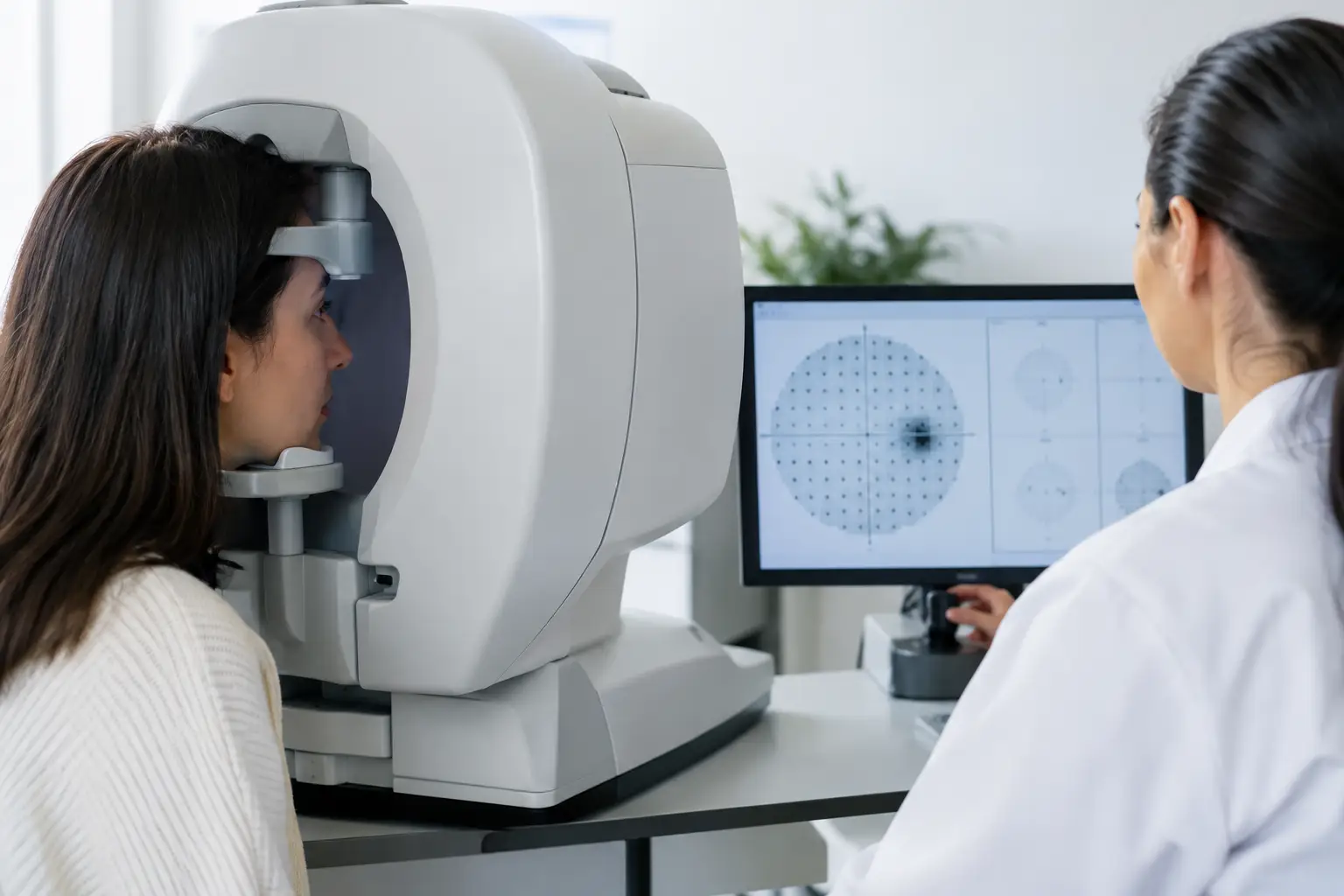
A person can read the smallest line on an eye chart and still have changes in their side vision. That is the central reason for a visual field test. The visual field test purpose is to measure how well you see across your entire field of vision, including the areas away from your direct line of sight that are easy to overlook in everyday life.
For many patients, the test is part of a comprehensive eye exam when the doctor wants a closer look at how the eyes, optic nerves, and visual pathways are functioning. It is a valuable tool for monitoring conditions that can affect vision gradually, often before noticeable symptoms develop.
The Visual Field Test Purpose and What It Measures
Your visual field is everything you can see while looking straight ahead – central vision, peripheral vision, and the areas above and below your line of sight. A visual field test maps that area by checking whether you can detect small lights presented in different locations and at varying levels of brightness.
The test does not measure how clearly you see letters or whether you need a stronger glasses prescription. Instead, it identifies areas where vision may be reduced or missing. These areas are sometimes called visual field defects, blind spots, or scotomas. Their size, location, and pattern can give your eye doctor useful clinical information.
A visual field test is commonly used to help evaluate and monitor glaucoma. Glaucoma can damage the optic nerve over time, and early changes may affect peripheral vision without causing obvious daily symptoms. By the time someone notices narrowing side vision, meaningful damage may already have occurred. Regular testing can help detect change sooner and guide treatment decisions.
The test can also support the assessment of optic nerve conditions, retinal disease, neurological concerns, and vision changes following a head injury or stroke. A visual field result is never interpreted in isolation. Your doctor considers it alongside your symptoms, eye pressure, retinal imaging, optic nerve appearance, OCT scans, and other findings from your examination.
When Your Eye Doctor May Recommend Testing
Visual field testing may be recommended when there is a specific reason to investigate further or when a known condition needs ongoing monitoring. A patient may have elevated eye pressure, an optic nerve that appears suspicious for glaucoma, a family history of glaucoma, or changes seen on retinal imaging or OCT.
It may also be appropriate if you report symptoms such as unexplained side-vision difficulty, bumping into objects, missing areas of vision, flashes or shadows, headaches with visual symptoms, or changes after a neurological event. Not every symptom points to a serious issue, but a careful evaluation helps determine what is happening and whether additional care is needed.
For patients with diagnosed glaucoma, visual field testing provides a practical way to track whether the condition is stable or progressing. One test offers a snapshot. A series of reliable tests over time is far more helpful because it allows the doctor to look for meaningful trends rather than reacting to a single unusual result.
Testing schedules vary. A person with low risk and normal findings may not need frequent testing, while someone with glaucoma or a higher-risk optic nerve may need testing at regular intervals. The right schedule depends on your age, risk factors, examination results, and the stability of your eye health.
What Happens During a Visual Field Test?
Most computerized visual field tests are straightforward and noninvasive. You will sit in front of a bowl-shaped instrument and rest your chin and forehead in position. One eye is tested at a time while the other is covered.
You will be asked to keep looking at a central target. Small lights appear briefly in different places inside the machine. Each time you see a light, you press a response button. Some lights will be bright and easy to see; others are deliberately faint. The goal is not to guess where a light will appear or to press the button constantly. Simply respond when you notice one.
The test generally takes several minutes per eye, depending on the type of test ordered. It does not touch the eye, use radiation, or require eye drops. Most people find it easy once they understand the instructions, although it does require concentration.
It is normal to feel that you may have missed some lights. That is built into the test design. Trying too hard to catch every possible flash can create less reliable results than calmly maintaining fixation and responding only when you genuinely see a light.
Why Reliable Results Matter
Visual field testing is partly dependent on patient response, which makes reliability important. The machine records useful indicators, such as whether you maintained your gaze on the central target, responded when no light was shown, or missed lights that should have been visible.
Fatigue, dry eye discomfort, anxiety, unfamiliarity with the test, or simply having a difficult day can affect performance. A droopy eyelid, an outdated prescription, cataracts, and small pupil size may also influence the result. These factors do not make the test unhelpful. They simply mean that your doctor interprets the findings with appropriate context.
If a result is unclear or does not match the rest of your eye examination, repeat testing may be recommended. This is common, particularly for first-time patients. There is a learning effect with visual field testing: many people become more comfortable and consistent after they have done it once or twice.
Preparing for Your Appointment
There is usually very little preparation required. Bring your current glasses if you wear them, especially reading glasses, because the testing team may use the appropriate correction for the eye being evaluated. Contact lens wear is often fine, but follow the instructions provided for your appointment if your doctor has given you any.
Try to arrive rested, eat normally, and let the team know if your eyes are irritated, you are experiencing a migraine, or you are feeling unwell. During the test, blink normally. If your eye feels dry, tell the technician so you can pause briefly if needed. A short break can be more useful than pushing through discomfort and producing a result that is harder to interpret.
Do not worry if you have trouble sitting perfectly still or if you are concerned about keeping focused. The staff will explain the process, position you comfortably, and help you understand what to do before the test begins.
Visual Field Testing Is One Part of Complete Eye Care
A visual field test can reveal information that standard vision testing cannot, but it is only one piece of a complete assessment. Eye pressure measurements, optic nerve evaluation, retinal imaging, OCT, and a discussion of your health history each provide a different view of your vision and eye health.
This combined approach matters because no single test tells the whole story. For example, a patient may have a concerning optic nerve but a normal visual field, suggesting the need for careful monitoring. Another patient may show a repeatable field change that prompts closer examination of the optic nerve, retina, or neurological system. The value is in connecting the findings accurately.
At Mountain Eye Care, advanced diagnostic testing is used with the same goal as every part of the eye exam: to provide clear answers, identify concerns early when possible, and make recommendations that fit your individual needs.
If your doctor recommends a visual field test, view it as an opportunity to measure more than the vision you notice day to day. A few focused minutes can provide a meaningful baseline for protecting the sight you depend on for work, driving, family, and the moments that matter most.