When reading medication labels takes a magnifier and recognizing a face across the room becomes uncertain, a standard eye exam may not answer the most practical question: how can you use the vision you still have more effectively? This low vision assessment guide explains what a specialty appointment looks at, who may benefit, and how the findings can support safer, more independent daily life.
Low vision does not mean total blindness. It describes vision loss that continues to interfere with everyday activities even after regular glasses, contact lenses, medical treatment, or surgery have provided the best possible correction. The right next step is not simply stronger glasses. It is a careful assessment of your vision, your goals, and the tools or strategies that may make a real difference.
What Is a Low Vision Assessment?
A low vision assessment is a detailed evaluation for people whose sight cannot be fully corrected with conventional eyewear. Its purpose is functional: to identify ways to make tasks such as reading, cooking, using a phone, seeing a classroom board, moving through unfamiliar places, or pursuing hobbies more manageable.
The appointment is different from a routine eye exam, although both are valuable. A comprehensive eye exam focuses on eye health, prescription needs, and diagnosing or monitoring conditions. A low vision assessment builds on that information by measuring how vision performs in real-life conditions and by matching recommendations to the activities that matter most to the patient.
Age-related macular degeneration, glaucoma, diabetic eye disease, inherited retinal conditions, stroke-related vision changes, optic nerve disease, and severe vision loss from other causes can all lead to low vision. Children and adults may benefit. The need is based on function, not age or one specific diagnosis.
When to Consider a Low Vision Assessment
Consider scheduling an assessment when everyday visual tasks are becoming harder despite wearing your current prescription. Common signs include needing very bright light to read, losing your place on a page, struggling with contrast on stairs or curbs, difficulty recognizing people, or giving up activities you once enjoyed because they require too much visual effort.
A referral from an ophthalmologist or primary care provider can be helpful, but it is not always necessary. Bring any recent eye records if you have them, particularly imaging reports, visual field results, or information about a diagnosed eye condition. Current glasses, magnifiers, and other devices should come along too. A device that did not work in one setting may still provide useful clues about what needs to change.
An assessment can also be appropriate after an eye condition has stabilized. There is a common misconception that nothing can be done once vision loss is permanent. While a low vision evaluation does not reverse eye disease, it can often improve how a person performs tasks with the vision that remains.
What Happens During the Appointment?
The assessment begins with a conversation about the patient’s medical and eye history, current treatment, and day-to-day challenges. Specific goals make the evaluation more useful. “I want to read my mail without help” offers more direction than “my vision is poor.” So does explaining whether reading is for short labels, newspapers, work documents, sheet music, or a tablet screen.
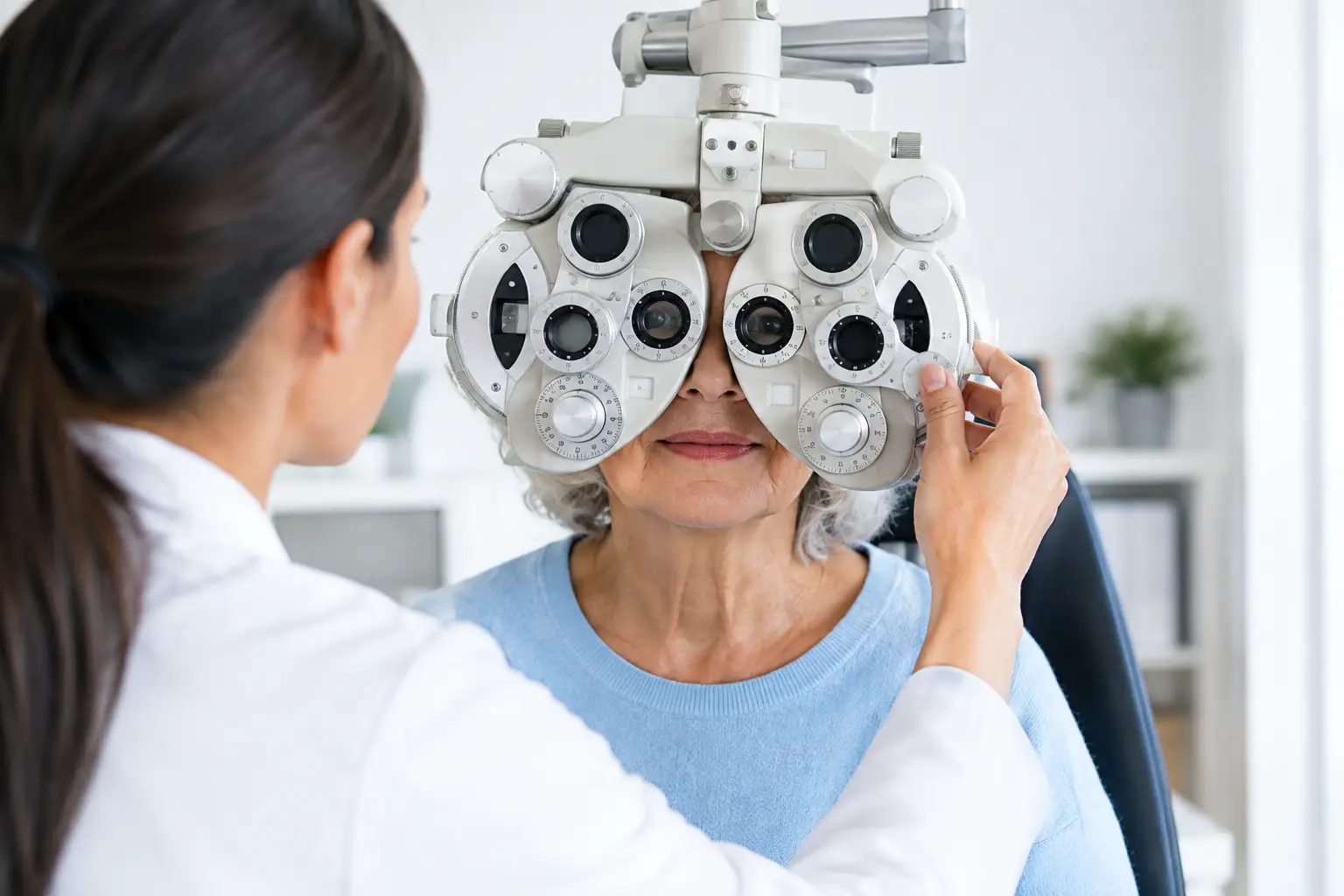
The doctor may measure distance and near visual acuity, contrast sensitivity, visual fields, glare sensitivity, eye alignment, focusing ability, and the effect of different lighting levels. Refraction may be repeated to determine whether a prescription adjustment could offer meaningful improvement. Advanced diagnostic information, including retinal imaging or OCT results when appropriate, can help place functional vision changes in context.
Testing is not solely about a number on an eye chart. Two people with similar acuity can face very different challenges. One may read comfortably with increased contrast and a focused task light, while another may have central blind spots, glare sensitivity, or peripheral field loss that calls for a different approach.
Daily Goals Shape the Recommendations
Low vision care works best when recommendations are practical and individualized. A patient who wants to manage finances may need a different solution than someone who wants to return to woodworking, follow a recipe, or see a grandchild play sports.
During the assessment, be candid about what is frustrating and what is still going well. Mention the lighting in your home, how much time you spend on screens, whether hand tremor affects device use, and whether you need help with mobility. These details determine whether a small handheld magnifier, a stand magnifier, specialized spectacles, electronic magnification, glare filters, or non-optical changes are likely to be useful.
Tools That May Help, and Their Trade-Offs
There is no single “best” low vision device. More magnification can make print larger, but it also narrows the field of view and may require the user to hold reading material closer. Electronic devices can offer variable magnification and contrast settings, but they require power, practice, and a level of comfort with technology. The best choice depends on the task, budget, hand strength, and personal preferences.
Recommendations may include the following options:
- High-powered reading glasses or task-specific prescriptions for close work
- Handheld or stand magnifiers for labels, menus, and short reading tasks
- Telescopic systems for distance viewing, such as signs, television, or events
- Video magnifiers, screen enlargement, and contrast settings for longer reading
- Lighting, glare-control filters, large-print materials, and organization strategies
A bioptic telescope may be considered for some distance tasks and, in select cases, driving. Driving with low vision is a complex decision. It depends on visual function, training, safety, and the licensing requirements where the person lives. An assessment can clarify whether it is reasonable to explore, but no device automatically makes driving safe or legally permitted.
Why Device Training Matters
Buying a magnifier without guidance often leads to disappointment. The challenge is not only choosing the device. It is learning the working distance, the correct angle, how to track across a line of print, and when a different tool is better suited to the job.
Training and follow-up allow recommendations to be adjusted after real-world use. A person may discover that a portable option is excellent for restaurant menus but not comfortable for reading a novel. Another may prefer a simple lamp and reading stand over a higher-tech device. Success is measured by useful, sustainable habits, not by owning the most equipment.
For patients with significant vision loss, the care plan may also include referrals to occupational therapy, orientation and mobility instruction, rehabilitation services, or community resources. These services can address home safety, cooking, technology access, travel, and confidence outside the clinic.
Preparing for Your Assessment
Give yourself enough time for the appointment and consider bringing a family member or support person, especially if it helps you remember recommendations. Still, the patient’s own goals should remain central. Low vision solutions work best when they support the person’s priorities rather than someone else’s idea of what they should do.
Bring the tasks that are causing difficulty when possible. A prescription bottle, a sample of a craft project, a book, a tablet, or paperwork from work can make testing more relevant. Write down questions ahead of time, including concerns about cost, device return policies, and follow-up training.
It is also helpful to understand the limits of the assessment. Some vision loss cannot be restored, and no device works equally well for every activity. Honest recommendations may include deciding that a task should be adapted, delegated, or supported with voice technology rather than forced through visual strain. That is not a failure. It is a safer and more effective way to protect independence.
A Practical Next Step for Hamilton Patients
At Mountain Eye Care, low vision assessments are approached as a personalized problem-solving appointment, supported by comprehensive eye care and a broad understanding of specialty optical options. The goal is to help patients make informed choices based on their eye health, functional needs, and daily routines.
If vision changes are limiting the parts of life that matter to you, do not wait until frustration becomes isolation. Bring one difficult task to the conversation, and let that practical goal be the starting point for a clearer path forward.