A new pair of glasses can make the need for eye exams feel obvious. The more valuable reason to schedule them, however, is often invisible. Many eye conditions develop quietly, with no early pain or noticeable change in sight, while changes in vision can also affect school, work, driving, comfort, and daily confidence.
A complete exam looks beyond whether letters on a chart appear clear. It gives your optometrist a detailed view of how your eyes function, how your prescription may be changing, and whether the internal structures of the eye show signs that need attention. For families in Hamilton, that makes routine care a practical part of protecting long-term eye health.
Eye Exams Are About More Than a Prescription
A refraction is the familiar part of an appointment where you compare lens choices and identify the prescription that gives you the clearest vision. That information matters, whether you wear glasses, contact lenses, progressive lenses, or no correction at all. But it is only one part of a comprehensive assessment.
Your optometrist also evaluates the health of the front and back of the eye. This can include the cornea, lens, retina, optic nerve, eye pressure, eye alignment, pupil responses, and peripheral vision. Depending on your history and symptoms, the exam may also assess tear quality, focusing ability, color vision, or how the eyes work together.
That broader view is why a person who feels their vision is fine can still benefit from a visit. Conditions such as glaucoma, diabetic eye disease, macular degeneration, cataracts, and retinal changes may not cause clear warning signs in their early stages. Detecting a concern early can create more treatment options and a better opportunity to preserve sight.
What Happens During a Comprehensive Eye Exam
No two appointments are exactly alike. A child with headaches, an adult considering contact lenses, and a senior noticing glare while driving may need different testing. Still, most comprehensive visits follow a clear process.
The appointment begins with a conversation about your vision, general health, medications, family history, work demands, screen use, and any concerns you have noticed. Blurry vision, fluctuating focus, burning eyes, double vision, light sensitivity, headaches, and difficulty driving at night are all worth mentioning. Details that may seem minor can help guide the exam.
Next comes vision testing and prescription measurement. Your doctor will check how clearly each eye sees at distance and near, then determine whether nearsightedness, farsightedness, astigmatism, or age-related near-vision changes are present. For patients who already wear correction, this confirms whether their current glasses or contacts are still serving them well.
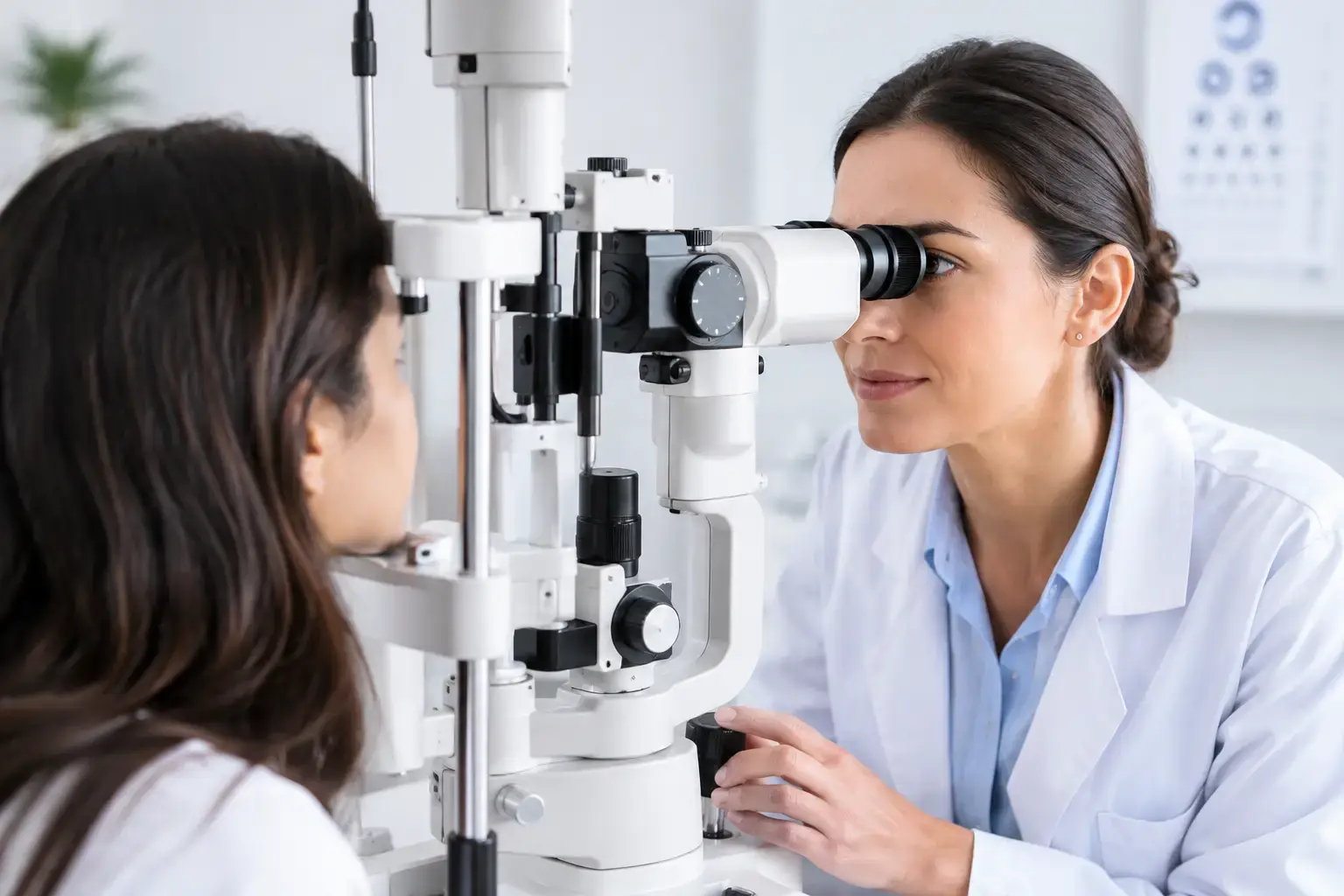
The health evaluation may include a slit-lamp examination, a microscope-based assessment of the eyelids, tear film, cornea, iris, and lens. Eye pressure testing helps assess glaucoma risk, although pressure alone cannot diagnose or rule out glaucoma. Your optometrist considers it alongside the appearance of the optic nerve, visual field results, and other findings.
Advanced diagnostic technology can add useful detail when clinically appropriate. Retinal imaging documents the back of the eye, while OCT imaging can provide cross-sectional views of the retina and optic nerve. Visual field testing checks side vision, and pachymetry measures corneal thickness. These tests are not extras for the sake of technology. They help create a clearer baseline and can reveal subtle changes that deserve monitoring or treatment.
Why Dilation May Be Recommended
Dilation enlarges the pupils so your doctor can view more of the retina and optic nerve. It is especially valuable when there are risk factors, symptoms, diabetes, high myopia, or findings that require a closer look.
The trade-off is temporary. Dilating drops can make near vision blurry and increase light sensitivity for several hours, so some patients prefer to arrange transportation or bring sunglasses. Your doctor can explain why dilation is recommended and whether retinal imaging or another approach may be appropriate for your situation.
How Often Should You Schedule Eye Exams?
The right interval depends on age, eye health, prescription changes, family history, and medical conditions. Many adults benefit from an exam every one to two years, while children, seniors, contact lens wearers, and people with eye disease or higher risk may need visits more often.
Children should have their vision assessed early and regularly because clear, coordinated vision supports reading, learning, sports, and development. A child may not realize that their eyesight differs from others, so squinting, sitting very close to screens, losing their place while reading, rubbing the eyes, or avoiding detailed tasks should not be dismissed as habits.
For adults, changes in close-up vision often become noticeable in the 40s, when reading small print or switching focus between a screen and distance takes more effort. This is common, but it is still worth evaluating. The right solution might be reading glasses, progressive lenses, occupational lenses, contact lenses, or a combination that fits your routine.
Seniors may need more frequent monitoring because the risk of cataracts, glaucoma, macular degeneration, dry eye, and systemic health-related eye changes rises with age. A yearly schedule is often sensible, particularly when there is diabetes, high blood pressure, a family history of eye disease, or previous eye surgery.
When Not to Wait for Your Next Appointment
Routine scheduling is appropriate for most vision needs, but some symptoms require prompt attention. Sudden vision loss, a curtain-like shadow, a new shower of floaters, flashing lights, severe eye pain, sudden double vision, chemical exposure, or an eye injury should be assessed urgently. These symptoms can signal a retinal tear, retinal detachment, acute glaucoma, infection, or another condition where time matters.
Persistent discomfort also deserves an appointment. Dry, scratchy, watery, red, or tired eyes are not always solved by using over-the-counter drops at random. Dry eye can involve tear production, tear evaporation, eyelid function, inflammation, contact lens wear, medications, or environmental factors. Identifying the cause allows for a treatment plan that is more likely to provide lasting relief.
Your Exam Can Guide Better Eyewear Choices
An accurate prescription is the foundation of good eyewear, but the best lens design depends on how you use your eyes. Someone who spends long hours at a computer may benefit from a different setup than someone who drives at night, works outdoors, or moves frequently between close tasks and distance viewing.
Frame fit matters too. A frame that sits too low, slides constantly, or places the optical center in the wrong position can reduce comfort and vision quality, even with the correct prescription. Patients with stronger prescriptions, progressive lenses, or specialty needs often benefit from professional fitting and lens recommendations rather than choosing based on appearance alone.
Contact lens wearers need ongoing exams as well. The cornea can change, and a lens that once felt comfortable may no longer fit or allow enough oxygen to reach the eye. A contact lens evaluation checks vision, lens movement, corneal health, tear film quality, and safe wearing habits. Sleeping in lenses, overwearing them, or topping off old solution can raise the risk of serious infection.
A More Personalized Approach to Eye Health
The most useful eye exam is not rushed or one-size-fits-all. It connects the test results to your daily life and explains what they mean in plain language. If there is a concern, you should understand whether it needs treatment, monitoring, a referral, or simply a different vision solution.
At Mountain Eye Care, comprehensive exams can be paired with advanced testing, specialty care, contact lens support, and professional eyewear fitting in one place. That continuity helps patients move from a diagnosis or prescription to a practical next step without losing sight of the bigger goal: comfortable vision and healthy eyes over time.
If it has been more than a year or two since your last visit, or if your eyes are asking more of you than they used to, schedule an exam before small changes become bigger frustrations. Clearer vision is valuable, but knowing your eyes are being properly monitored can be even more reassuring.