
A gritty, burning feeling after a day on the computer is easy to dismiss, but dry eyes can make reading, driving, wearing contact lenses, and enjoying time outdoors uncomfortable. Knowing how to use artificial tears correctly can bring meaningful relief, but the bottle you choose and how often you need it also provide useful clues about your eye health.
Artificial tears are a common first step for dry eye symptoms. They are available without a prescription, but they are not all the same. The right approach depends on whether your dryness is occasional, related to screen use or seasonal conditions, connected to contact lens wear, or part of a more persistent dry eye condition.
What Artificial Tears Do for Dry Eyes
Natural tears do more than add moisture. They form a protective film over the front of the eye, keeping the surface smooth, comfortable, and clear. This tear film includes water, oils, and mucus. When one or more of these components is out of balance, tears may evaporate too quickly or fail to coat the eye evenly.
Artificial tears supplement that natural tear film. Depending on the formula, they can lubricate the eye surface, hold moisture in place, reduce friction during blinking, or support the oily layer that slows tear evaporation. They may ease stinging, scratchiness, fluctuating vision, and the feeling that something is in your eye.
They do not, however, cure every cause of eye irritation. Allergies, eyelid inflammation, blocked oil glands, contact lens problems, medication side effects, and certain health conditions can all contribute to dryness. If you rely on drops frequently without lasting improvement, an eye examination can identify what is driving the problem.
How to Use Artificial Tears Correctly
Using eye drops is simple once you have the technique down. The goal is to get one clean drop into the eye without touching the bottle tip to your lashes, eyelid, fingers, or eye. Contact with these surfaces can contaminate the bottle and raise the risk of irritation or infection.
Start by washing and drying your hands. If you wear contact lenses, check the package instructions before applying drops. Some artificial tears are made specifically for use with contacts, while others should only be used after removing your lenses.
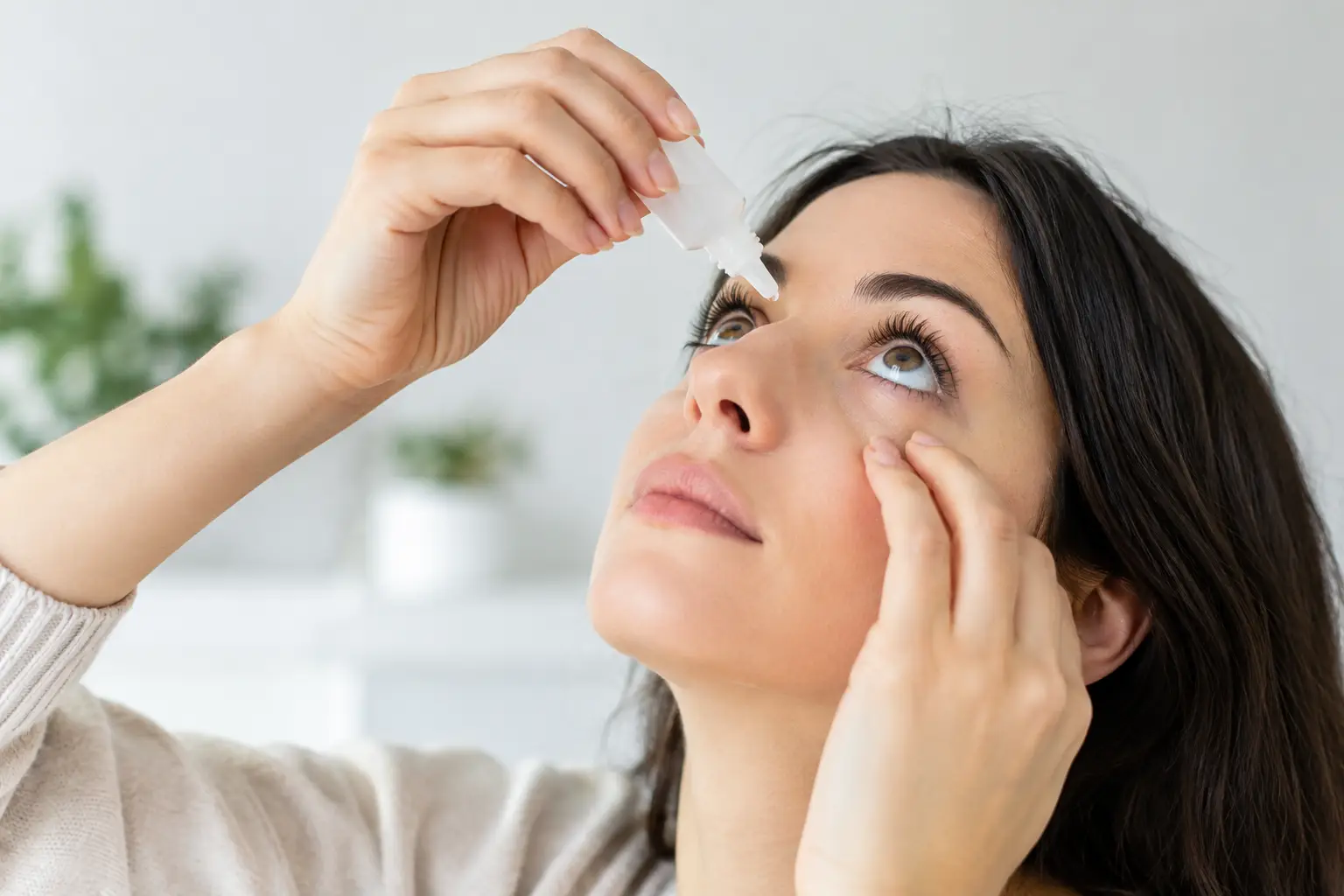
Tilt your head back or lie down. With one hand, gently pull down your lower eyelid to create a small pocket. Hold the bottle above the eye with the other hand and look upward. Squeeze one drop into the pocket, then close your eye gently for a moment. Do not squeeze your eyelids tightly, since this can push the drop out.
For better absorption, lightly press a clean finger at the inner corner of your closed eye, near your nose, for about a minute. This helps limit drainage through the tear duct. If you need drops in both eyes, repeat the process on the other side.
If you use more than one type of eye drop, wait at least five minutes between products. Ointments and gels should generally go in last because they can create a temporary blur. Always follow the instructions on the specific product and the advice of your eye care provider.
Common Application Mistakes to Avoid
More drops are not necessarily better. One drop is usually enough because the eye cannot hold much more than that at once. Adding several drops often just causes overflow and wastes the product.
Avoid sharing eye drops, even with family members. Also, do not use a bottle if the tip is cracked, dirty, or has touched an unclean surface. Pay attention to the expiration date and any discard-after-opening instructions, especially with preservative-free single-use vials.
Choosing the Right Type of Artificial Tears
The eye drop aisle can be overwhelming, but the label can help narrow the options. For mild, occasional dryness, standard lubricating drops may be enough. If symptoms happen several times a day, preservative-free drops are often a better choice because frequent exposure to preservatives can irritate sensitive eyes.
Preservative-free tears are typically sold in small single-use vials or specially designed multidose bottles. They can be especially helpful for people with moderate to severe dry eye, those using drops more than four times daily, and patients with sensitive eyes.
If your eyes feel dry because tears seem to disappear quickly, consider a formula designed to support the eye’s lipid, or oil, layer. Evaporative dry eye is common, particularly in people with meibomian gland dysfunction, where the tiny oil glands along the eyelids are not functioning well.
Gel drops and lubricating ointments last longer than thin liquid drops. They can be useful at bedtime or for more significant dryness, but they may temporarily blur vision. They are usually not the best choice right before driving, working, or any activity that requires sharp vision.
Be cautious with redness-relief drops. Many are designed to make the whites of the eyes look less red by narrowing blood vessels, not to treat dryness. Repeated use can lead to rebound redness and may mask a problem that needs professional care. For dry eye symptoms, choose a product labeled as a lubricating eye drop or artificial tear instead.
How Often Can You Use Artificial Tears?
For occasional symptoms, using artificial tears when your eyes feel dry may be appropriate. People dealing with predictable triggers, such as extended screen time, dry indoor heat, wind, or air travel, may benefit from using drops before discomfort becomes severe.
If you need preserved artificial tears more than four times a day, switch to a preservative-free formula or speak with an eye doctor. Needing drops every hour, waking with painful dry eyes, or getting only brief relief are signs that over-the-counter drops may not be addressing the full issue.
Dry eye management often works best as a routine rather than an emergency response. Taking regular breaks from close-up work, blinking fully during screen use, staying hydrated, and avoiding direct airflow from fans or vents can reduce irritation between applications. Warm compresses and eyelid hygiene may also help when eyelid oil glands are involved, but the right routine depends on the cause of your symptoms.
Artificial Tears and Contact Lenses
Contact lens wear can make dryness more noticeable, especially late in the day. Only use drops clearly labeled for contact lens use while your lenses are in. Regular artificial tears may contain ingredients that are not intended to sit between a contact lens and the eye.
If lenses regularly become uncomfortable, blurry, or difficult to remove, do not simply keep adding drops. The lens material, fit, replacement schedule, cleaning solution, and underlying tear film quality may all be contributing. A contact lens evaluation can help determine whether a different lens type or dry eye treatment would provide more consistent comfort.
When Dry Eyes Need More Than Eye Drops
Artificial tears should not cause significant burning, worsening redness, or pain. Stop using a product and seek professional advice if that happens. Prompt eye care is also appropriate for light sensitivity, discharge, sudden vision changes, eye injury, severe pain, or redness in one eye that does not improve.
Persistent dry eye deserves attention even when the symptoms seem manageable. Chronic dryness can affect the eye surface, interfere with clear vision, and make contact lens wear difficult. An eye doctor can assess tear quality, eyelid health, corneal changes, and other factors that a store-bought drop cannot reveal.
At Mountain Eye Care, dry eye evaluations can help patients move beyond trial and error. Depending on the findings, care may include targeted home treatment, prescription options, advanced dry eye therapies, or management for eyelid and oil gland concerns.
The best artificial tear is the one that safely matches your symptoms and fits into a plan that protects your long-term eye comfort. If drops have become part of every hour of your day, it is a good time to have the cause of your dryness checked.