
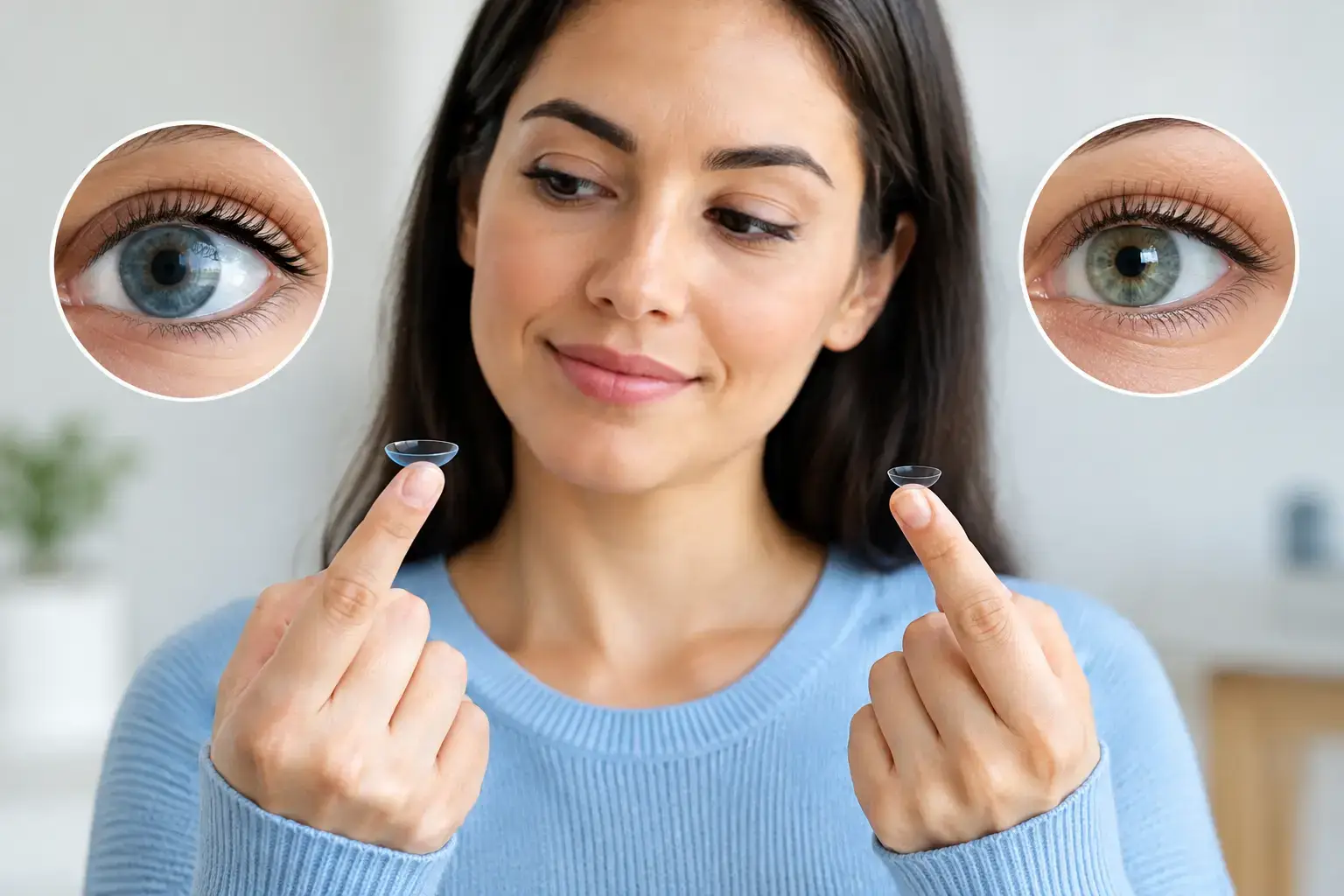
A contact lens should do more than help you see the clock across the room. It should feel stable, support the health of your eyes, and fit the way you live. When patients ask about scleral versus soft lenses, the right answer is rarely a simple matter of which option is “better.” The better lens is the one that matches your prescription, eye shape, tear film, corneal health, and daily needs.
Soft lenses remain the most common choice for everyday vision correction. Scleral lenses are larger specialty lenses that can provide exceptional vision and comfort for people with certain eye conditions or more challenging prescriptions. Both can be excellent options when prescribed and fitted correctly.
Scleral Versus Soft Lenses: The Main Difference
Soft contact lenses are made from flexible, water-containing materials. They sit directly on the cornea, which is the clear front surface of the eye. Because they conform closely to the shape of the eye, most people adjust to them quickly. Soft lenses are available in daily disposable, two-week, monthly, toric, multifocal, and specialty designs.
Scleral lenses are rigid gas permeable lenses with a much larger diameter. Rather than resting primarily on the cornea, they vault over it and rest on the white part of the eye, called the sclera. Before insertion, the lens is filled with preservative-free saline. That fluid reservoir remains between the lens and the cornea during wear.
This design creates two important benefits. First, it can mask irregularities on the cornea, producing sharper and more consistent vision than a standard soft lens may provide. Second, the fluid layer can protect and hydrate the corneal surface for people whose eyes are especially dry or sensitive.
The larger size can sound intimidating, but many patients find scleral lenses surprisingly comfortable once they learn proper insertion, removal, and care. The adjustment period is different from soft lenses, not necessarily harder.
When Soft Lenses May Be the Better Choice
For many patients, soft lenses are a practical, comfortable, and effective solution. They are often the first choice for routine nearsightedness, farsightedness, astigmatism, and age-related near-vision changes. Modern soft lens materials allow more oxygen to reach the cornea than older designs, helping support healthy daily wear when used as directed.
Daily disposable soft lenses are especially appealing for people who want a simple routine. You wear a fresh pair in the morning and discard it at night, without needing a lens case or nightly cleaning solution. This can be convenient for students, busy professionals, occasional lens wearers, and people who prefer less maintenance.
Soft lenses also work well for many active lifestyles. They stay centered during sports, offer a wide field of view, and do not fog in the same way scleral lenses sometimes can. Patients who want an easy transition between glasses and contacts may appreciate the familiarity and flexibility of soft lenses.
However, comfort with soft lenses depends heavily on the health of the ocular surface. If lenses become dry, blurry, or uncomfortable by afternoon, the answer may be a different soft lens material, a revised replacement schedule, treatment for dry eye, or a specialty lens evaluation. Discomfort should not be treated as an unavoidable part of contact lens wear.
When Scleral Lenses Can Make a Meaningful Difference
Scleral lenses are often recommended when conventional soft lenses cannot provide clear, stable, or comfortable vision. They are commonly used for irregular corneas, including keratoconus, corneal scarring, complications after corneal surgery, and other conditions that change the cornea’s shape.
With an irregular cornea, a soft lens follows the uneven surface of the eye. That can leave vision distorted or fluctuating. A scleral lens creates a smooth optical surface in front of the eye, which can improve clarity and reduce glare, ghosting, or shadowed vision for appropriate candidates.
They can also be valuable for some patients with significant dry eye disease or ocular surface conditions. The saline-filled reservoir may provide relief by reducing direct friction between the eyelid and the cornea. That said, scleral lenses are not a substitute for dry eye treatment. In many cases, the best outcomes come from addressing the underlying cause of dryness while considering specialty lenses as part of a broader care plan.
Scleral lenses may also help patients who have struggled with lens stability or vision quality in high prescriptions. Still, not every high prescription requires a scleral lens. Advances in custom soft lenses and other specialty contact lens designs give patients several options.
Comfort, Vision, and Convenience: The Real Trade-Offs
The comparison between scleral and soft lenses usually comes down to three practical questions: How well can you see? How comfortable are your eyes through the day? How much care are you willing and able to manage?
Soft lenses usually win on simplicity. They are faster to insert, easier to carry, and familiar to most contact lens wearers. Daily disposables offer the lowest-maintenance routine. For uncomplicated prescriptions and healthy eyes, that convenience can be hard to beat.
Scleral lenses often win when vision quality or eye comfort has been difficult to achieve with standard lenses. Their larger design makes them more stable on the eye, and their optics can be life-changing for patients with corneal irregularity. The trade-off is that they require more technique and a more detailed cleaning and filling routine.
Scleral lens wearers need to use the recommended preservative-free saline for filling, as well as approved cleaning and disinfection products. They should never use tap water or saliva on lenses or cases. Proper hygiene matters with every type of contact lens, but it is particularly important when a lens is worn for many hours against a protected corneal surface.
Cost can also differ. Standard soft lenses, particularly widely available monthly or daily designs, may have a lower upfront cost. Specialty scleral lenses involve detailed measurements, diagnostic fitting, follow-up visits, and customized lens design. Insurance coverage varies, especially when a lens is medically necessary rather than purely elective. A contact lens evaluation can clarify expected costs before you make a decision.
Why a Professional Contact Lens Fitting Matters
A contact lens prescription is not interchangeable with a glasses prescription. Contacts sit directly on the eye, so the fit, material, lens diameter, curvature, power, and replacement schedule all need to be assessed individually.
During a comprehensive contact lens evaluation, your eye doctor checks more than vision. They evaluate the cornea, eyelids, tear film, eye health, and how a trial lens centers and moves on the eye. Advanced corneal measurements can be particularly useful when considering scleral lenses or evaluating irregular corneal shape.
Follow-up care is part of a successful fit. A lens that seems acceptable during an initial visit may need adjustment after a full day of wear. Patients should mention fluctuating vision, redness, fogging, dryness, pressure, or difficulty removing lenses. Small changes in lens design or care routines can make a substantial difference.
At Mountain Eye Care, contact lens recommendations are based on your complete visual and ocular health needs, not simply on the lens type you have worn in the past. For some patients, the best next step is a newer soft lens. For others, a specialty scleral lens evaluation may open the door to clearer, more comfortable vision.
Questions to Consider Before Choosing
Think about the moments when your current vision correction falls short. Are your eyes dry or irritated by late afternoon? Does your vision blur, ghost, or fluctuate even with an up-to-date prescription? Do you need a low-maintenance lens for occasional wear, or are you willing to follow a more involved routine for stronger visual performance?
Also consider your eye health history. Previous eye surgery, corneal injury, keratoconus, severe dry eye, and repeated discomfort with standard lenses are all reasons to discuss specialty options. On the other hand, if your eyes are healthy and standard soft lenses feel clear and comfortable all day, changing lens types may not offer a meaningful advantage.
The most useful next step is not choosing a lens from a chart. It is scheduling a contact lens evaluation and describing exactly how your eyes feel and how your vision performs throughout the day. The right lens should support the life you want to live, while giving your eyes the care they deserve.