A road sign can appear just out of reach for someone with reduced distance vision: visible, but not clear enough to read until it is too late to act comfortably. Bioptic telescopes for driving vision may help certain people with low vision spot signs, signals, street names, and distant hazards sooner. They are not a substitute for normal vision, and they are not appropriate for every driver. With the right assessment, device, training, and licensing approval, however, they can be part of a safe plan for greater independence.
What Are Bioptic Telescopes for Driving Vision?
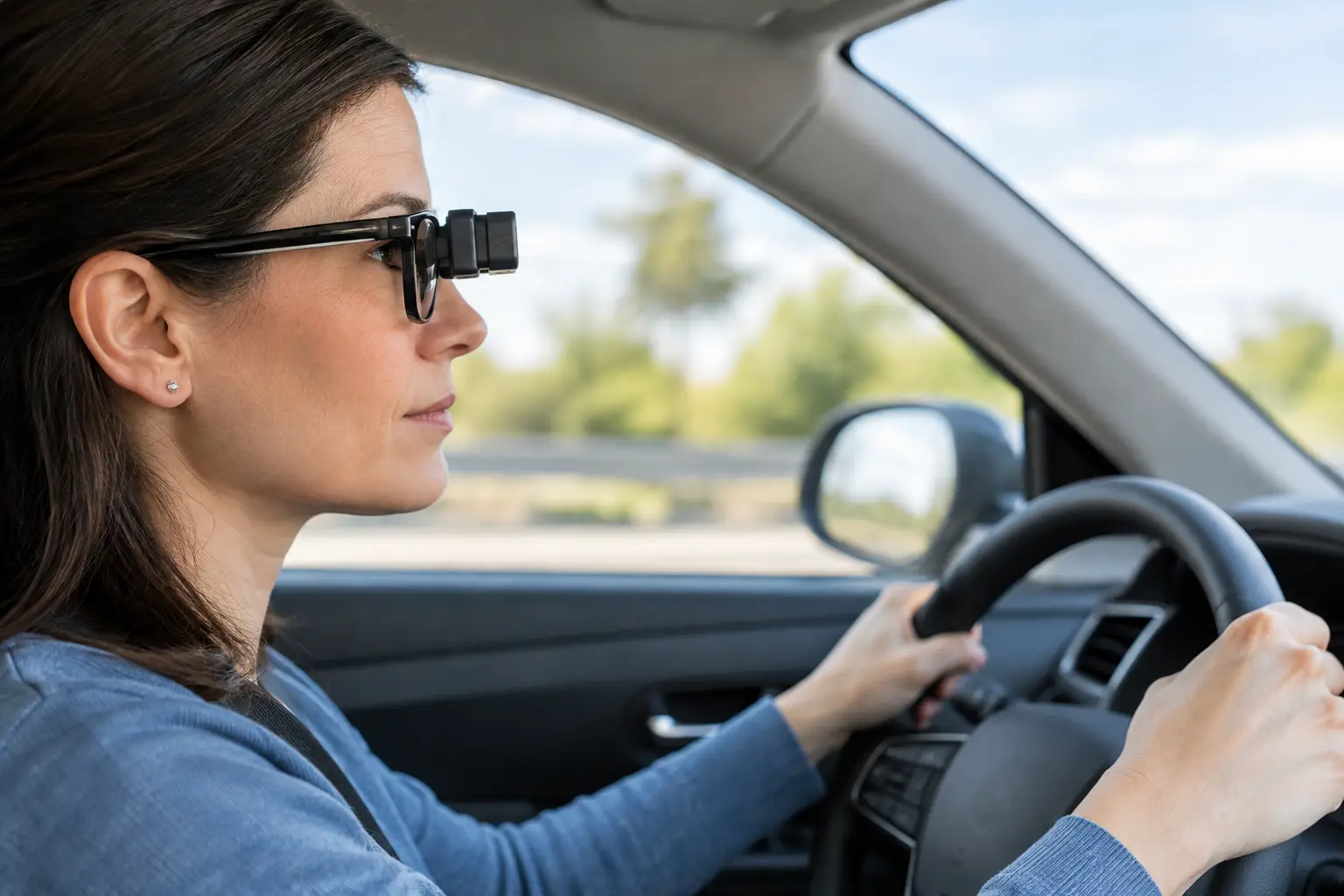
Bioptic telescopes are small telescopic systems mounted near the top of a pair of prescription eyeglasses. The wearer looks through the regular prescription lenses for most driving tasks. When they need to check a distant detail, such as an approaching traffic light or a highway sign, they briefly tilt their head or eyes upward to look through the telescope.
This distinction matters. A bioptic device is designed for quick, targeted viewing, not continuous use while the vehicle is moving. The regular lenses provide the wide field of view needed to monitor lanes, pedestrians, mirrors, and surrounding traffic. The telescope provides momentary magnification for details that would otherwise be too small or too blurred to resolve at a distance.
Most devices are customized. The telescope’s magnification, position, focus, lens prescription, and frame fit all affect comfort and performance. A device that is too strong can narrow the view excessively. One that is poorly aligned can make it difficult to find the target quickly. A careful fitting is a clinical process, not simply an eyewear purchase.
Who May Be a Candidate?
A person may be considered for bioptic driving when their distance vision is reduced but they retain useful vision, adequate peripheral awareness, and the ability to process visual information safely. Some patients have stable reduced central vision related to conditions such as albinism, macular changes, optic nerve conditions, or other low-vision diagnoses.
The diagnosis alone does not determine eligibility. Two people with the same eye condition can have very different visual skills, driving histories, reaction times, visual fields, and comfort levels in traffic. A comprehensive low-vision evaluation looks at the whole picture.
Candidates typically need stable vision, a reliable understanding of their visual limitations, and a willingness to complete training. They must also meet the vision and health standards set by the licensing authority where they drive. Requirements vary by jurisdiction, so no optical device can guarantee driving eligibility or license approval.
Bioptic telescopes may not be appropriate when significant peripheral field loss, double vision, poor contrast sensitivity, impaired visual processing, or certain medical concerns make driving unsafe. Sometimes the most responsible recommendation is to avoid driving or limit it to another form of transportation. Patient-first care means being direct about that possibility.
A low-vision evaluation goes beyond an eye chart
A standard eye exam is essential, but a bioptic assessment is more detailed. Your eye care provider may evaluate best-corrected visual acuity, contrast sensitivity, peripheral visual field, eye health, glare concerns, depth perception, and the stability of your prescription. They will also discuss the situations that create the greatest difficulty, such as reading freeway signs, recognizing traffic signals, or driving at dusk.
This assessment helps identify whether magnification is likely to solve a meaningful problem. If glare, dry eye, a cataract, or an untreated retinal issue is the main barrier, addressing that concern first may make more sense than fitting a telescope.
How the Bioptic Driving Process Works
A successful bioptic plan takes time. It usually begins with a low-vision eye examination and an honest conversation about goals, habits, and current driving status. If a patient appears clinically appropriate, the provider can demonstrate different systems and determine whether the person can locate and use the telescope efficiently.
After a custom device is ordered and fitted, training becomes the central part of the process. The wearer learns to keep attention on the road through the regular lenses and to use the telescope only for brief checks. They practice locating signs, judging when a quick magnified glance is useful, and returning promptly to the carrier lens view.
In many areas, driving instruction with a qualified rehabilitation professional or driving specialist may be required or strongly recommended. The process may also include an on-road assessment and documentation for the licensing agency. Rules are specific to the jurisdiction and can change, so patients should confirm current requirements with the relevant authority before assuming they can drive with a bioptic device.
Expect an adjustment period
The telescope view is more magnified, but it is also narrower. At first, many people find it unfamiliar to shift their gaze upward, find the target, and return to normal viewing without losing awareness of the road. That is why practice in controlled settings matters.
There can also be practical limits. A person may be approved only for daytime driving, local roads, or other conditions set by their licensing authority. Night driving can be especially challenging when low vision is combined with glare sensitivity or reduced contrast. Responsible use means respecting those limitations, even after training builds confidence.
Benefits That Matter in Real Driving
For an appropriate, trained driver, the most meaningful benefit is often earlier access to information. Being able to read a sign sooner can allow more time to choose the correct lane, prepare for a turn, or respond calmly to a changing route. Seeing a traffic signal or destination marker with greater clarity can reduce the strain of trying to guess at distant details.
Bioptics can also support independence. Driving is closely connected to work, medical appointments, family responsibilities, and participation in the community. For someone whose vision no longer meets standard requirements without assistance, a properly prescribed device may create a path to continued mobility where local regulations allow it.
Still, the goal is not to make vision perfect. The goal is to determine whether a specific person can operate a vehicle safely with carefully defined tools, skills, and conditions. That measured approach protects both the driver and everyone sharing the road.
Choosing the Right Provider and Device
Bioptic telescopes require expertise in low vision, precise optical measurements, and ongoing patient education. Look for a provider who begins with eye health and functional vision, rather than focusing only on the frame or device. The best recommendation may include a bioptic, a different low-vision aid, medical treatment, updated prescription lenses, or a combination of services.
Frame selection is also more important than it may seem. The frame must sit securely, support the telescope at the correct height, and remain comfortable for daily wear. Prescription needs such as progressive lenses, prism, tint, or glare control may also influence the design. A good fitting includes adjustments after the glasses are dispensed, because small changes in alignment can affect usability.
At Mountain Eye Care, low-vision assessments and specialty optical options can help patients understand whether a bioptic system is worth pursuing. The conversation should be practical and individualized: what can you see now, where does vision limit you, what does local licensing require, and what level of driving feels safe?
Questions to Ask Before Moving Forward
Before committing to a bioptic device, ask how much magnification is being recommended and why. Ask whether your visual field, contrast sensitivity, and eye health support driving. Ask what training is expected, what restrictions may apply, and how follow-up care will be handled.
It is also reasonable to ask about the device’s limitations. Will it help with street signs but not night glare? Will your current vision condition remain stable? Are there other treatments or optical changes that should be considered first? Clear answers help set realistic expectations and prevent a costly device from becoming underused.
A bioptic telescope is most valuable when it is part of a thoughtful safety plan, not a shortcut around visual limitations. If distance details have made driving stressful or uncertain, schedule a low-vision evaluation and bring your questions. A careful assessment can clarify the safest next step, whether that includes a bioptic system or another solution better suited to your vision and life.