A missed street sign, a child moving closer to the TV, or headaches after a workday can all point to changes in vision. A visual acuity test is often the first measurement taken during an eye exam because it quickly shows how clearly each eye sees at a specific distance. It is useful, but it is not the whole story of your eye health.
What Is a Visual Acuity Test?
Visual acuity describes the sharpness and clarity of your vision. During a visual acuity test, you read letters, numbers, pictures, or symbols that become progressively smaller. The test is commonly performed at distance using a wall chart or digital display, and it may also be performed up close to assess reading vision.
The familiar result is written as a fraction, such as 20/20. The first number refers to the testing distance, usually 20 feet. The second number describes the distance at which a person with standard vision can read the same line. If your vision is 20/40, you must stand 20 feet away to see what a person with standard acuity can see from 40 feet away.
A 20/20 result means your distance vision is considered typical at the time of testing. It does not mean your eyes are free of disease, that you have perfect vision in every situation, or that you do not need a comprehensive eye exam.
How the Test Is Performed
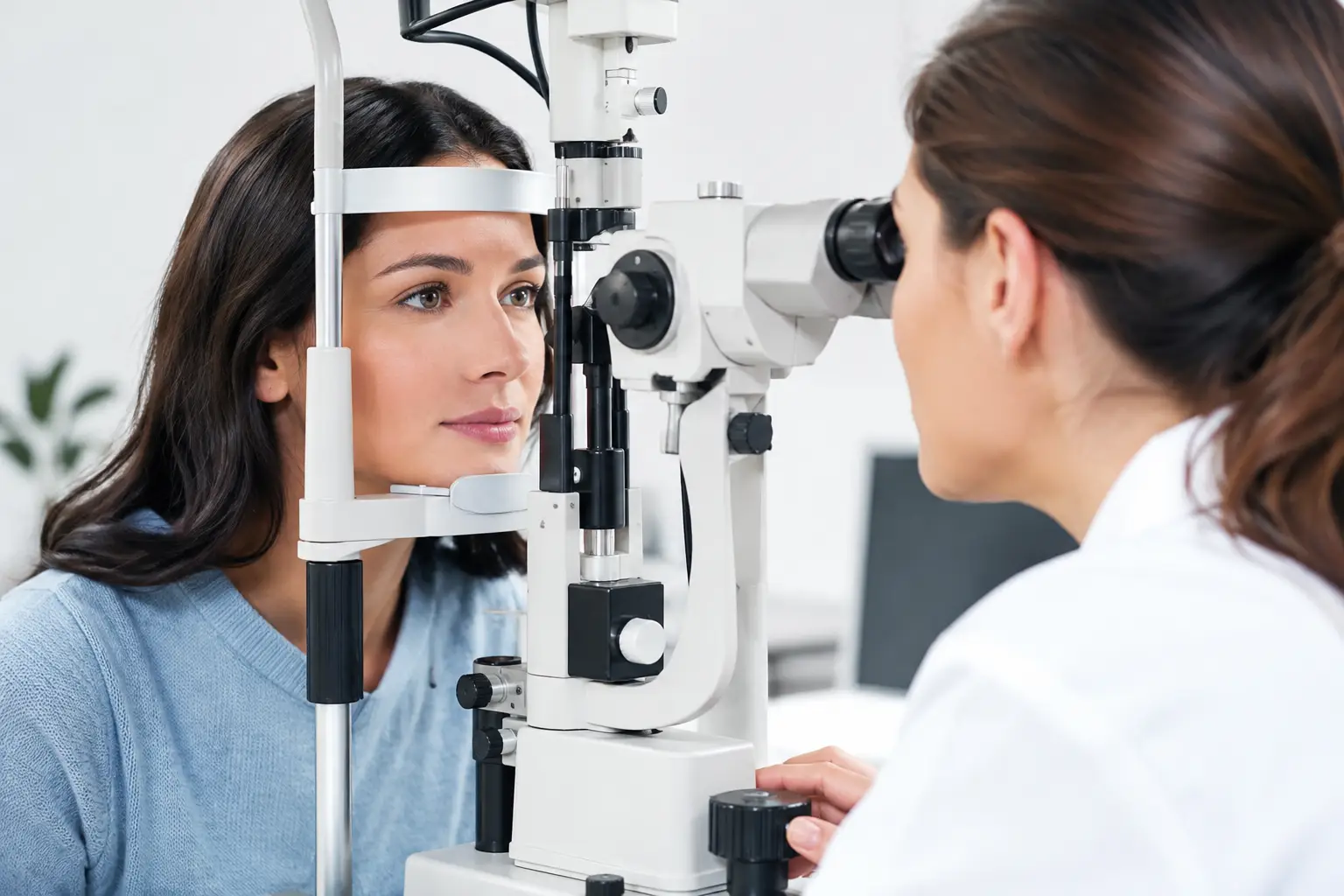
The test itself is straightforward, but accuracy matters. Your optometrist or trained staff member will generally test one eye at a time, then both eyes together. You may be asked to wear your current glasses or contact lenses first, followed by testing without them when appropriate.
For children or patients who cannot identify letters, the chart may use matching symbols, a tumbling E chart, or pictures. Young children do not need to read the traditional eye chart for an eye care professional to evaluate visual acuity effectively.
If your vision is not as clear as expected, the next step may be a refraction. This is the part of the exam where you look through a series of lenses and answer which option looks clearer. The results help determine whether glasses or contact lenses could improve your sight and what prescription may be appropriate.
What Your Results Can Tell You
Visual acuity results help identify whether vision correction is needed or whether an existing prescription may have changed. A lower result can be caused by nearsightedness, farsightedness, astigmatism, presbyopia, or a prescription that is no longer current.
For example, a child who struggles to see the board at school may have reduced distance acuity from nearsightedness. An adult who can drive comfortably but needs to hold a menu farther away may be experiencing presbyopia, the normal age-related decline in near focusing ability. Reading glasses, progressive lenses, bifocals, or contact lens options may help, depending on the person’s needs and eye health.
Results also help establish a baseline. If your acuity changes between visits, that information can guide further testing and treatment decisions. A gradual change may point to a prescription update, while a sudden change in vision deserves prompt attention.
Why 20/20 Does Not Tell the Whole Story
A visual acuity test measures one essential part of sight: the ability to distinguish detail at a defined distance. However, comfortable, functional vision depends on much more than reading the smallest line on a chart.
Someone can have 20/20 acuity and still experience dry, irritated eyes that make vision fluctuate through the day. Another person may see sharply in a well-lit exam room but have poor night vision, glare from headlights, reduced contrast sensitivity, eye alignment concerns, or difficulty processing visual information after a concussion.
A comprehensive eye exam may include an assessment of eye pressure, the front and back of the eye, pupil responses, eye movements, focusing ability, peripheral vision, and retinal health. Advanced imaging and diagnostic testing can reveal changes that a chart alone cannot detect. This is especially valuable because certain eye conditions can develop with few noticeable symptoms in their early stages.
Distance, Near, and Corrected Vision
The way visual acuity is measured depends on your daily demands. Distance acuity matters for driving, recognizing faces, watching presentations, and seeing signs. Near acuity matters for reading, phone use, medication labels, crafts, and detailed work. Intermediate vision is also increasingly relevant for computer use and dashboard viewing.
Your exam may document uncorrected acuity, which is how clearly you see without glasses or contacts, and best-corrected acuity, which is your vision with the most appropriate prescription. These measurements help your optometrist recommend a solution that fits your life rather than simply chasing a number on a chart.
For some patients, the clearest prescription is not always the most comfortable choice. Stronger lenses may affect adaptation, depth perception, or visual comfort in certain tasks. This is one reason professional guidance matters when selecting progressive lenses, specialty contact lenses, or low vision devices.
When a Change in Acuity Needs Attention
Routine testing is useful for everyone, but some changes should not wait for a regular appointment. Contact an eye care professional promptly if you notice sudden blurred vision, new double vision, a curtain or shadow in your field of view, flashing lights, a sudden increase in floaters, significant eye pain, or vision loss in one eye.
Less urgent symptoms still deserve an exam when they persist. Frequent squinting, headaches during reading, eye fatigue, trouble driving at night, fluctuating clarity, and increased difficulty with screens can all signal a vision or eye health concern. Children may not describe blurry vision clearly, so watch for rubbing their eyes, avoiding reading, sitting unusually close to screens, or losing their place while reading.
Preparing for Your Eye Exam
You do not need to study an eye chart before your appointment. Bring your current glasses, contact lens information, and a list of any medications or eye drops you use. If you have noticed specific symptoms, think about when they occur. Is blur worse at night, after screen use, while reading, or when you first wake up? Details like these help guide the exam.
If dilation is planned or recommended, your vision may be temporarily blurry afterward and bright light may feel uncomfortable. Bringing sunglasses and arranging transportation when needed can make the visit easier.
At Mountain Eye Care, visual acuity testing is used as a practical starting point within a broader, patient-focused assessment. The goal is not only to help you read the chart more clearly, but also to understand what supports comfortable vision and long-term eye health.
Clear sight affects school, work, safety, and the small routines that make a day feel effortless. If your vision seems different, or if it has simply been a while since your last exam, scheduling a comprehensive evaluation is a sensible next step.