A blurry road sign, frequent headaches, or a child moving closer to the screen can make an eye exam feel urgent. But before booking, many patients ask: are eye exams covered? The honest answer is that coverage depends on your age, health needs, location, and the details of your government or private insurance plan.
Knowing the difference between a routine vision exam and a medically necessary eye evaluation can help you avoid surprises. It also helps you choose care based on what matters most: clear vision today and early detection of eye health concerns that may not cause noticeable symptoms.
Are Eye Exams Covered by Insurance?
Some eye exams are covered in full, some are covered in part, and some are paid out of pocket. A standard comprehensive eye exam may be included through a vision benefits plan, while an exam related to an eye disease, injury, or medical condition may be billed through medical insurance. The exact rules vary by plan.
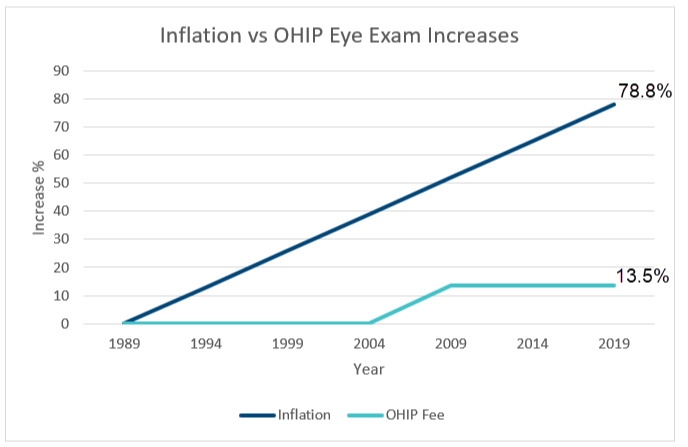
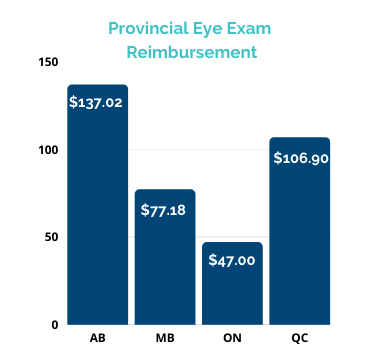
In Ontario, provincial coverage is generally available for children and teens under 20, adults 65 and older, and people with certain qualifying medical conditions. Eligibility and the number of covered visits can change, so it is wise to confirm your current benefits before your appointment. Adults ages 20 to 64 who do not meet a qualifying medical criteria often rely on workplace vision benefits or pay privately for routine care.
Private vision plans are equally varied. One plan may cover a comprehensive exam every 12 or 24 months up to a set dollar amount. Another may cover an exam but not retinal imaging, specialty testing, contact lens fitting, or a separate refraction. A plan with a larger eyewear allowance does not necessarily provide stronger exam coverage.
Routine Vision Care and Medical Eye Care Are Not Always the Same
A routine exam checks how well you see, determines whether your prescription has changed, and evaluates overall eye health. It is appropriate for patients who need updated glasses or contact lenses, have no new symptoms, and want preventive care.
A medical eye evaluation is more likely when there is a concern such as sudden flashes or floaters, eye pain, an infection, an injury, diabetes-related eye changes, glaucoma risk, cataracts, or significant dry eye symptoms. Coverage may be handled differently because the visit is focused on diagnosing or managing a medical condition rather than simply updating a prescription.
That distinction matters, but it is not a reason to delay care. An eye doctor determines the appropriate type of exam based on your history, symptoms, and clinical findings. If you are unsure why you are being scheduled for certain testing, ask. A clear explanation of the purpose of the exam and any expected out-of-pocket fees is part of good patient care.
What May Be Included in a Comprehensive Eye Exam?
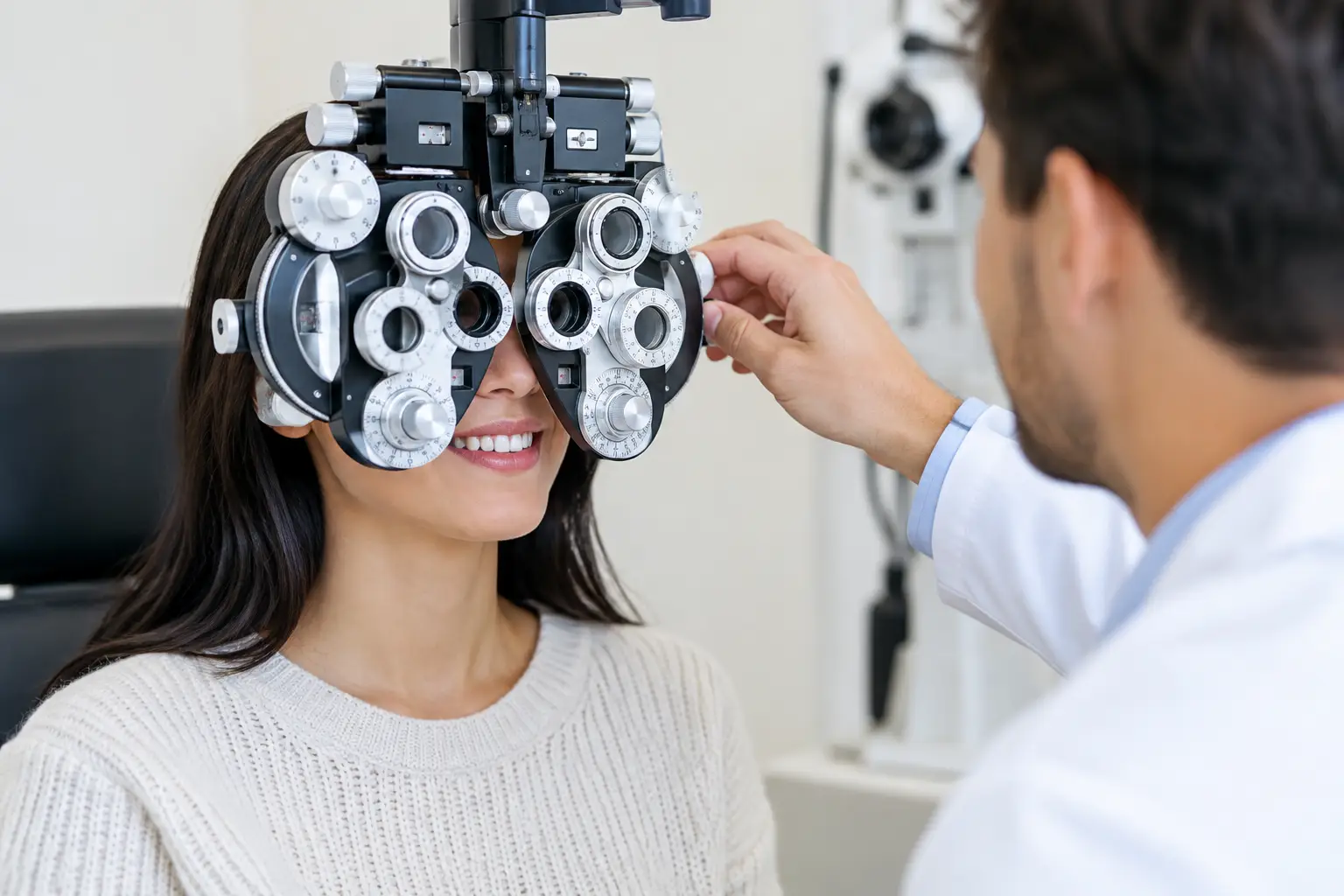
A comprehensive exam is more than reading letters across the room. Your doctor may assess visual acuity, prescription needs, eye coordination, eye pressure, pupil response, and the health of the front and back of the eye. Depending on your needs, the visit may also include a discussion of screen-related strain, contact lenses, dry eye symptoms, headaches, or changes in night vision.
Advanced diagnostic tools can provide valuable information, especially for patients with a family history of glaucoma, diabetes, macular degeneration, or retinal disease. Retinal imaging, optical coherence tomography (OCT), visual field testing, and pachymetry may be recommended to establish a baseline or investigate a concern.
These services are clinically useful, but they are not always included in a basic exam benefit. Some plans treat them as optional upgrades, while others may cover them when there is a medical indication. The key is not to assume that every test is included or excluded. Ask your optometry office to explain what has been recommended and why.
Why Contact Lens Exams Can Cost More
Contact lens patients often need a separate fitting or evaluation in addition to a standard eye exam. Contacts sit directly on the eye, so the doctor needs to confirm that the lens material, curve, diameter, prescription, and wearing schedule are appropriate for your eyes.
This is particularly important for multifocal lenses, toric lenses for astigmatism, specialty lenses, and patients with dry eye. A contact lens prescription is not the same as a glasses prescription, and many insurance plans do not include contact lens fitting fees in their routine exam coverage.
The same principle applies to more specialized services. Myopia control, low vision assessments, neurovisual evaluations, and advanced dry eye care address meaningful clinical needs, but benefits vary widely. Some services may have partial coverage, while others are typically self-pay. A reputable clinic should help you understand the expected fees before treatment begins.
How to Check Your Benefits Before You Book
A quick review of your benefits can make your visit more straightforward. Start by checking whether you have a vision plan through an employer, spouse, parent, professional association, or private insurer. Look for the exam frequency, annual or biennial maximum, and whether your provider must be in a specific network.
Then confirm the details that commonly create confusion: whether the exam allowance applies to a comprehensive exam, whether dilation or retinal imaging is included, and whether contact lens fitting is covered. If you have a health spending account, it may help pay for costs that are not reimbursed through your standard vision benefit.
When calling the office, have your insurance card or plan information available. The team can often explain common payment options and help identify what information is needed for a claim. However, the insurer makes the final decision about eligibility and reimbursement. Verifying directly with your plan is the best way to understand your personal coverage.
When an Exam Is Worth Booking Even Without Coverage
Insurance can reduce the cost of care, but it should not be the only reason to schedule an exam. Many eye conditions develop gradually and without pain. Glaucoma, diabetic eye disease, retinal changes, and early macular degeneration may not affect vision until damage has already occurred.
Children also benefit from regular exams, even if they do not complain about seeing. Difficulty focusing, eye teaming problems, and early myopia can affect reading, sports, confidence, and classroom performance. A school vision screening is useful, but it does not replace a comprehensive eye exam.
For adults, changes in near vision, increased glare at night, tired eyes after computer work, or a sudden change in vision deserve attention. For seniors, routine monitoring becomes increasingly valuable because the risk of cataracts, glaucoma, and retinal disease rises with age.
Questions to Ask Before Your Appointment
If you want a clearer estimate of your costs, ask whether the appointment is being booked as a routine comprehensive exam or for a medical concern. Ask whether any recommended imaging or specialty testing has a separate fee, and whether a contact lens fitting is needed. If you are bringing a child or an older parent, confirm whether their age-based coverage applies to the planned visit.
Most importantly, mention symptoms when you book. New flashes, a curtain-like shadow, sudden vision loss, severe eye pain, or a chemical exposure should be addressed promptly rather than treated as a routine exam question.
Clear answers about coverage are helpful, but protecting your sight is the bigger goal. Whether your plan pays all, some, or none of the visit, a timely eye exam gives you a practical next step toward comfortable vision and healthier eyes for the years ahead.