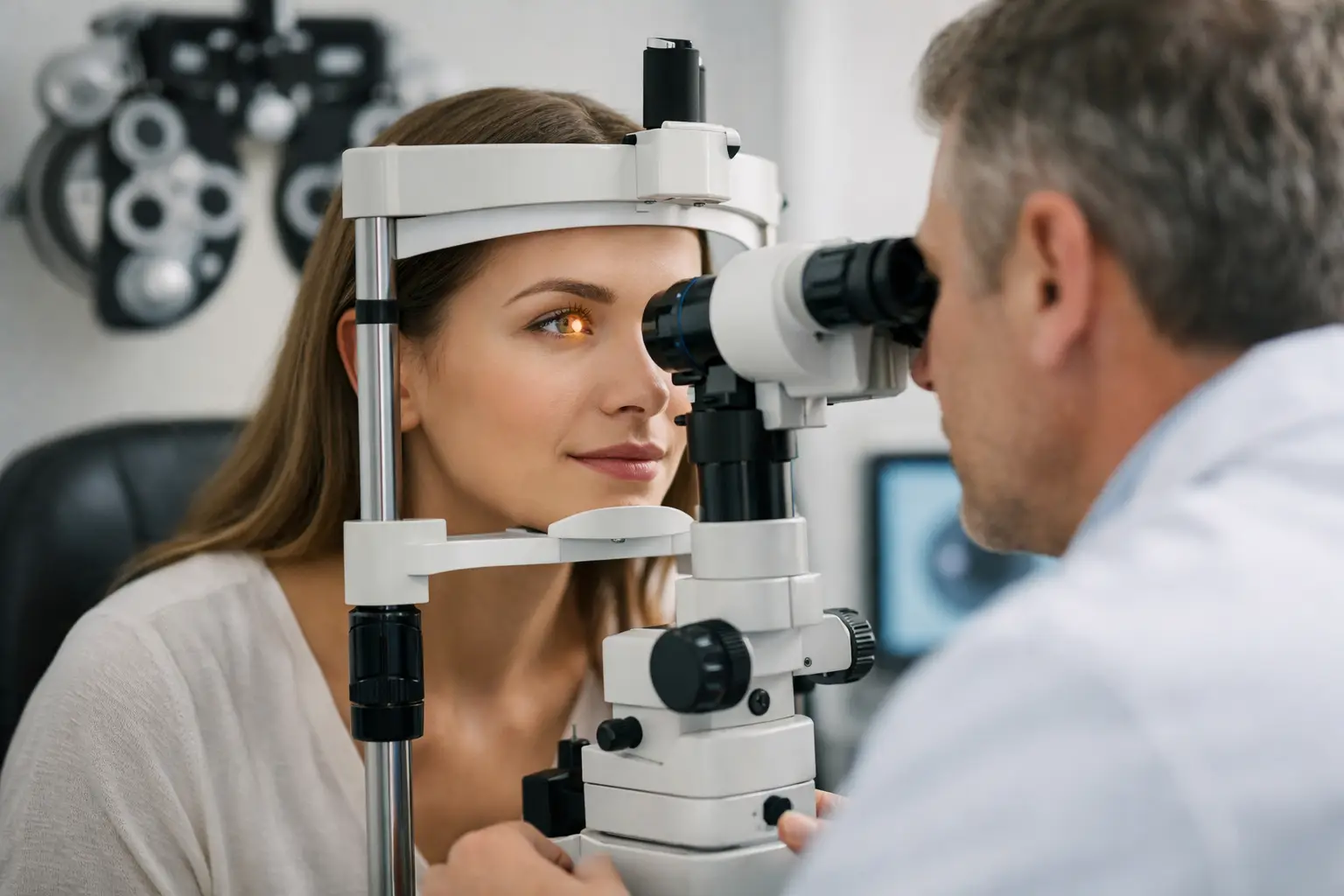
A lot of people walk into an appointment wondering the same thing: what happens during an eye exam, and how long will it take? That question is completely normal, especially if it has been a few years since your last visit or you are bringing in a child or older family member for care. A comprehensive eye exam is not just about reading letters on a chart. It is a detailed check of your vision, your eye health, and in many cases, early signs of broader health issues.
At a full-service practice, the exam is designed to do more than confirm whether you need glasses. It helps your optometrist understand how well your eyes work, how your prescription may have changed, and whether there are any concerns that need treatment, monitoring, or referral. Some visits are routine. Others lead to important findings that patients did not know were there.
What happens during an eye exam starts before testing
Your appointment usually begins with questions. This part matters more than many people expect. Your doctor or clinical team will ask about blurred vision, headaches, eye strain, dryness, floaters, flashes of light, trouble driving at night, contact lens comfort, and any recent changes in how you see.
Medical history is also part of the process. Conditions like diabetes, high blood pressure, autoimmune disease, migraines, and certain medications can affect the eyes. Family history matters too. If glaucoma, macular degeneration, or retinal disease runs in your family, your doctor will want to know.
For children, the discussion may include school performance, reading habits, screen use, and whether they squint or hold devices very close. For seniors, the focus may shift more toward cataracts, retinal changes, glaucoma risk, and how vision affects daily safety and independence.
Checking how clearly you see
One of the first tests is usually visual acuity. This is the familiar part where you read letters from a chart across the room. It measures how clearly you see at a distance and, in many cases, up close as well.
If you already wear glasses or contact lenses, your vision may be checked both with and without them. That helps show how well your current prescription is working. If your vision is not as sharp as it should be, the next step is to determine whether a prescription change would improve it.
This is where refraction comes in. You will look through different lens options and answer the classic question, “Which is better, one or two?” It may seem simple, but it is a precise process. The goal is to fine-tune your prescription for the clearest and most comfortable vision possible.
That said, not every vision problem is solved with a stronger prescription. Sometimes blurry vision is caused by dry eye, cataracts, corneal changes, or other health issues. That is one reason a full exam is more valuable than a quick vision screening.
How your eye team checks eye coordination and focusing
Clear sight is only one part of visual function. Your eyes also need to work together properly. During the exam, your doctor may assess eye alignment, tracking, depth perception, and focusing ability.
This part is especially important for children, students, and adults who spend long hours reading or using screens. A person can have 20/20 distance vision and still struggle with eye teaming or focusing problems that cause fatigue, headaches, double vision, or trouble concentrating.
If there are signs of a more specific visual issue, additional testing may be recommended. In some cases, patients benefit from more specialized assessment for neurovisual or binocular vision concerns. It depends on symptoms, age, and what the doctor observes during the exam.
What happens during an eye exam for eye health
After vision testing, the focus turns to the health of the eyes themselves. Your optometrist will examine the front and back of the eye to look for signs of disease, irritation, damage, or structural changes.
The front of the eye includes the eyelids, cornea, conjunctiva, iris, and lens. These structures are evaluated for issues such as dryness, inflammation, infection, cataracts, corneal injury, and contact lens-related problems. If you have symptoms like burning, tearing, redness, or fluctuating vision, this part of the exam often provides important answers.
The inside of the eye is just as important. Your doctor looks at the retina, optic nerve, and blood vessels to check for conditions such as glaucoma, diabetic eye disease, macular degeneration, retinal tears, and other abnormalities. In many cases, these conditions develop gradually and do not cause early symptoms, which is why routine exams matter even when your vision seems fine.
Technology that adds a deeper level of care
Modern eye exams often include advanced diagnostic imaging. This can make a major difference in how early changes are detected and how accurately conditions are tracked over time.
Retinal imaging allows your doctor to capture detailed pictures of the back of the eye. Optical coherence tomography, often called OCT, provides cross-sectional images of retinal layers and the optic nerve. This helps identify subtle changes that may not be visible during a standard exam alone.
Depending on your needs, your visit may also include pachymetry to measure corneal thickness or visual field testing to assess peripheral vision. These tools are especially useful when monitoring glaucoma risk, retinal concerns, neurological changes, or other medical eye conditions.
Not every patient needs every test at every visit. Age, symptoms, medical history, family history, and previous findings all help determine what is appropriate. That is part of what makes a comprehensive exam different from a one-size-fits-all screening.
Do your eyes need to be dilated?
Some exams include dilation, which means using eye drops to widen the pupils so the doctor can get a better view inside the eye. This is often recommended when a more complete retinal evaluation is needed, particularly for patients with diabetes, flashes and floaters, high prescriptions, retinal concerns, or age-related eye health risks.
Dilation can cause light sensitivity and blurry near vision for a few hours, so it is worth planning around. Some patients prefer to bring sunglasses or arrange their schedule if they expect close-up work afterward.
There are situations where imaging may reduce the need for dilation at certain visits, but it does not replace it in every case. Your doctor will decide which approach gives the safest and most complete view of your eye health.
If you wear contacts or need glasses
If you wear contact lenses, your exam may include extra measurements and evaluation of how the lenses fit on your eyes. Comfort, oxygen flow, tear quality, and lens movement all matter. A contact lens prescription is not exactly the same as a glasses prescription, so this part requires its own assessment.
If you need glasses, your doctor will explain your prescription and how it relates to your daily life. Someone who drives often at night may have different lens priorities than someone who works on a computer all day. Multifocal needs, blue light concerns, sun protection, and specialty lens options can all be discussed based on your routine, not just your chart results.
For children with worsening nearsightedness, the conversation may also include myopia control. This is a good example of why an eye exam is about long-term planning, not just today’s prescription.
How long does an eye exam take?
A routine comprehensive eye exam often takes about 30 to 60 minutes, depending on the complexity of the visit and whether additional testing is needed. A child’s first exam, a medical eye concern, a specialty contact lens visit, or advanced imaging can add time.
That extra time is usually well spent. A thorough exam gives your doctor a clearer picture of your vision and eye health, which supports better recommendations and fewer surprises later.
What you should take away from the visit
By the end of the appointment, you should know how well you are seeing, whether your prescription has changed, and whether there are any eye health concerns to monitor or treat. You should also understand the next step, whether that means ordering new eyewear, managing dry eye, returning for follow-up testing, or simply coming back for your next routine exam.
At Mountain Eye Care, that patient-first approach is what helps turn a standard appointment into meaningful care. The best eye exams do not leave patients guessing. They give you answers, context, and a clear path forward.
If you have been putting off an appointment because you were unsure what to expect, the process is usually more straightforward and more valuable than most people realize. A good exam does not just measure eyesight. It helps protect the way you live, work, drive, read, and stay connected to the people and routines that matter most.