
A contact lens that feels comfortable at 8 a.m. can feel very different after a full workday, a workout, time outdoors, or hours in front of a screen. That is why the choice between daily vs monthly contact lenses is about more than price. Your prescription, tear film, wearing habits, and ability to follow a cleaning routine all affect which replacement schedule will serve your eyes best.
Both options can provide clear, dependable vision when they are professionally fitted and worn as prescribed. The better choice is the one that supports healthy eyes while fitting naturally into your day-to-day life.
Daily vs Monthly Contact Lenses: The Main Difference
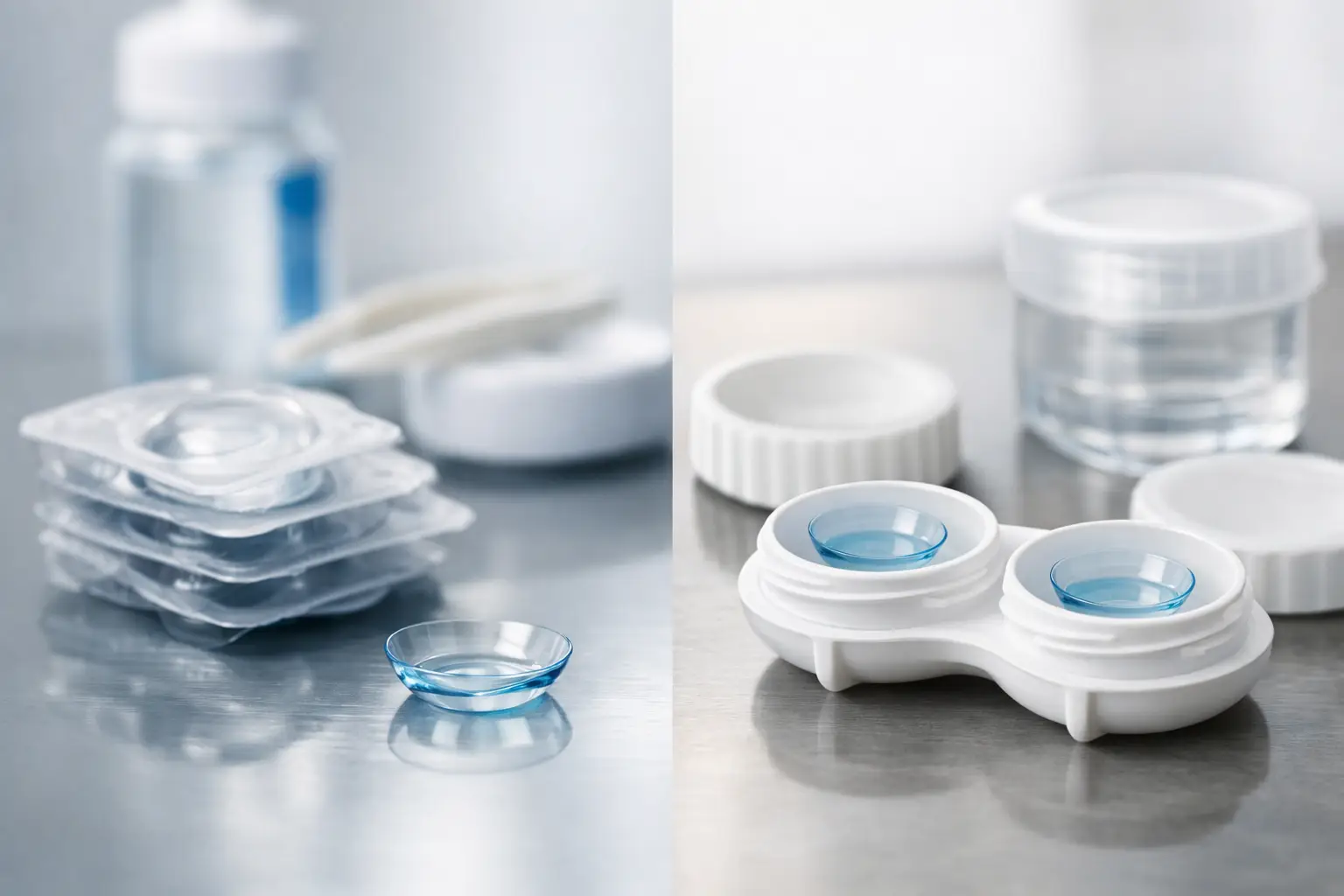
Daily disposable lenses are opened fresh each day and discarded after removal. There is no lens case, cleaning solution, or overnight storage. Monthly lenses are designed to be removed, cleaned, disinfected, and stored every night, then replaced on a monthly schedule set by your eye doctor.
This distinction matters because deposits from tears, cosmetics, hand creams, and the environment can build up on any lens over time. A new daily lens starts with a clean surface every morning. A monthly lens can remain comfortable and safe throughout its approved replacement period, but only with consistent care.
Neither category is automatically right for every patient. Modern monthly lenses can offer excellent breathability, durability, and visual performance. Daily disposables offer a simple hygiene routine that many patients find easier to maintain. An eye exam and contact lens evaluation are the best way to match those benefits to your eyes.
Why Daily Disposable Lenses Appeal to Many Wearers
The strongest advantage of daily disposables is convenience. You apply a new pair in the morning, remove them at night, and throw them away. For people with busy schedules, teenagers learning lens care, frequent travelers, or anyone who dislikes handling cleaning solution, that simplicity can remove a common barrier to successful contact lens wear.
Fresh lenses may also be helpful for patients who notice end-of-day dryness or discomfort from protein and lipid deposits. Replacing the lens every day limits the time those deposits have to accumulate. This does not mean daily lenses treat dry eye on their own. If your eyes sting, burn, water excessively, feel gritty, or your vision fluctuates, an eye health assessment is still needed. Dry eye, allergies, eyelid inflammation, and an outdated prescription can all affect lens comfort.
Daily lenses are also practical for occasional wear. If you wear contacts only for sports, social events, or weekends, you do not need to open and maintain a monthly lens that sits unused for much of the month. A daily lens lets you wear contacts when you want them without committing to a cleaning routine between uses.
There are trade-offs. The per-lens cost of dailies is often higher, particularly for patients who wear lenses every day. They also create more packaging waste than reusable lenses. Some prescriptions may have fewer daily disposable choices, although availability continues to expand for astigmatism, multifocal needs, and higher prescriptions.
When Monthly Lenses May Be the Better Fit
Monthly contact lenses can be a cost-conscious option for full-time wearers. Because one pair is used for an entire replacement cycle, the initial product cost may be lower than opening 30 fresh pairs each month. You will need to factor in the ongoing cost of recommended cleaning and disinfecting solution, a clean lens case, and backup lenses.
Many monthly lens materials are designed for reliable all-day wear and offer a broad range of prescription parameters. This can be especially useful when a patient needs toric lenses for astigmatism, multifocal correction for presbyopia, or a more specialized fit. Your eye doctor can determine whether the material, size, and lens design are working well on your cornea and with your tear film.
The key requirement is disciplined care. Monthly lenses must be removed before sleep unless your eye doctor specifically prescribes a different wear schedule. They need to be rubbed and rinsed when directed, stored in fresh disinfecting solution, and replaced on time even if they still feel fine. A lens case should be cleaned, air-dried, and replaced regularly.
Monthly lenses are not a good choice if you regularly fall asleep in contacts, skip cleaning steps, top off old solution, or lose track of replacement dates. Those habits increase the risk of irritation, inflammation, and serious infection. Saving money on lenses is never worth compromising eye health.
Comfort Is About More Than the Replacement Schedule
It is easy to assume that daily lenses are always more comfortable, but comfort depends on several factors. Lens material, oxygen transmission, edge design, fit, prescription accuracy, screen time, humidity, medications, and underlying dry eye can all make a difference.
For example, a patient with seasonal allergies may do well with daily disposables during peak allergy months because a fresh lens can reduce exposure to accumulated allergens. Another patient may achieve excellent comfort in a properly fitted monthly silicone hydrogel lens, especially when they follow a consistent care routine. The answer is personal, not one-size-fits-all.
Contact lens discomfort should not be ignored or managed by simply wearing lenses less often. Redness, pain, light sensitivity, sudden blurred vision, discharge, or a persistent foreign-body sensation can signal a problem that needs prompt professional attention. Remove the lenses and contact your eye care provider if these symptoms occur.
What About Overnight Wear?
Daily disposable does not mean safe to sleep in. Monthly does not mean a lens can be worn for 30 consecutive days. Most contact lenses are intended for daily wear only, meaning they should be removed before sleeping.
Sleeping in lenses reduces oxygen reaching the cornea and raises the risk of complications, including microbial keratitis, a potentially sight-threatening infection. Even if your eyes have tolerated overnight wear in the past, that does not make it a safe routine. Follow the wear schedule prescribed for your specific lenses.
Choosing Based on Your Lifestyle and Budget
Think about how you actually live, not how you hope to manage your lenses. A daily disposable may make sense if you travel often, play sports, wear contacts intermittently, have trouble keeping up with cleaning, or want the reassurance of a fresh lens each day. It may also be worth considering if deposits or allergies frequently affect comfort.
A monthly lens may be a strong option if you wear contacts most days, are comfortable with proper cleaning and storage, and have a prescription that benefits from the available lens designs. It can be a practical choice for patients who value lower ongoing product costs and can reliably replace lenses on schedule.
Cost comparisons should be realistic. Include solutions, cases, replacement lenses, and the value of convenience, not just the price on the box. If you frequently discard a monthly lens early because it becomes uncomfortable or accidentally run out of solution, the apparent savings may be smaller than expected.
A Professional Contact Lens Fit Matters
A contact lens prescription is not the same as a glasses prescription. In addition to corrective power, it includes details such as lens brand or material, base curve, diameter, and replacement schedule. These specifications are based on how the lens aligns with your eye and how your vision performs while wearing it.
At Mountain Eye Care, a contact lens assessment evaluates more than whether you can read the chart clearly. It considers lens movement, corneal health, tear quality, visual needs, and your experience at the end of the day. This is especially valuable for patients with dry eye symptoms, astigmatism, multifocal needs, or a history of contact lens intolerance.
Bring up your real habits during the appointment. Let your doctor know if you work long hours on a computer, spend time in dusty environments, wear lenses for sports, struggle with redness, or occasionally sleep in your lenses. Honest details lead to a safer, more workable recommendation.
The right lens schedule should make clear vision feel easier, not add stress to your routine. A well-fitted lens, a current prescription, and good habits will do more for your comfort and long-term eye health than choosing based on price alone.
