A pair of glasses can be ready in seconds. Contact lenses can make it feel as though your vision correction has disappeared. Both can provide excellent vision, but the better choice depends on more than appearance or convenience. Your prescription, eye health, workday, sports, comfort preferences, and budget all matter.
For many patients, the answer is not choosing one option forever. Keeping both glasses and contact lenses gives you flexibility while protecting your eyes when they need a break. A comprehensive eye exam and contact lens evaluation can help determine what will work safely and comfortably for your vision.
Glasses vs Contact Lenses: The Everyday Difference
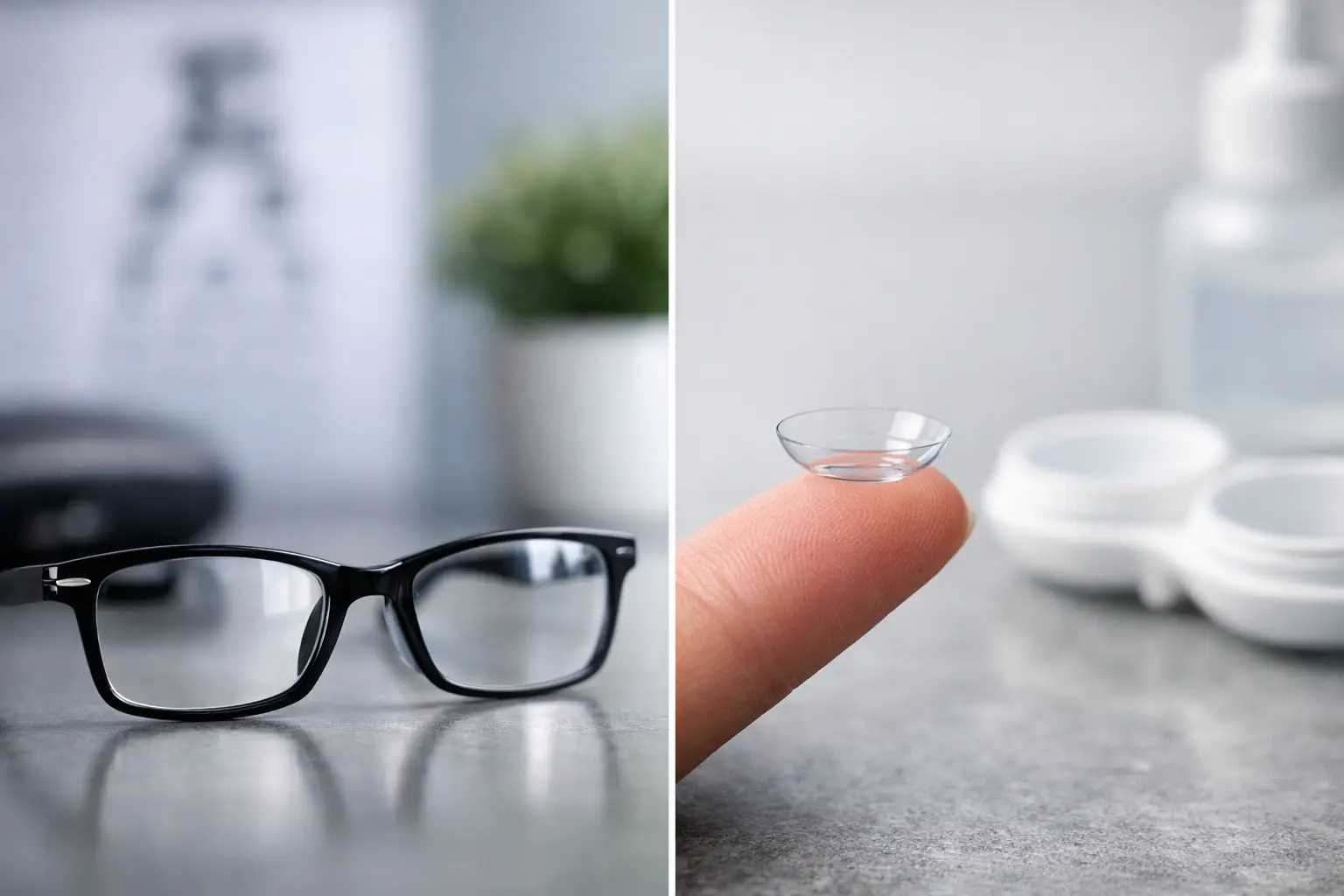
Glasses sit in front of the eye, while contact lenses rest directly on the tear film covering the eye. That basic difference affects how each option feels, performs, and fits into daily life.
Glasses are simple to use. Put them on, take them off, and clean the lenses as needed. They do not require touching the surface of your eye, and they can be an especially practical choice for children, people with dry eye symptoms, and anyone who prefers a low-maintenance routine. Modern frames also make glasses a personal style choice, with options ranging from understated and professional to bold and expressive.
Contact lenses offer a wider field of view because they move with the eye. There are no frame edges in your peripheral vision, and contacts will not fog up when you step indoors on a cold day. They are often preferred for sports, outdoor activities, special events, and jobs where protective eyewear or helmets are required.
Neither option is automatically better. The right choice is the one that supports clear vision without compromising comfort or eye health.
When Glasses May Be the Better Choice
Glasses are often the most straightforward option for patients who want reliable correction with minimal daily care. They can correct nearsightedness, farsightedness, astigmatism, and presbyopia. Multifocal and progressive lenses can be particularly helpful for adults who need vision support at more than one distance.
They also provide a physical barrier against wind, dust, and airborne debris. Prescription sunglasses add UV protection and can make driving, walking, and time outdoors more comfortable. For people who spend hours on digital devices, lens options can be selected based on visual demands, glare concerns, and the distance of the screen.
Glasses can be a good choice if your eyes frequently feel dry, irritated, or tired. Contact lenses can still be possible for some dry eye patients, but the underlying cause should be evaluated first. Dry eye may be related to tear quality, eyelid gland function, allergies, medications, screen time, or other health factors. Treating the condition can improve comfort whether you wear glasses, contacts, or both.
The trade-off is that glasses can slip, collect rain or smudges, and fog with temperature changes. They may also feel less convenient for certain activities. A well-fitted frame and properly positioned lenses make a meaningful difference, especially with stronger prescriptions or progressive lenses.
Glasses can be especially practical for
Patients who want the simplest daily routine, children who are not ready for contact lens handling, and people with significant dryness often do well with glasses as their primary correction. They are also a dependable backup for every contact lens wearer.
When Contact Lenses May Be the Better Choice
Contact lenses are designed for active, flexible vision. They can be useful for athletes, performers, frequent travelers, and people who dislike the feeling of frames on their face. Because contacts follow the movement of the eye, they offer stable vision in many directions of gaze.
There are more options than many people realize. Daily disposable lenses are worn once and discarded, avoiding the need for cleaning and storage. Biweekly and monthly lenses can be a cost-effective choice when cared for exactly as directed. Multifocal contacts can help adults who need reading support, while toric lenses are made to correct astigmatism. Specialized lenses may also be considered for certain corneal conditions or more complex prescriptions.
Contact lenses require responsibility. Every lens must be prescribed for your eyes, not just your prescription. The lens material, diameter, curvature, replacement schedule, and fit all affect safety and comfort. A lens that works well for a friend or family member may not be appropriate for you.
The most common contact lens problems are preventable. Sleeping in lenses that are not approved for overnight wear, topping off old solution, using tap water, and wearing lenses past their replacement date can increase the risk of irritation and infection. Redness, pain, light sensitivity, discharge, or a sudden change in vision should be assessed promptly.
Daily disposables versus reusable lenses
Daily disposable contacts are convenient and hygienic because you begin with a fresh pair each morning. They can be an excellent option for occasional wear, busy schedules, allergies, or patients who prefer not to manage cleaning solution.
Reusable lenses may cost less per day, but they require consistent cleaning, disinfecting, and storage. They should never be rinsed or stored in water. The best value is not simply the lowest price per box. It is the lens option you can wear safely and replace on schedule.
Comfort and Eye Health Should Lead the Decision
A contact lens should not feel painful, scratchy, or persistently noticeable. Mild awareness can happen during the adjustment period, but ongoing discomfort is a reason to return for an evaluation. Your doctor can check lens fit, tear film stability, eyelid health, allergy symptoms, and the surface of the cornea.
Some patients assume contact lens discomfort means they have to give up contacts entirely. Often, a change in lens material, replacement schedule, wearing time, or dry eye treatment can help. Others will be healthier and more comfortable wearing glasses most days and contacts only for specific activities. Both approaches are valid.
Eye health also changes over time. A lens that felt excellent several years ago may no longer be the best fit after changes in prescription, hormones, medications, tear production, or screen habits. Regular eye exams help catch those changes before discomfort becomes a bigger problem.
For children, contact lenses can be a safe option when the child and parent are ready to follow hygiene instructions consistently. They may be particularly useful for sports or for certain vision needs, including myopia management. Readiness matters more than age alone.
Cost: Look Beyond the First Purchase
Glasses usually involve a larger upfront purchase for frames and lenses, then can last for years with proper care. Costs vary based on prescription complexity, lens materials, coatings, and whether you choose a second pair or prescription sunglasses.
Contacts spread costs across the year. Daily lenses typically have a higher ongoing supply cost, while reusable lenses require solution and a case in addition to the lenses themselves. You will also need an up-to-date contact lens prescription and annual evaluation.
It is wise to include a backup pair of glasses in your plan even if contacts are your primary correction. If your eyes become irritated, you develop an infection, lose a lens, or simply need a rest day, glasses let you continue seeing clearly without pushing through discomfort.
A Practical Way to Choose
Start with your routine. If you spend most of your time at a desk, drive frequently, or want the lowest-maintenance solution, glasses may be your natural starting point. If you play sports, wear safety gear, or value unobstructed peripheral vision, contacts may offer advantages.
Next, consider your eyes. Dryness, allergies, eyelid inflammation, and certain corneal conditions can influence the safest option. Be honest about how likely you are to follow cleaning and replacement instructions. A reusable lens is only a good fit if you can maintain it properly.
Finally, consider combining both. Many patients wear glasses at home, during long screen sessions, or on days when their eyes feel tired, then choose contacts for work, exercise, or social plans. This approach can reduce contact lens wearing time while preserving the freedom contacts provide.
At Mountain Eye Care, a contact lens evaluation is about more than reading letters on a chart. It includes assessing how your eyes tolerate lenses and selecting options that support your long-term ocular health as well as your daily visual needs.
Clear, comfortable vision should never require you to ignore dry, red, or painful eyes. Whether you prefer frames, contacts, or a combination of both, choose the option that fits your life and gives your eyes the care they deserve.