
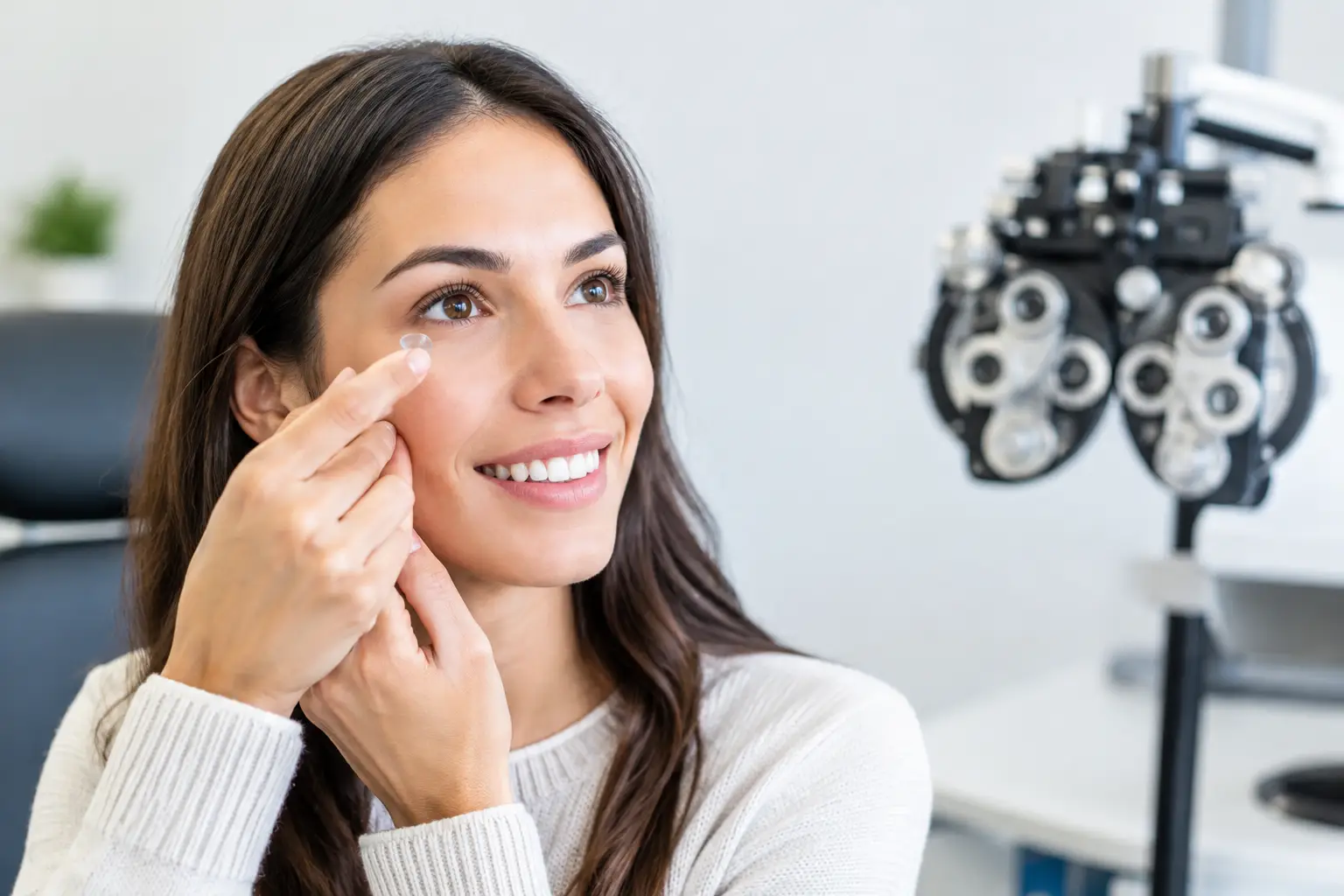
A contact lens prescription is not simply a glasses prescription printed on a different box. Contact lens exam benefits begin with fitting a medical device directly on your eye, then confirming that it provides clear vision without compromising comfort or eye health. The right lenses should work for your workday, screen time, sports, sleep schedule, and the natural condition of your eyes.
For many patients, contacts offer freedom from frames and dependable vision for active routines. But comfort that fades after a few hours, fluctuating vision, redness, or a lens that feels “normal enough” can signal that your current fit needs attention. A professional contact lens exam gives your eye doctor the information needed to make a precise recommendation rather than relying on trial and error.
What Makes a Contact Lens Exam Different?
A routine eye exam evaluates your overall vision and eye health. A contact lens exam includes that foundation while adding measurements and assessments specifically related to lens wear. Your doctor evaluates the front surface of the eye, eyelids, tear film, cornea, and the way a lens sits and moves with each blink.
The curve, diameter, material, power, and replacement schedule all matter. Even two lenses with the same prescription can feel and perform very differently because their design and material are not identical. Your doctor may also assess astigmatism, age-related focusing changes, dry eye, or myopia progression when recommending a lens option.
This process is especially valuable if you are new to contacts, returning after years in glasses, or considering a change from monthly lenses to daily disposables. It is also useful for patients who have accepted dryness or inconsistent vision as part of wearing contacts. Those symptoms are common, but they should not be dismissed.
Contact Lens Exam Benefits That Go Beyond Your Prescription
Clearer vision in real-life conditions
A contact lens exam confirms more than whether you can read the letters on a chart. Your doctor can evaluate how well your lenses correct vision at distance and near, how stable that vision remains, and whether your eyes work together comfortably. This matters when you drive at night, shift between screens and distance viewing, play sports, or spend long hours in detailed work.
Patients with astigmatism may benefit from toric lenses designed to maintain a stable orientation on the eye. Patients over 40 who notice reading difficulty may be candidates for multifocal lenses, monovision, or another strategy. There is no universal best choice. The right option depends on your vision demands and what feels natural during daily life.
A more comfortable fit
Dryness is one of the most frequent concerns among contact lens wearers. It can be caused by reduced tear quality, allergies, screen use, environmental conditions, certain medications, or an unsuitable lens material or schedule. Adding drops without identifying the cause may provide temporary relief, but it may not solve the underlying issue.
During the exam, your doctor looks for signs of dry eye and evaluates how the lenses interact with your tear film. A change in material, replacement frequency, cleaning system, or wearing schedule may make a meaningful difference. Some patients need dry eye treatment before their contact lens comfort can improve. Addressing both concerns protects the ocular surface and creates a better long-term wearing experience.
Earlier detection of eye health concerns
Contact lenses can reduce the amount of oxygen reaching the cornea, particularly when they are overworn, slept in without approval, or used beyond their replacement date. Poor hygiene can also raise the risk of irritation, inflammation, and serious infection.
A contact lens exam allows your doctor to look for early changes that you may not feel yet. These can include corneal staining, inflammation, blood vessel growth, reduced tear quality, or changes in the eyelids. Identifying concerns early gives you the chance to adjust habits or treatment before a small problem becomes a reason to stop wearing lenses altogether.
The examination also supports broader eye health monitoring. Depending on your needs, advanced testing such as retinal imaging, OCT, visual field testing, or pachymetry may be recommended as part of comprehensive care. Contacts should never take attention away from the health of the entire eye.
A safer lens replacement plan
Daily disposable, biweekly, and monthly lenses each have advantages. Daily disposables offer a fresh lens every morning and can be an excellent choice for patients with allergies, busy schedules, or limited time for cleaning. Reusable lenses may suit patients who prefer a particular design or want a different cost structure, provided they follow cleaning and replacement instructions carefully.
Your doctor can help you choose based on your eye health, prescription, lifestyle, and budget. The goal is not to place every patient in the same lens category. It is to recommend an option that you are likely to wear correctly and comfortably.
The Fitting Process: What to Expect
Your appointment begins with a discussion about your visual needs and contact lens history. Be honest about how long you wear your lenses, whether you nap or sleep in them, and any discomfort you experience. These details help your doctor identify patterns that may affect your eyes.
After evaluating your prescription and eye health, the doctor takes the measurements needed for lens fitting and may provide trial lenses. You will be asked to wear them long enough to judge comfort and vision in your usual routine. A follow-up evaluation confirms that the lenses fit properly and that your eyes remain healthy with wear.
If you are a first-time wearer, you will also receive hands-on instruction for insertion, removal, cleaning, storage, and replacement. This is practical training, not a formality. Proper handling lowers the chance of contamination, torn lenses, and preventable irritation.
Mountain Eye Care provides contact lens services alongside comprehensive eye health evaluations, giving Hamilton-area patients one place to address prescription changes, comfort concerns, dry eye symptoms, and lens ordering needs.
When Is It Time to Schedule an Exam?
Most contact lens wearers should have an annual exam, even if their vision seems unchanged. Lenses and prescriptions expire because your eye health and fit can change over time. An annual visit also keeps your prescription current for ordering lenses.
Schedule sooner if your lenses have become uncomfortable, your vision is blurry or variable, or you notice redness, discharge, light sensitivity, pain, or a feeling that something is stuck in your eye. Remove your lenses if these symptoms occur and contact your eye care provider promptly. Do not try to push through pain or redness with extra drops or a new pair of lenses.
You should also book an evaluation when you want to change brands, switch replacement schedules, try colored lenses, or explore multifocal contacts. Cosmetic lenses still require a prescription and professional fitting. A lens that changes eye color can cause the same risks as any other poorly fitted lens.
Getting More From Your Contact Lenses
The best-fitting lens still depends on good daily habits. Wash and dry your hands before handling contacts. Use only the solution recommended for your lens type, never water or saliva. Replace the lens case regularly, follow the prescribed replacement schedule, and do not share lenses with anyone else.
Most importantly, treat comfort as useful information. Healthy contact lens wear should not require you to tolerate burning, persistent dryness, or blurred vision by the end of the day. A contact lens exam is an opportunity to protect your eyes while finding a vision solution that genuinely fits your life. If your current lenses are falling short, a thoughtful evaluation can help you see and feel the difference.