
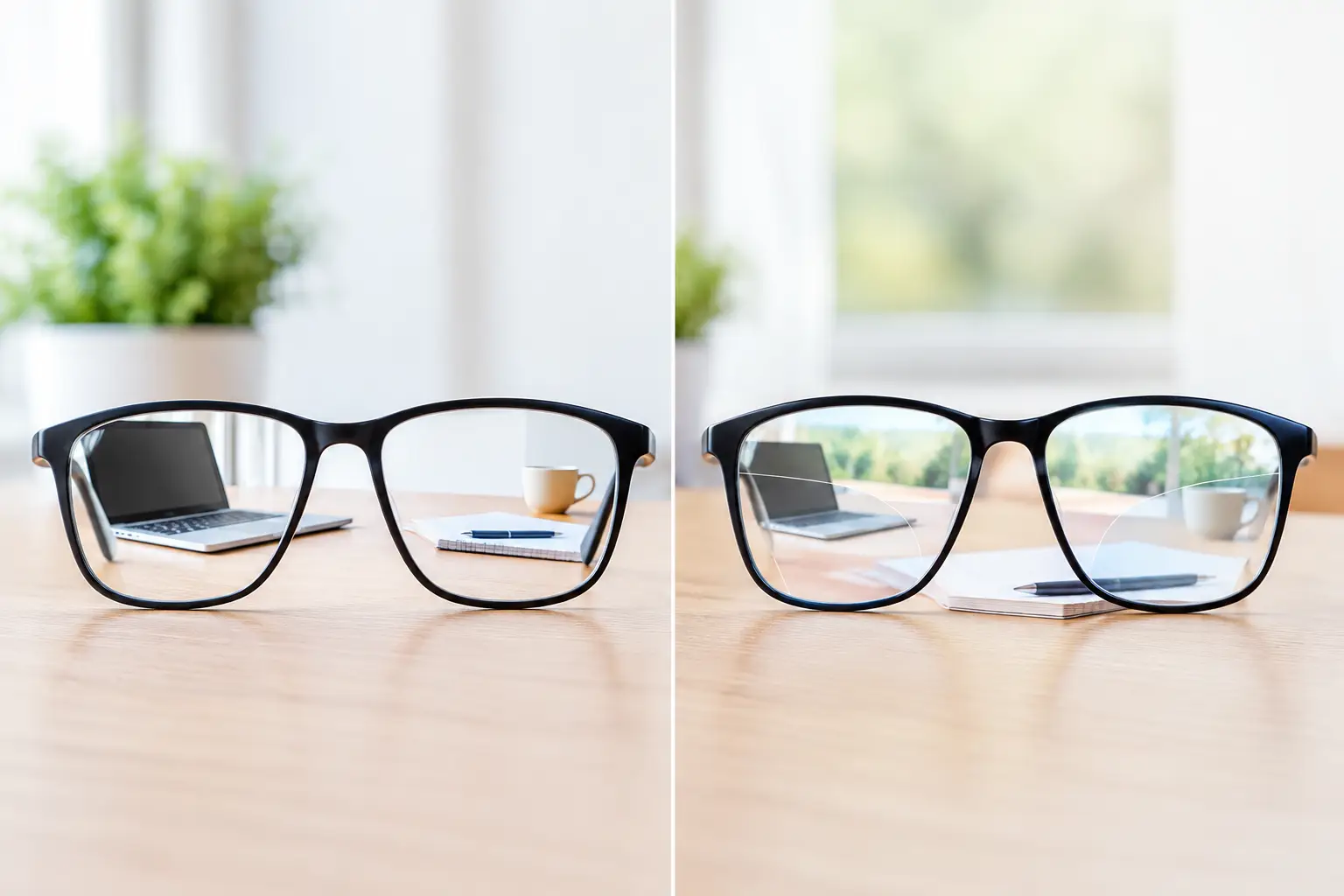
Reading a restaurant menu with your glasses off, holding your phone farther away, or switching between two pairs of eyewear are common signs that your visual needs may be changing. The choice between single vision versus multifocal lenses is not simply about age or convenience. It is about matching your prescription, daily routines, comfort expectations, and eye health needs with the lens design that will serve you best.
The right answer can be wonderfully straightforward for some patients and more nuanced for others. A detailed eye exam and a conversation about how you work, drive, read, use screens, and move through your day make the difference between glasses that are merely usable and glasses you genuinely enjoy wearing.
Single Vision Versus Multifocal Lenses: The Core Difference
Single vision lenses have one prescription power across the entire lens. They can be made for distance vision, near vision, or intermediate vision, such as computer work. If you are nearsighted, a distance single vision lens can help you see road signs, faces, and the front of a classroom clearly. If you need reading correction, a near single vision lens may make books, labels, crafts, and a phone screen easier to see.
Multifocal lenses contain more than one viewing zone in a single pair of glasses. Traditional bifocals separate distance and near powers with a visible line. Progressive lenses offer a gradual change in power from distance at the top of the lens to intermediate and reading vision lower down, without the visible line. Some multifocal designs are also created for specific activities, including office work or extended computer use.
The key distinction is simple: single vision lenses address one primary viewing distance, while multifocal lenses are designed for people who need correction at multiple distances. That distinction matters most when the eye loses some natural focusing flexibility, a normal age-related change called presbyopia.
When Single Vision Lenses Are the Better Fit
Single vision lenses are often the clearest, easiest option when your visual needs are focused at one distance. Children and teens commonly wear them for nearsightedness, farsightedness, or astigmatism. Adults who only need glasses for driving, watching television, or seeing a whiteboard may also prefer a single vision design.
They can be an excellent choice for dedicated tasks. A pair of computer glasses can be tailored to the distance between your eyes and monitor, reducing the need to tip your chin or strain to find a comfortable viewing zone. Reading glasses can offer a wide, stable near field for paperwork, hobbies, or close-up detail. For patients with a high prescription or certain visual conditions, a carefully selected single vision lens may also provide the most consistent vision across the lens.
There are practical trade-offs. If you need both distance and near correction, single vision lenses usually mean changing glasses. Some people are happy to keep a distance pair and a reading pair in convenient places. Others find that carrying, locating, and switching between pairs becomes frustrating during workdays, errands, travel, or social events.
When Multifocal Lenses Make More Sense
Multifocal lenses are often a strong solution for adults who see well at a distance with correction but have begun struggling with reading or arm’s-length tasks. Rather than reaching for separate readers, you can look through different areas of one lens to see across a range of distances.
Progressive lenses are a popular choice because they provide a more natural appearance than lined bifocals and support distance, dashboard, computer, and reading vision in one pair. They can be especially useful for people who move frequently between tasks, such as parents, teachers, retail professionals, healthcare workers, and active retirees. Premium progressive designs can be customized based on your prescription, frame selection, fitting measurements, and everyday visual demands.
However, multifocal lenses are not automatically the best choice for every situation. The usable reading and intermediate zones are smaller than those in a dedicated single vision pair, particularly in compact frames. People who perform detailed close work for hours at a time may still benefit from a separate occupational or computer pair, even if they wear progressives for most of the day.
What the Adjustment Period Feels Like
The most common concern about progressive lenses is adaptation. Because lens power changes gradually from top to bottom, your eyes and brain need time to learn where to look. Early on, some people notice mild peripheral blur or feel that they must turn their head more directly toward what they want to see. Stairs, curbs, and store aisles can feel slightly different during the first few days.
Many patients adapt quickly when the prescription, lens design, measurements, and frame fit are accurate. Wearing the new glasses consistently, rather than switching back and forth to an old pair, can help. A frame that sits too low, slides on the nose, or has been adjusted incorrectly can interfere with the intended viewing zones, which is why professional fitting and follow-up adjustments matter.
If discomfort persists, do not assume you simply have to live with it. The issue may be related to lens positioning, frame adjustment, prescription changes, dry eye, or a design that does not match your primary tasks. Your optometry team can assess the cause and recommend the appropriate next step.
Choosing Lenses Around Your Real Life
A useful lens recommendation starts with specific questions. Do you spend long hours on a desktop monitor? Do you drive after dark? Are you regularly reading music, recipes, tools, medication labels, or a phone? Do you need clear vision while moving around a workplace? The answers guide both the type of lens and the features added to it.
For driving and daily errands
A progressive lens can reduce the inconvenience of changing between distance glasses and readers. If glare is a concern, an anti-reflective treatment may improve comfort and appearance by reducing distracting reflections. Sunglasses with your prescription can also support clearer, more comfortable daytime driving.
For screen-heavy work
A standard progressive may work well for occasional computer use, but a dedicated occupational lens may provide a larger intermediate viewing zone for monitors and desk tasks. This is often a better match for people who spend much of their workday at a fixed screen distance. The best option depends on monitor placement, posture, and how often you need to look across the room.
For close work and hobbies
Readers or near single vision lenses can offer the widest and most stable close-up field for sewing, drawing, model work, books, and paperwork. Multifocals remain convenient for those who need to look up frequently, but a task-specific pair can reduce neck movement and visual fatigue during longer sessions.
For children and teens
Single vision lenses are often used for myopia correction, but lens selection should be part of a broader discussion when a child’s nearsightedness is progressing. Regular eye exams help track changes and determine whether additional myopia management options may be appropriate.
Your Prescription Is Only Part of the Decision
Two people with the same prescription may need different lens recommendations. Eye health, binocular vision, dryness, previous eyewear experiences, work requirements, and sensitivity to visual changes can all affect comfort. Patients with low vision, neurological visual concerns, or complex prescriptions may require specialty optical solutions beyond a standard pair of glasses.
Frame choice also has a real impact. Multifocal lenses need enough vertical space to provide comfortable distance, intermediate, and near zones. A frame should fit securely and suit your facial features, but it should also support the optical design you select. Choosing a frame first and discussing lenses later can limit options unnecessarily.
At Mountain Eye Care, a comprehensive eye exam and an experienced optical fitting process help connect clinical findings with the demands of your everyday life. That approach is particularly valuable when you are trying multifocal lenses for the first time or have struggled with glasses in the past.
The best pair of glasses should make your routine feel easier, not force you to work around your eyewear. Bring up the moments when your vision feels least reliable at your next appointment, whether that is driving at night, reading a screen, or seeing details up close. Those details give your eye care team the information needed to recommend lenses that support clearer, more comfortable vision where you need it most.