
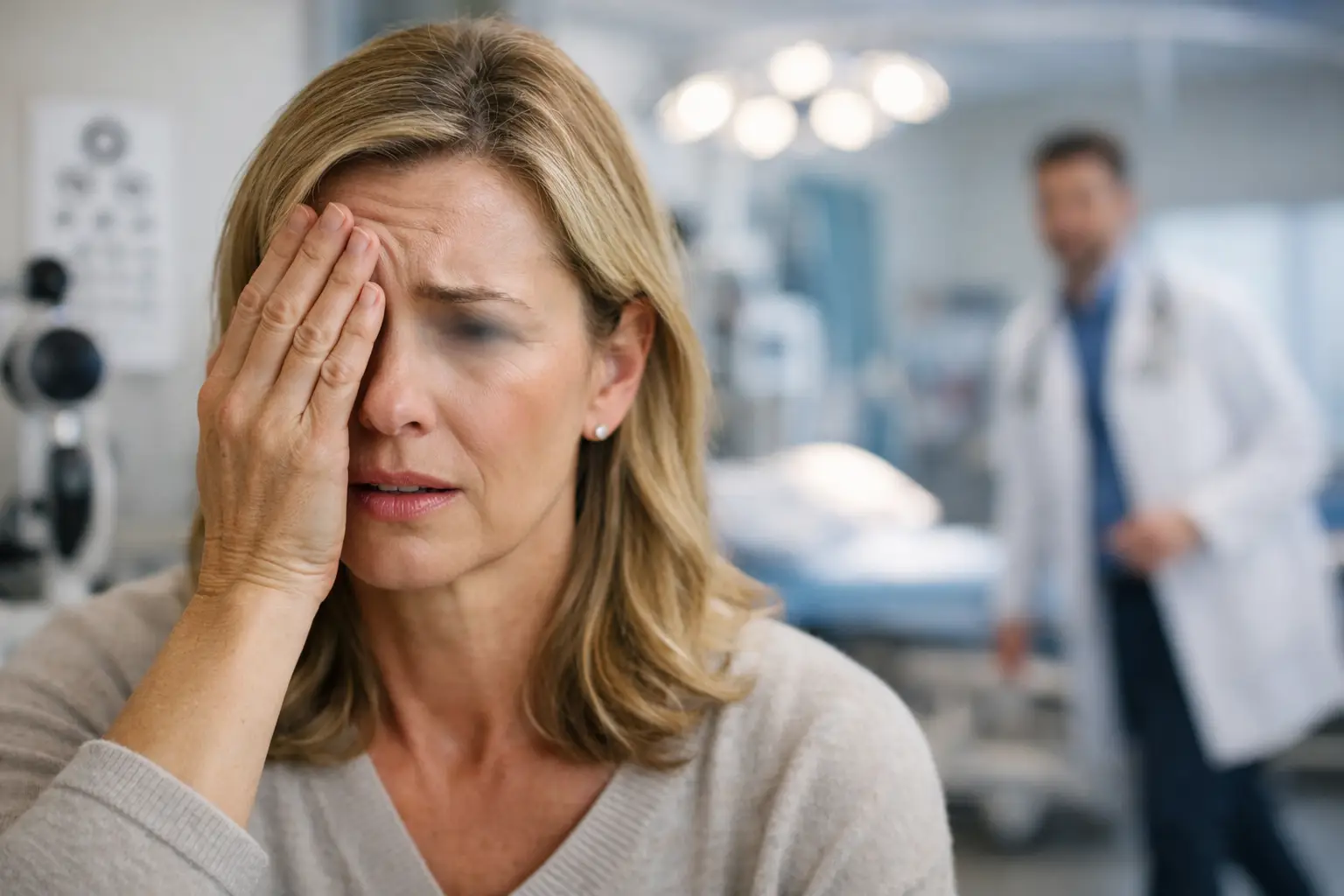
A splash of cleaner at the sink, a hockey puck to the face, or a curtain-like shadow across your vision can change the plan for your day immediately. Emergency eye care is not just for dramatic injuries. Sudden vision changes, severe pain, flashes of light, and new double vision can all signal problems that need prompt assessment to protect your sight.
The safest response is to take symptoms seriously without trying to diagnose them at home. Some eye concerns can be managed with a same-day optometry appointment. Others require an emergency department or a call to 911. Knowing the difference helps you act quickly and avoid making the injury worse.
When Emergency Eye Care Is Needed Right Away
Sudden loss of vision in one or both eyes is always urgent. This includes complete vision loss, a new dark area in your field of view, a gray curtain or veil, or a major decline in clarity that does not clear with blinking. These symptoms can be associated with retinal, circulation, neurologic, or other serious conditions. Do not drive yourself if your vision is impaired. Arrange transportation or call emergency services.
Severe eye pain also deserves immediate attention, particularly when it occurs with nausea, vomiting, a severe headache, halos around lights, redness, or blurred vision. Pain is not always proportional to the seriousness of an eye condition, so mild discomfort should not be ignored if vision has changed or the eye has been injured.
A blow to the eye, face, or head can cause more damage than is visible from the outside. Seek urgent assessment after a high-impact injury, especially if there is vision loss, double vision, bleeding, a misshapen pupil, trouble moving the eye, or increasing swelling. Children should be evaluated promptly after an eye injury because they may have difficulty explaining what they are seeing.
Chemical exposure is another true emergency. Household cleaners, pool chemicals, solvents, industrial products, and even some cosmetics can damage the surface of the eye quickly. Start rinsing the eye immediately with clean, lukewarm water. Hold the eyelids open and continue flushing for at least 15 to 20 minutes. Do not wait to find eye drops or contact a clinic before rinsing. After flushing, seek urgent medical care and bring the product container or a photo of its label when possible.
Flashes, Floaters, and Curtain-Like Shadows
A few longstanding floaters may be harmless, especially if an eye doctor has already evaluated them. A sudden shower of new floaters, repeated flashes of light, or a shadow moving across side vision is different. These symptoms can occur when the vitreous gel inside the eye changes, and in some cases they can indicate a retinal tear or detachment.
A retinal problem is not something to watch for a few days to see whether it improves. Same-day emergency eye care is the right step, particularly for people who are highly nearsighted, have had recent eye surgery or trauma, have a family history of retinal detachment, or notice a curtain or missing area of vision.
Symptoms That May Be More Than an Eye Problem
Vision changes can sometimes be part of a medical emergency affecting the brain or circulation. Call 911 for sudden vision loss or double vision with facial drooping, weakness or numbness on one side, difficulty speaking, severe dizziness, confusion, or a sudden intense headache. These symptoms may indicate a stroke or another neurologic emergency, where every minute matters.
What to Do Before You Are Seen
The first goal is to prevent further damage. Do not rub an injured eye, even if it feels irritated or contains debris. Rubbing can worsen a scratch, push a foreign object deeper, or increase pressure on an already injured eye.
If something is embedded in the eye or eyelid, do not attempt to remove it. Cover the eye loosely with a clean paper cup or protective shield if available, taking care not to apply pressure. Avoid using tweezers, cotton swabs, or magnets. For a cut, puncture, or protruding object, go directly to an emergency department.
For loose dust, sand, or an eyelash, gentle rinsing with clean water or sterile saline may help. Stop if the sensation persists, vision remains blurry, pain increases, or you cannot comfortably open the eye. A corneal scratch can feel like a grain of sand that will not come out, and it needs professional assessment rather than repeated attempts to remove something that may no longer be there.
Contact lens wearers should remove the lens only if it comes out easily and the eye has not suffered a penetrating injury. Do not put the lens back in, and do not use leftover prescription drops unless an eye doctor instructs you to do so. Red, painful eyes in contact lens wearers require prompt attention because certain infections can progress quickly.
If you are heading for an urgent appointment or emergency department, bring your glasses, current medications, a list of allergies, and the name of any eye drops you use. If the issue followed a workplace incident, note the time of injury and the material involved. Clear details help the care team make faster decisions.
When a Same-Day Eye Exam May Be Appropriate
Not every eye problem requires the emergency department. A same-day eye exam may be appropriate for a painful red eye without trauma, persistent foreign-body sensation, a possible corneal scratch, sudden onset of flashes or floaters without vision loss, or a contact lens-related concern. An optometrist can assess vision, eye pressure, the cornea, retina, and other structures using specialized equipment, then determine whether treatment or referral is needed.
The trade-off is simple: if symptoms are severe, rapidly worsening, or connected to a serious injury or possible stroke, do not delay emergency medical care while trying to arrange an office visit. When symptoms are concerning but stable, calling an eye care practice can help you determine whether a same-day assessment is the best next step.
At Mountain Eye Care, advanced diagnostic tools can support a thorough evaluation when urgent eye symptoms need attention. Retinal imaging, OCT scans, visual field testing, and careful examination help identify concerns that are not visible in a mirror. The goal is not only to relieve discomfort but also to identify threats to long-term ocular health as early as possible.
Common Mistakes That Can Make an Eye Emergency Worse
Using redness-relief drops is a frequent mistake. These products may temporarily reduce redness, but they do not treat an injury, infection, high eye pressure, or retinal problem. They can also mask symptoms that should be evaluated.
Another mistake is using a patch over a painful eye. Patching may trap bacteria and create a warmer environment that is not appropriate for many corneal injuries or infections. Unless a clinician specifically tells you otherwise, protect the eye from further trauma without pressing on it.
It is also wise to avoid driving with blurred, doubled, or partially blocked vision. Even when one eye seems unaffected, depth perception and reaction time can be compromised. Ask a friend or family member for help, use a rideshare service, or call emergency services when symptoms are significant.
Protecting Your Eyes After Urgent Treatment
Follow-up is often part of emergency eye care, not an optional extra. Surface injuries may need rechecks to confirm healing. New flashes and floaters may require dilated retinal examinations. Infections, inflammation, pressure concerns, and trauma can change quickly, even after initial treatment starts.
Use prescribed drops exactly as directed, keep follow-up appointments, and return sooner if pain, redness, discharge, light sensitivity, or vision worsens. If protective eyewear is recommended for work, sports, or home projects, wear it consistently. The right safety glasses can prevent many injuries that happen in only a moment.
Your eyesight is too valuable to gamble on whether a sudden symptom will pass. When vision changes quickly, pain is severe, or an injury involves chemicals or impact, seek help promptly and let an eye care professional guide the next step.