A new prescription can feel like a simple number change, but the right vision correction affects far more than what you can read on a chart. It can influence how comfortably you work at a screen, drive after dark, play sports, recognize faces, and manage the close-up tasks that fill a normal day. The best option is not always the strongest prescription or the most popular frame. It is the solution that supports your vision, eye health, comfort, and routine.
At Mountain Eye Care, vision correction begins with a careful eye examination and a conversation about how you use your eyes. Whether you are choosing your child’s first glasses, considering contact lenses, or looking for help with more complex vision needs, clear answers matter.
Vision Correction Starts With a Complete Eye Exam
An eye exam does more than determine whether you are nearsighted, farsighted, or have astigmatism. Those measurements are essential, but they are only one part of the picture. Your doctor also evaluates the health of the front and back of the eye, checks how your eyes work together, and looks for changes that may affect vision now or in the future.
Advanced testing can be particularly valuable when a standard prescription does not fully explain your symptoms. Retinal imaging, OCT scans, visual field testing, and corneal measurements can help identify concerns that may require medical care, monitoring, or a more specialized optical solution.
This is why an online prescription estimate or a quick retail screening cannot replace a comprehensive exam. If your eyes feel strained, your vision fluctuates, or your new glasses never seem quite right, the issue may be more than a small prescription adjustment.
Eyeglasses: Reliable Vision Correction for Everyday Use
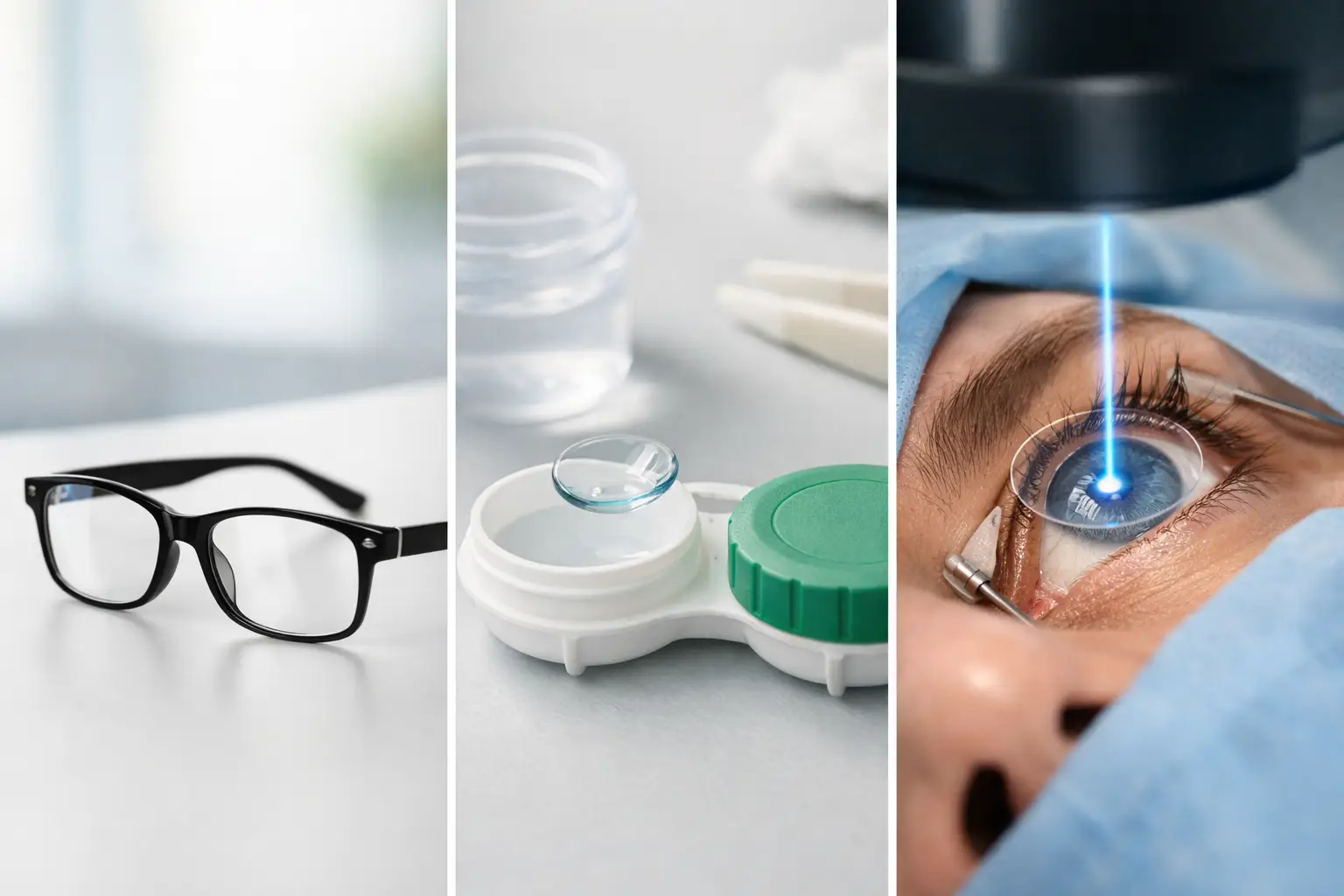
Prescription glasses remain one of the most dependable and flexible choices for children, adults, and seniors. Modern lens materials can be thinner, lighter, and more durable than many people expect, while lens treatments can reduce glare, improve comfort, and add scratch resistance.
The best lens design depends on your prescription and daily demands. Single-vision lenses correct one viewing range, such as distance or reading. Bifocals offer separate zones for distance and near tasks. Progressive lenses provide a gradual range of vision from far away to up close without the visible line found in traditional bifocals.
Progressives can be an excellent option for people who move frequently between driving, computer work, shopping, and reading. They do require a short adaptation period for some wearers, and precise measurements are critical. Frame fit, lens position, and the way a patient naturally holds their head all affect performance. A quality fitting is not an extra step. It is part of the prescription.
Specialty lenses can also make a meaningful difference. Computer-focused lenses may reduce the strain of prolonged intermediate work. Prescription sunglasses provide clear, protected vision outdoors. For patients with significant visual limitations, bioptic telescopes and low-vision devices may help make specific activities more manageable.
Contact Lenses Offer Flexibility, With the Right Fit
Contact lenses can provide excellent vision correction for people who prefer an unobstructed field of view, participate in sports, or simply enjoy the convenience of not wearing glasses every day. They are available in daily disposable, two-week, monthly, multifocal, toric, and specialty designs.
A contact lens prescription is different from a glasses prescription. The lens sits directly on the eye, so the doctor must assess the shape of the cornea, tear film quality, lens movement, and how your eyes respond over time. A lens that seems similar on paper may not offer the same comfort or clarity in real life.
Daily disposable lenses are often a practical choice for patients who value convenience and want a fresh lens each day. Reusable lenses can be a good fit for others, provided they are cleaned and replaced exactly as directed. Multifocal contacts may help patients who need both distance and near correction, although results vary based on prescription, eye health, and visual expectations.
Dry eye deserves special attention. Contact lenses may still be possible, but comfort can be affected when the ocular surface is irritated or the tear film is unstable. Treating dry eye first, adjusting lens material, or choosing a different replacement schedule may lead to a far better experience.
Children Need More Than a Clear Distance Prescription
For children, vision correction supports learning, confidence, coordination, and daily development. A child may not say that their vision is blurry because they may not realize their experience is different from anyone else’s. Squinting, sitting close to screens, losing their place while reading, frequent headaches, or avoiding close work can all be reasons to schedule an eye exam.
Myopia, or nearsightedness, is especially important to monitor in children. A stronger glasses prescription can help a child see clearly, but it does not necessarily slow the progression of myopia. Myopia control options may be considered when a child’s prescription is changing over time. Depending on the individual case, treatment may involve specialized contact lenses, glasses, or other doctor-directed approaches.
The right plan depends on age, prescription, eye health, family history, lifestyle, and the child’s ability to follow treatment instructions. Regular follow-up is essential because the goal is not only clear vision this school year, but healthier long-term visual outcomes.
When Clearer Vision Requires Specialty Care
Not every visual concern is solved by routine glasses or contacts. Some patients continue to experience difficulty after an updated prescription because of dry eye, binocular vision problems, eye disease, neurological changes, or low vision.
Low-vision assessments can help patients make the most of remaining sight when standard correction is no longer enough. The focus may include magnification, lighting, filters, telescopic devices, and practical strategies for reading, hobbies, mobility, and everyday independence.
Neurovisual assessments may be appropriate after concussion, brain injury, or other neurological events that affect visual processing, eye movement, focusing, or coordination. Symptoms can include headaches, double vision, motion sensitivity, poor concentration, and discomfort in busy visual environments. These concerns deserve a detailed evaluation rather than an assumption that a stronger prescription will solve them.
Dry eye treatment can also be an important part of better vision. When the eye surface is compromised, vision may blur between blinks and contact lenses may become difficult to tolerate. Treatment options can range from at-home care and prescription therapies to in-office services such as IPL or amniotic membrane treatment when clinically appropriate.
How to Choose the Right Vision Correction Option
The most useful question is not, “What is the best type of vision correction?” It is, “What will work best for my eyes and my life?” A truck driver who struggles with night glare, a student who spends hours on a laptop, a parent who wants simple daily contacts, and a senior with reduced vision may all need very different recommendations.
Share the details that affect your day during your appointment. Mention screen time, driving habits, sports, close work, headaches, dry eye symptoms, and any times when your current correction falls short. Bring your existing glasses if you have them. The condition of the lenses and frame can provide useful information about fit, wear patterns, and the challenges you are experiencing.
Cost also matters, and a good plan should be practical as well as clinically appropriate. Your doctor and optical team can help you prioritize where premium lens features are likely to add value and where a simpler option may meet your needs. The goal is informed choice, not one-size-fits-all vision care.
Clear vision should feel dependable, not like something you have to work around. A comprehensive exam and properly fitted correction give you a stronger foundation for the tasks, relationships, and moments you do not want to miss.