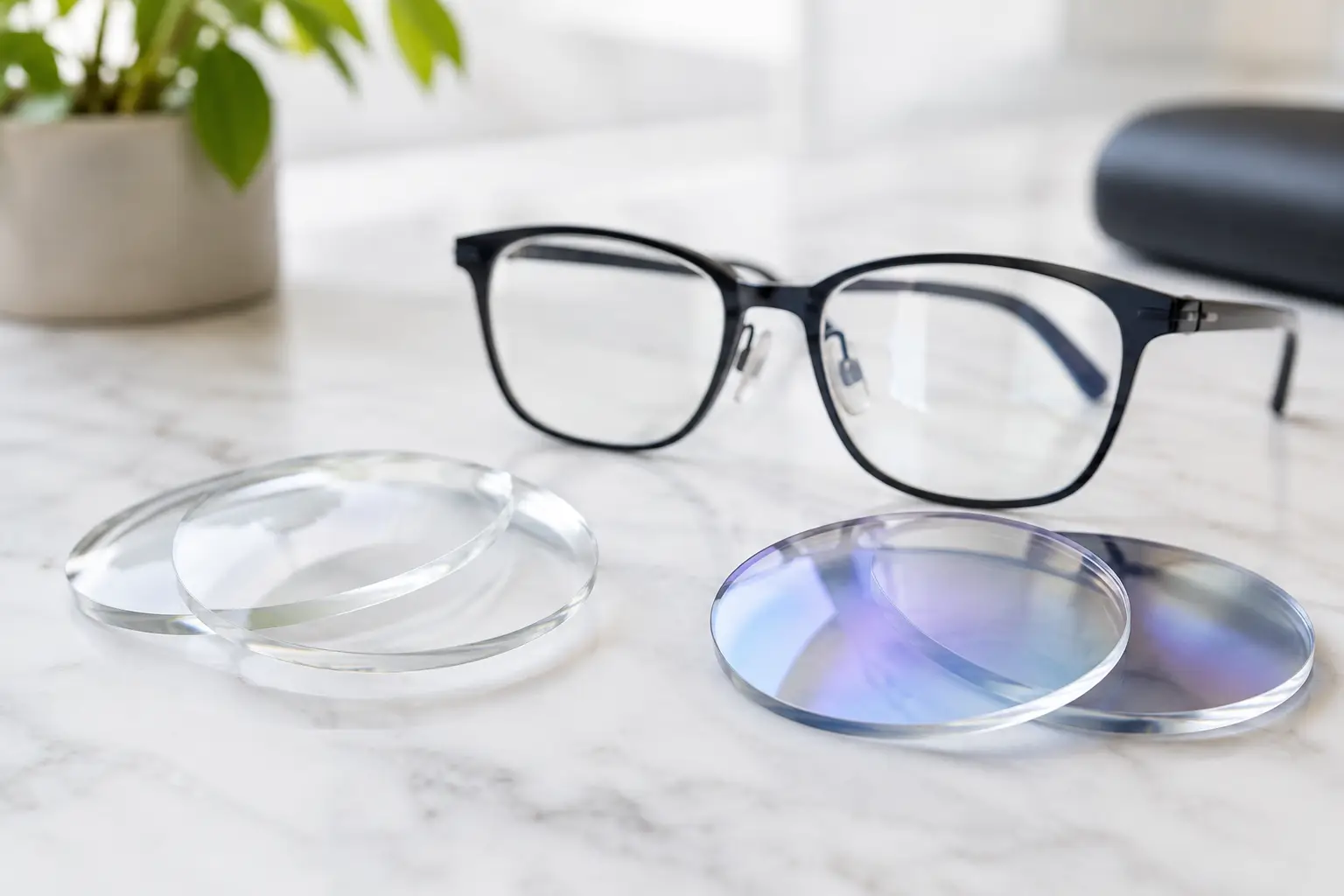
A new pair of glasses can look completely different depending on the lens material behind the frame. When patients ask about polycarbonate versus high index lenses, they are usually asking two practical questions: Will my glasses be safe and comfortable, and will they look good on me? The best answer depends on your prescription, frame choice, daily activities, and visual priorities.
Both materials are lighter than traditional glass lenses and can be excellent options. They are not interchangeable, though. Polycarbonate leads in impact resistance, while high-index materials are designed to reduce lens thickness for stronger prescriptions. Understanding the trade-offs before you choose helps you invest in lenses that work well long after you leave the optical center.
Polycarbonate versus high index: the core difference
Polycarbonate is a highly impact-resistant plastic lens material. It is naturally thinner and lighter than standard plastic, blocks ultraviolet light, and is a common recommendation for children, active adults, safety-minded wearers, and many rimless or semi-rimless frame styles.
High-index lenses are made from materials that bend light more efficiently than standard plastic. Because they bend light more effectively, they can achieve the same prescription power with less material. For someone with a moderate-to-strong prescription, that can mean noticeably thinner, lighter-looking lenses.
The term “high index” is not one single material. It describes a range of lens materials with different refractive indexes, commonly 1.60, 1.67, and 1.74. In general, a higher number can produce a thinner lens for the same prescription, although the highest available index is not automatically the best choice for every patient.
When polycarbonate makes sense
Polycarbonate’s main advantage is protection. It is significantly more resistant to impact than standard plastic and is an especially practical choice where accidents, sports, or rough handling are part of daily life. For children and teens, this added durability is often a deciding factor. Kids also tend to benefit from a lens that is light enough for comfortable all-day wear.
Polycarbonate can also work well for adults who work in active settings, spend time outdoors, or simply want added peace of mind. It is a common material for sports eyewear, protective eyewear, and everyday glasses when prescription strength is low to moderate.
Its thinner profile compared with basic plastic is another benefit. If your prescription is relatively mild, polycarbonate may provide a clean, comfortable result without the cost of a higher-index material. It also offers built-in UV protection, though sunglasses and clear lenses alike still benefit from the right coatings for their intended use.
There are limitations. Polycarbonate has a lower optical clarity rating than some high-index materials and standard plastic. Many people will not notice a difference in routine use, but patients who are highly sensitive to visual detail, wear glasses for demanding tasks, or have a strong prescription may prefer another option. Polycarbonate is also softer than some lens materials, making a quality scratch-resistant coating essential.
When high-index lenses are worth it
High-index lenses are most valuable when a prescription would otherwise create thick, heavy edges or a prominent lens profile. Nearsighted prescriptions often become thicker at the edge of the lens, while farsighted prescriptions are thicker toward the center. High-index materials reduce bulk in either case, particularly when paired with a frame size and shape that suit the prescription.
For many patients, high-index lenses improve more than appearance. Less lens material can reduce weight on the bridge of the nose and behind the ears. This can make glasses more comfortable during a full workday and may help keep a frame from sliding forward.
A thinner lens may also create less magnification or minification of the eyes behind the glasses. With a strong farsighted prescription, lenses can make the eyes appear larger. With strong nearsightedness, they can make the eyes appear smaller. High-index lenses do not eliminate these effects, but they can reduce the lens thickness that contributes to them.
High-index materials can be an excellent match for many premium frame styles, especially smaller, well-fitted frames. They are also popular for progressive lenses, where comfort, cosmetics, and precise optical design all matter. A higher-index lens is often a sound upgrade for stronger prescriptions, but the recommendation should be based on your actual prescription rather than a one-size-fits-all sales approach.
Clarity, coatings, and real-world vision
Lens material is only one part of visual performance. A high-quality anti-reflective coating can have a major effect on comfort and appearance. It reduces distracting reflections from headlights, screens, and overhead lights, while allowing more light to pass through the lens. It can also make your eyes easier to see in photos and face-to-face conversations.
Anti-reflective coating is particularly valuable with high-index lenses because these materials can reflect more light than standard plastic. Without it, reflections can be more noticeable on the lens surface. A premium coating may also include hydrophobic and oleophobic properties, making smudges easier to clean and helping the lenses resist water and oils.
For outdoor use, photochromic lenses or prescription sunglasses may be worth considering. UV protection matters at every age, and glare reduction from polarized sunglasses can be especially helpful for driving, water activities, and bright pavement. The ideal combination is not always the thinnest lens. It is the lens package that supports how you actually see and live.
The role of your frame selection
A frame can make a meaningful difference in lens thickness, weight, and appearance. Larger frames generally require larger lenses, which can increase edge thickness for a nearsighted prescription. A smaller frame with your eyes centered in the lens often produces a thinner, more balanced result.
Frame material matters, too. A bold acetate frame can help conceal lens edges, while a thin metal frame may make a thick edge more visible. Rimless frames require appropriate lens materials and careful fitting because the lens is drilled and mounted directly to the hardware. Polycarbonate is often considered for its impact resistance, but your optician will assess whether the lens design, prescription, and frame construction are a suitable combination.
This is why it is helpful to choose frames and lenses together rather than treating them as separate purchases. A trained optical professional can show you how different materials will work with the specific frame you like.
Cost and value: choosing the right upgrade
Polycarbonate is often less expensive than high-index options, making it a practical value for many prescriptions. High-index lenses cost more because of the material and manufacturing involved, especially at higher index levels. If your prescription is mild, the visible difference in thickness may be small enough that the upgrade is unnecessary.
On the other hand, a stronger prescription can make high index a worthwhile investment. If a thinner lens improves comfort, reduces distracting weight, and helps you feel more confident in your chosen frame, its value extends beyond appearance. The right decision is not about buying the most expensive lens. It is about avoiding a lens that feels too heavy, looks thicker than expected, or does not support your daily visual needs.
Insurance coverage can also affect the final price. Lens benefits may cover a base material while leaving upgrades, coatings, or specialty designs as an out-of-pocket expense. Ask for a clear explanation of your options so you can compare the practical benefit of each recommendation.
A practical way to decide
Polycarbonate is often a strong choice if safety is your top concern, you are selecting glasses for a child, you have a mild-to-moderate prescription, or you need durable everyday eyewear. High index is often the better fit if your prescription is stronger, you want a thinner cosmetic profile, you are choosing a larger or more delicate frame, or all-day comfort is a high priority.
There are exceptions. Someone with a moderate prescription may prefer high index for a particular frame, while a person with a strong prescription may prioritize the extra durability of polycarbonate for work or sports. Your prescription type, pupillary distance, frame measurements, and lens design all influence the final result.
At Mountain Eye Care, a comprehensive eye exam and professional optical fitting provide the information needed to make that choice with confidence. Bring your daily routine, your preferred frame style, and your budget into the conversation. The best lenses should feel like a natural part of your day, not a compromise you notice every time you put on your glasses.