
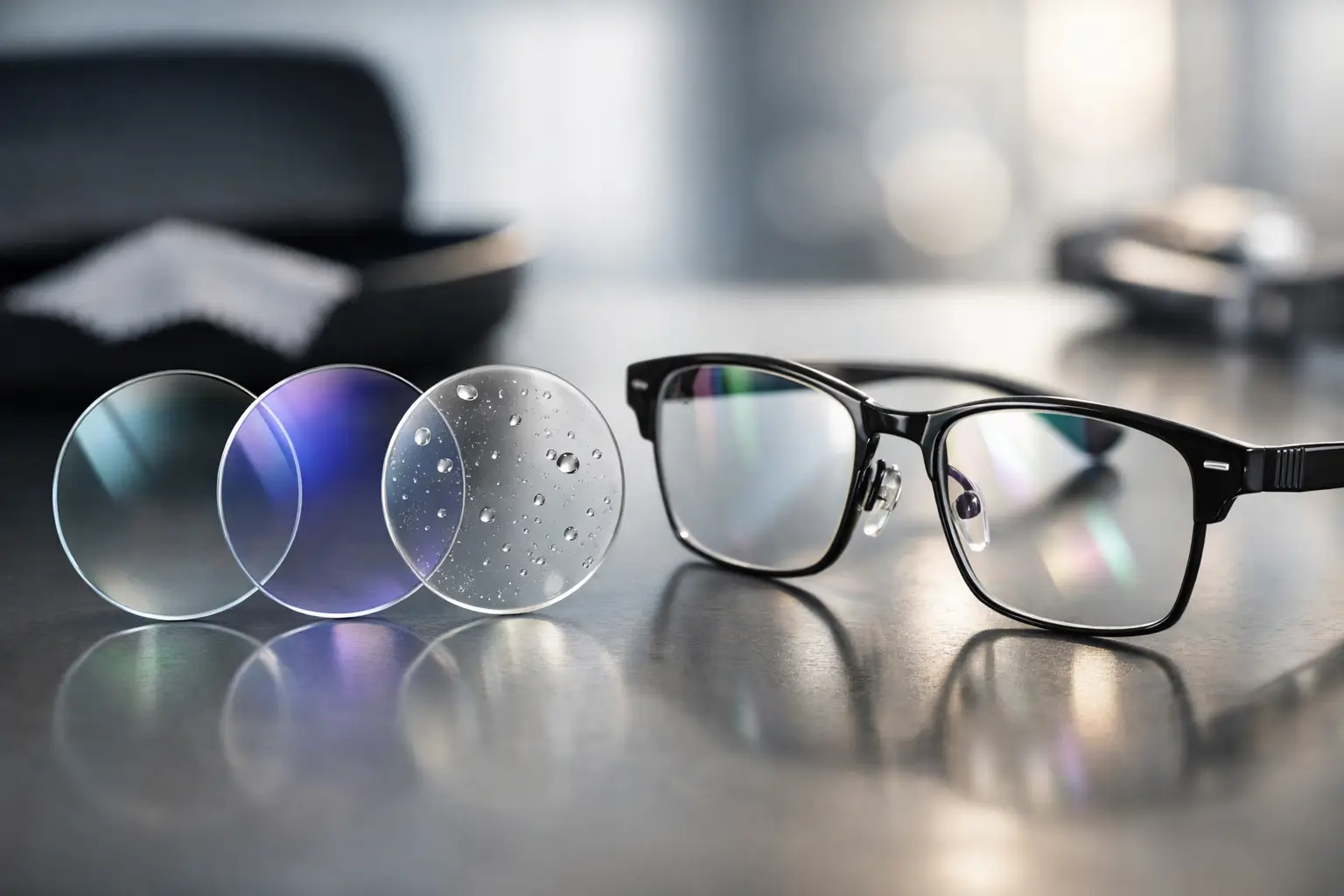
A new pair of glasses can look great in the optical center, then become frustrating the first time headlights flare across the lenses, fingerprints smear your view, or a tiny scratch catches the light. The best lens coatings for glasses are not simply upgrades at checkout. The right combination can make prescription lenses clearer, easier to clean, more durable, and more comfortable for the way you actually use them.
For most patients, anti-reflective coating is the strongest place to start. Other coatings can add meaningful benefits, but the best choice depends on your prescription, lens material, daily routine, work environment, and whether the glasses are for a child, an adult, or a dedicated pair of sunglasses.
Best Lens Coatings for Glasses: Start With Anti-Reflective
Anti-reflective coating, often called AR coating, reduces reflections from both the front and back surfaces of a lens. Without it, light can bounce off the lens and create distracting glare, particularly at night, under fluorescent lighting, or when looking at digital screens.
AR coating is especially valuable for higher prescriptions and thinner high-index lenses, which can naturally reflect more light. It also helps other people see your eyes more clearly rather than seeing bright reflections in your lenses. That matters in conversation, video calls, photographs, and professional settings.
For drivers, AR coating can reduce the glare caused by headlights, streetlights, and reflections from the dashboard. It does not turn night driving into perfect daytime vision, and it cannot correct vision changes caused by cataracts, dry eye, or other eye health concerns. Still, it is one of the most practical improvements available for everyday prescription glasses.
Many premium AR treatments also include a top layer that resists water, oils, dust, and smudges. These layers make a major difference in day-to-day cleaning, which is why patients often notice that higher-quality coatings stay clearer longer between wipes.
Scratch-Resistant Coating Helps Protect Your Lenses
Modern plastic lenses are lighter and safer than traditional glass lenses, but they are also more vulnerable to surface wear. Scratch-resistant coating adds a hardened layer designed to improve durability. It is recommended for nearly every pair of prescription glasses, especially for children, active adults, and anyone who regularly takes glasses on and off throughout the day.
The key word is resistant, not scratch-proof. No lens coating can prevent every scratch. Placing glasses face-down on a table, storing them loose in a purse or vehicle, or cleaning dry lenses with a shirt can still damage the surface.
A protective case and proper cleaning habits extend the life of any coating. Rinse lenses with lukewarm water first to remove grit, use a cleaner approved for eyeglasses, then dry with a clean microfiber cloth. Paper towels, tissues, and clothing can hold particles that leave fine scratches behind.
UV Protection Is Essential Outdoors
Ultraviolet protection helps shield the eyes from UVA and UVB exposure. Long-term UV exposure is associated with several eye health concerns, including cataracts and damage to the delicate tissues around and inside the eye. UV protection is not only for bright summer days. Sunlight reflects from snow, water, pavement, and vehicle surfaces throughout the year.
Many lens materials provide some built-in UV filtering, while other lenses receive UV protection through a treatment. Your optician can confirm the level of protection included with the lenses you are considering. For outdoor eyewear, look for lenses that provide full UV protection rather than relying on lens darkness alone. Dark lenses without adequate UV protection can allow the pupil to widen while UV light still reaches the eye.
For children, UV protection is particularly worthwhile. Young eyes may be more susceptible to cumulative sun exposure, and children often spend more time outdoors than adults.
Hydrophobic and Oleophobic Coatings Make Cleaning Easier
Hydrophobic coatings repel water. Oleophobic coatings resist oils, including the fingerprints and facial oils that can quickly cloud lenses. These treatments are often included as part of a premium anti-reflective package rather than selected separately.
They may sound like small conveniences, but they can be valuable for anyone who cleans their glasses frequently. A lens that sheds water more easily is more pleasant to wear in rain, snow, and humid conditions. An oil-resistant surface also means less rubbing and wiping, which can help preserve the lens over time.
These coatings will not eliminate the need to clean your glasses, and performance can gradually decline after years of wear. However, for people who want low-maintenance lenses, they are usually worth choosing.
Blue-Light Filtering: Helpful for Some, Not Essential for Everyone
Blue-light filtering coatings are frequently discussed by people who use computers, tablets, and phones for much of the day. These lenses may reduce a portion of blue light transmitted through the lens, and some people prefer the visual comfort they provide under certain indoor lighting conditions.
The evidence does not support blue-light coatings as a universal solution for digital eye strain, headaches, or sleep problems. Screen-related discomfort is often tied to reduced blinking, dry eyes, glare, uncorrected prescription changes, poor ergonomics, and long periods of near work. A coating cannot address all of those causes.
If screens leave your eyes tired or dry, an eye exam can help identify whether your prescription, lens design, tear film, or visual habits are contributing. In many cases, AR coating, appropriate lighting, regular visual breaks, and dry eye care are more important than a blue-light filter. Blue-light coating can still be a reasonable preference, but it should not be oversold as a medical necessity.
Coatings for Sunglasses and Specialty Lenses
Prescription sunglasses benefit from the same core protections as clear glasses: scratch resistance, UV protection, and often anti-reflective treatment on the back surface. Backside AR can reduce reflections that enter from behind the wearer, such as sunlight bouncing off the cheeks or the inside of a car.
Polarization is another excellent option for many outdoor activities, although it is a lens filter rather than a surface coating. It reduces reflected glare from water, roads, snow, and other flat surfaces. It can be particularly useful for driving, fishing, boating, and time near bright pavement. Some people who rely on certain digital displays may prefer non-polarized lenses, since screens can appear dim or change color at certain angles.
Mirror finishes are primarily a style choice, though they can also reduce some light transmission. They should be paired with full UV protection and a quality lens material. For sports, safety, and occupational eyewear, lens impact resistance and frame fit may matter more than adding every available coating.
Choosing the Right Combination for Your Routine
The best package is usually not the one with the longest list of upgrades. It is the one that addresses how you wear your glasses. A person who drives after dark may prioritize premium AR coating. Someone working outdoors needs dependable UV protection and may benefit from prescription sunglasses or photochromic lenses. A parent choosing glasses for a child may focus on scratch resistance, easy cleaning, and a secure fit.
Photochromic lenses are worth mentioning because they are often grouped with coatings, though they are a light-responsive lens technology rather than a simple surface coating. They darken in UV light and can be convenient for people moving between indoor and outdoor spaces. They do not replace dedicated sunglasses for every situation, especially inside a vehicle where the windshield may block much of the UV light needed for activation.
At Mountain Eye Care, an optician can help match lens coatings with your prescription, frame selection, visual demands, and budget. Ask which features are included in a lens warranty, how to care for the coating, and whether a premium option provides a benefit you will notice every day.
Clear vision should feel effortless. Choosing durable, glare-reducing, easy-to-clean lenses is one practical way to make your glasses work better from the first morning commute to the last screen check of the day.
