A bright pair of headlights in the rearview mirror can make a familiar road feel far less comfortable. If you squint at oncoming traffic, struggle to read signs after dark, or feel worn out after a nighttime drive, you may be considering night driving glasses. The right eyewear can help in certain situations, but many products marketed for night driving make promises that deserve a closer look.
For safe, comfortable nighttime vision, the best solution is usually not a one-size-fits-all pair of tinted glasses. It is clear, accurate vision correction, lenses selected for your needs, and an eye health evaluation when glare or reduced night vision becomes a concern.
What are night driving glasses?
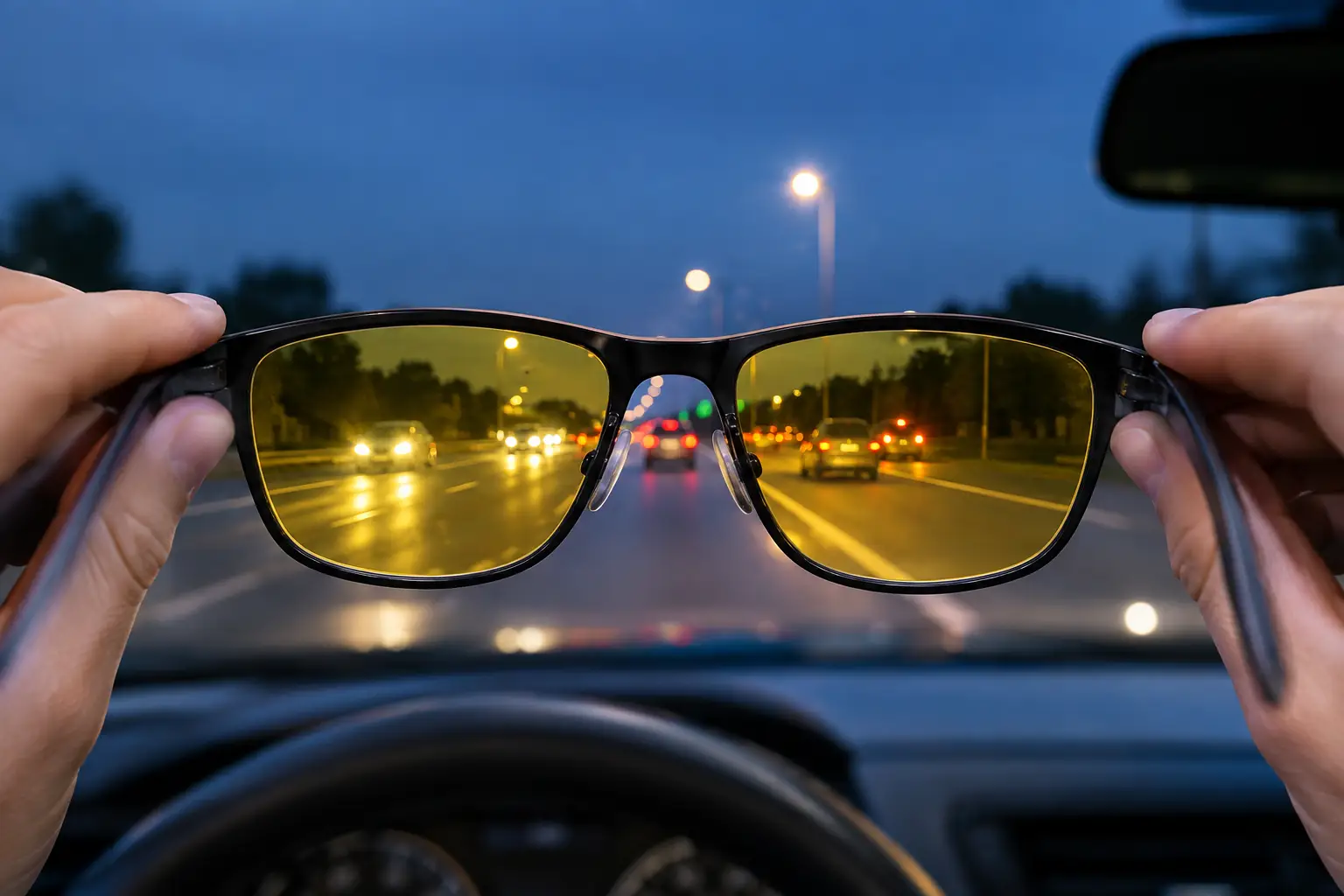
The term “night driving glasses” is used for several different products. Some are non-prescription glasses with yellow or amber-tinted lenses, often promoted as a way to reduce glare from headlights and improve contrast. Others are prescription glasses made specifically for driving, commonly with anti-reflective coating and lens designs that provide clear distance vision.
These are very different options. Yellow-tinted glasses may make a scene appear warmer or more contrasty in certain lighting, but they also reduce the amount of light reaching your eyes. That is a meaningful drawback when you are driving at night, when available light is already limited.
Prescription night driving glasses, on the other hand, can be a sensible choice when they correct a refractive error and minimize distracting reflections. If you need glasses to see clearly during the day, you will generally benefit from wearing an up-to-date prescription after dark as well.
Do yellow lenses improve night driving?
For most drivers, yellow or amber lenses are not the best answer for nighttime glare. The idea is understandable: yellow lenses can filter some blue light and may make contrast feel sharper in specific conditions. However, they do not remove the primary challenge of nighttime driving, which is low light combined with bright, scattered light from headlights, streetlights, wet pavement, and illuminated signs.
Because tinted lenses reduce visible light transmission, they can make darker areas harder to see. That matters when a pedestrian, cyclist, animal, pothole, or unmarked edge of the road is outside the reach of your headlights. A lens that feels comfortable under bright store lighting may not provide the clearest view on a dark road.
There are exceptions. Some people prefer a very light tint for daytime overcast conditions or for certain sports. But a yellow lens should not be treated as a medical solution for glare, halos, or declining night vision. If these symptoms are new or worsening, an eye exam is more useful than another pair of over-the-counter glasses.
The lens features that can make a real difference
A clean, current prescription is the foundation of better nighttime driving. Even a small uncorrected amount of nearsightedness, astigmatism, or farsightedness can become more noticeable after dark because your pupils enlarge and visual demands increase. Road signs may look soft, headlights may streak, and your eyes may work harder to keep images clear.
Anti-reflective coating is one of the most practical upgrades for driving glasses. It reduces reflections from the front and back surfaces of the lenses, helping more useful light reach your eyes. It can also reduce distracting reflections of dashboard lights or lights coming from behind you.
For many patients, clear lenses with premium anti-reflective coating are a stronger nighttime choice than tinted lenses. The coating will not eliminate glare from every vehicle or make nighttime vision perfect, but it can improve comfort and visual clarity without unnecessarily dimming the road.
Lens design matters, too. A person who wears progressive lenses may need a design that provides a wide, stable distance viewing area for driving. Someone with a strong prescription may benefit from lens materials and frame choices that reduce edge distortion. An optician can help match the prescription, frame fit, and lens design to how you drive.
Keep lenses and windshields clean
Smudges, fine scratches, dust, and residue scatter light. At night, that scattered light can look like extra glare around headlights and traffic signals. Clean your glasses with lens cleaner and a clean microfiber cloth, and replace lenses that are heavily scratched or have a deteriorating coating.
Your windshield matters just as much. Clean the inside and outside surfaces, including the area swept by the wipers. Haze on the interior glass can be easy to miss during the day but highly visible when headlights shine through it at night.
When glare may point to an eye health concern
Some increase in glare sensitivity is common with age, but persistent problems should not simply be accepted as part of driving at night. Cataracts are a common cause of halos, starbursts, and increased sensitivity to headlights. Dry eye can also blur vision and cause fluctuating glare, especially during longer drives with heat or air conditioning blowing toward the face.
Other possible contributors include changes in your glasses prescription, astigmatism, corneal irregularities, certain medications, and conditions that affect the retina or optic nerve. Night vision difficulties can also be more pronounced for people with diabetes or other systemic health conditions that affect the eyes.
An eye exam can determine whether your concern is primarily optical, such as an outdated prescription, or whether a health issue needs attention. Advanced testing may be appropriate when symptoms and exam findings suggest a closer look at the retina, cornea, or other structures of the eye.
Seek prompt care if you experience a sudden change in vision, new flashes of light, a curtain or shadow in your field of vision, sudden double vision, eye pain, or a rapid increase in floaters. Those symptoms are not a routine nighttime driving issue.
Choosing night driving glasses for your needs
If you are shopping for driving eyewear, begin with how and when you drive. Someone who occasionally drives through well-lit city streets may have different needs than someone commuting on dark rural roads or driving several hours after sunset.
A dedicated pair of prescription driving glasses can be helpful if your everyday eyewear is not optimized for distance vision, if you wear reading glasses during the day, or if you want a backup pair in the car. Choose clear lenses, verify that the prescription is current, and ask about anti-reflective coating. Avoid very dark tints for night use, including sunglasses, because they reduce visibility.
Frame fit is also a safety issue. The frame should sit comfortably and remain stable without blocking too much peripheral vision. Large lenses can offer a wider field of view, while a frame that sits too low or slides down the nose may place you in the wrong viewing zone of a progressive lens.
If glare is your main complaint, be cautious about products claiming to “block all glare” or dramatically improve night vision without a prescription. Headlights can be uncomfortable, but no lens can safely erase the visual challenge of driving in low light. A qualified eye care team can explain what a lens can reasonably do and what deserves further evaluation.
Practical habits for more comfortable night driving
Good eyewear works best alongside good driving habits. Give your eyes time to adjust before leaving a brightly lit space, keep interior dashboard lights low enough that they do not reflect in the windshield, and look toward the right edge of the road rather than directly into oncoming headlights when possible.
Take breaks on long drives, particularly if your eyes feel dry or tired. If dryness is a recurring issue, treatment can improve comfort and help keep vision more stable. Finally, do not push through a drive when you feel unable to see clearly. Arrange a ride, postpone the trip, or choose daylight travel when that is the safer option.
At Mountain Eye Care, a comprehensive eye exam and thoughtful lens consultation can help separate marketing claims from solutions that fit your eyes, prescription, and daily routine. Clearer nighttime driving often starts with a simple question: are your eyes and glasses giving you the best possible information about the road ahead?