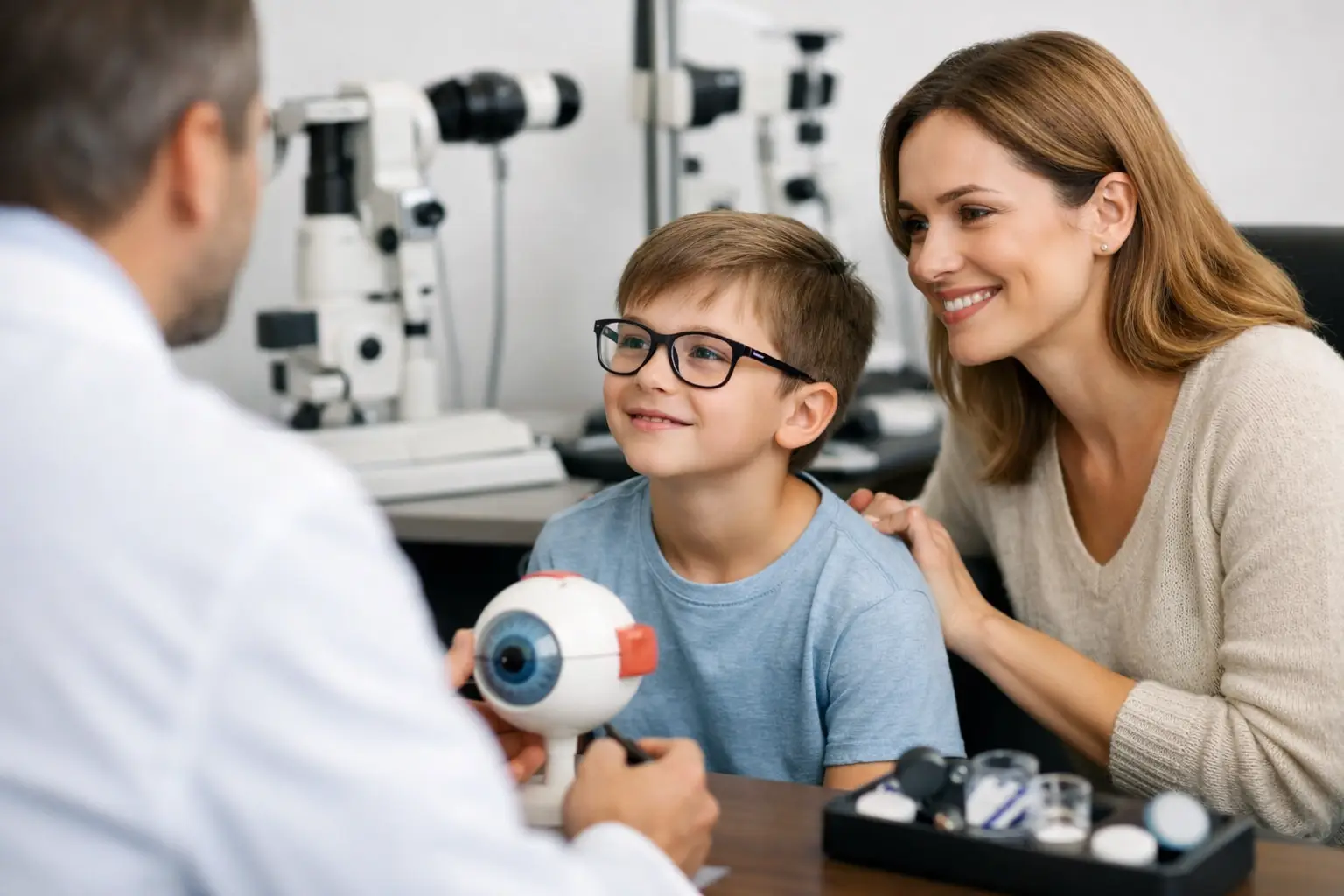
A child who needs a stronger glasses prescription year after year is not simply “outgrowing” their old lenses. It may be a sign that myopia, or nearsightedness, is progressing. This myopia control treatment guide explains the options that can help slow that progression, what families should expect from care, and why regular monitoring matters.
Myopia makes distant objects look blurry because the eye has grown too long from front to back, or because its focusing system bends light too strongly. Glasses and standard contact lenses restore clear vision, but they do not necessarily address the underlying progression. Myopia control is a proactive approach designed to reduce how quickly a child’s prescription worsens over time.
Why Slowing Myopia Progression Matters
A mild prescription may seem manageable, especially when a child sees well with glasses. The concern is not only what their prescription is today. Higher levels of myopia are associated with a greater lifetime risk of certain eye conditions, including retinal detachment, glaucoma, cataracts, and myopic macular degeneration.
Myopia control cannot promise that a child’s prescription will stop changing completely. Every child responds differently, and genetics, age, lifestyle, and starting prescription all play a role. The goal is to slow eye growth and reduce the chance of reaching higher levels of nearsightedness.
Children often develop myopia during the school-age years, when the eyes are still growing. Earlier progression, especially in a young child, can mean more years for the prescription to increase. That is why an eye examination is worthwhile when a child starts squinting, sits very close to screens, loses their place while reading, complains of headaches, or has difficulty seeing the board at school. Some children have no obvious symptoms at all.
Myopia Control Treatment Guide: The Main Options
The right treatment is not the same for every child. A comprehensive eye exam gives the doctor a clearer picture of prescription changes, eye health, visual needs, and whether myopia control is appropriate. Measurements may include the child’s prescription and, when indicated, the length of the eye. Tracking these findings over time helps guide treatment decisions.
Specialized Soft Contact Lenses
Daily disposable soft contact lenses designed for myopia control can provide clear vision while using a specific optical design to help slow progression. They are often a practical choice for active children who want freedom from glasses during school, sports, and activities.
Daily lenses can be convenient because a fresh lens is used each day, reducing the need for cleaning and storage. However, successful contact lens wear depends on maturity and hygiene. Children must be able to wash and dry their hands, follow insertion and removal instructions, and never sleep in lenses unless specifically directed by their eye doctor. Parents should be involved, particularly during the early weeks of wear.
Orthokeratology Lenses
Orthokeratology, often called Ortho-K, uses custom rigid contact lenses worn overnight. The lenses gently reshape the front surface of the eye while the child sleeps, allowing clear daytime vision without glasses or daytime contact lenses.
For families with a reliable nightly routine, Ortho-K can be an appealing option. It requires careful fitting, consistent follow-up, and strict lens care. Because the lenses are worn overnight, proper hygiene and timely appointments are essential to protect eye health. It may not be the best fit for every child, particularly if sleep routines or lens care are likely to be inconsistent.
Low-Dose Atropine Eye Drops
Low-dose atropine drops may be prescribed to help slow myopia progression. The drops are typically used at bedtime, making them a useful option for children who are not ready for contact lenses or who prefer to continue wearing glasses.
Atropine can be used on its own or, in some cases, alongside an optical treatment plan. The appropriate concentration and schedule should be determined by an eye doctor, since treatment needs vary. Some children may experience mild light sensitivity or near-vision changes, depending on the formula and dose. Follow-up care helps ensure the drops remain both effective and comfortable.
Myopia Control Glasses
Specially designed spectacle lenses are another option for children who prefer glasses or are not yet ready to handle contacts. These lenses look similar to regular glasses but use treatment zones intended to influence how light focuses across the retina.
Glasses are straightforward to wear and do not require the cleaning routine of contact lenses. The trade-off is that children need to wear them consistently for the intended benefit. They may also still want prescription sunglasses or sports eyewear for certain activities.
How an Eye Doctor Chooses a Plan
A good myopia control plan starts with more than a prescription. The doctor considers a child’s age, the speed of progression, family history, eye health, daily activities, comfort with lenses, and ability to follow treatment instructions.
A seven-year-old whose prescription has changed quickly may need a different approach than a teenager with a stable prescription and a busy sports schedule. A child with dry eyes, allergies, or difficulty touching their eyes may be better suited to drops or specialized glasses than contact lenses. There is no prize for choosing the most complex option. The best treatment is one that fits the child and can be used consistently.
At Mountain Eye Care, myopia control discussions are grounded in a complete eye health assessment and practical guidance for families. Parents should leave knowing what the recommended option is, why it was selected, what it costs, and when their child needs to return for monitoring.
Daily Habits That Support Eye Health
Treatment works best as part of a broader plan. More time outdoors has been associated with a lower risk of developing myopia and may support healthy visual habits. Aim for regular outdoor play whenever possible, not just occasional weekends outside.
Close work such as reading, homework, gaming, and phone use does not need to be avoided. It does need balance. Encourage children to hold reading material at a comfortable distance, avoid using devices inches from their face, and take regular visual breaks. A simple family habit is to look across the room or out a window for about 20 seconds after roughly 20 minutes of near work.
Good lighting, adequate sleep, and a consistent routine also make it easier for children to use their glasses, drops, or contact lenses correctly. These habits are supportive, not substitutes for prescribed myopia control treatment.
What Follow-Up Visits Tell You
Myopia control is not a one-time purchase or a single appointment. Children usually need follow-up visits to check vision, prescription changes, eye health, treatment adherence, and comfort. The exact schedule depends on the treatment method and the child’s individual needs.
At these visits, the doctor may adjust the plan if progression continues faster than expected. That does not mean the original treatment failed. It means the care plan is responding to new information. Eye growth is not identical from one child to another, and flexibility is part of responsible management.
Parents can help by noting changes between visits. Report frequent squinting, headaches, blurred distance vision, red or painful eyes, contact lens discomfort, or missed doses of eye drops. If a child wears contacts, seek prompt care for redness, pain, light sensitivity, discharge, or a sudden drop in vision rather than waiting for the next scheduled appointment.
Questions Parents Should Ask
Ask how quickly your child’s prescription has changed, whether their age or family history increases risk, and which treatment options fit their lifestyle. It is also reasonable to ask how success will be measured, how often follow-up visits are needed, and what happens if the prescription continues to increase.
The goal is not to create anxiety around glasses or make a child feel different. It is to give families clear information early enough to make thoughtful choices. When myopia is monitored closely and treatment is matched to the child, parents can focus less on chasing the next stronger prescription and more on protecting vision for the years ahead.