A child can pass a basic vision screening and still have an eye condition that affects reading, sports, coordination, or comfort. That is why parents often ask, when should children get eye exams? The short answer is earlier than many families expect, followed by regular care as a child grows.
Clear vision is not only about reading the smallest line on a chart. A comprehensive eye exam evaluates how the eyes focus, move, work together, and support visual development. It can also reveal eye health concerns that may not cause obvious symptoms at home or at school.
When Should Children Get Eye Exams?
Most children should have their first comprehensive eye exam between 6 and 12 months of age. This early visit gives the doctor an opportunity to assess whether the eyes are developing normally, aligned properly, and responding appropriately to light and visual targets.
A second exam is commonly recommended around age 3, when a child can participate more actively in age-appropriate testing. Another exam should take place before starting kindergarten or first grade. From there, many school-age children benefit from yearly eye exams, especially as classroom demands, screen use, and the risk of myopia increase.
The exact schedule can vary. A child with healthy eyes and no risk factors may need a different follow-up plan than a child with a family history of significant nearsightedness, a premature birth, developmental concerns, diabetes, or previous eye surgery. Your optometrist can recommend an exam schedule based on your child’s individual needs.
Vision Screenings Are Helpful, but They Are Not Full Eye Exams
School and pediatric vision screenings serve an important purpose: they can identify children who may need more complete care. However, a screening is brief and does not replace a comprehensive exam with an optometrist.
Many screenings focus on distance vision. They may not identify early nearsightedness, farsightedness, astigmatism, eye teaming problems, focusing difficulties, color vision concerns, or subtle eye health issues. A child may also see clearly with one eye while the other eye has reduced vision, which can be missed without a thorough assessment.
This matters because the visual system develops rapidly in early childhood. When certain concerns are detected early, treatment may be more effective. Depending on the findings, care may involve glasses, contact lenses for older children, vision support strategies, monitoring, or referral for additional medical care.
Signs Your Child May Need an Eye Exam Sooner
Children do not always recognize that their vision is different from other people’s. They may assume blurred vision, headaches, or eye fatigue are normal. Parents and teachers are often the first to notice changes.
Schedule an eye exam promptly if your child frequently squints, sits very close to screens, holds books unusually near their face, loses their place while reading, or complains that words move or blur. Frequent headaches, rubbing the eyes, avoiding reading, covering one eye, tilting the head, or blinking excessively can also be worth evaluating.
Watch for concerns beyond the classroom as well. Trouble tracking a ball, poor depth judgment on stairs, clumsiness that seems out of character, sensitivity to light, or a drifting eye may point to a vision or eye coordination issue. A visible eye turn, a white or unusual-looking pupil, sudden vision changes, eye pain, injury, redness with light sensitivity, or flashes and floaters should be assessed urgently.
Not every symptom means a child needs glasses. Headaches, reading avoidance, and attention difficulties can have many causes. Still, a complete eye exam is a practical step because it helps rule out vision-related factors before families assume the problem is behavioral or academic.
What Happens During a Children’s Eye Exam?
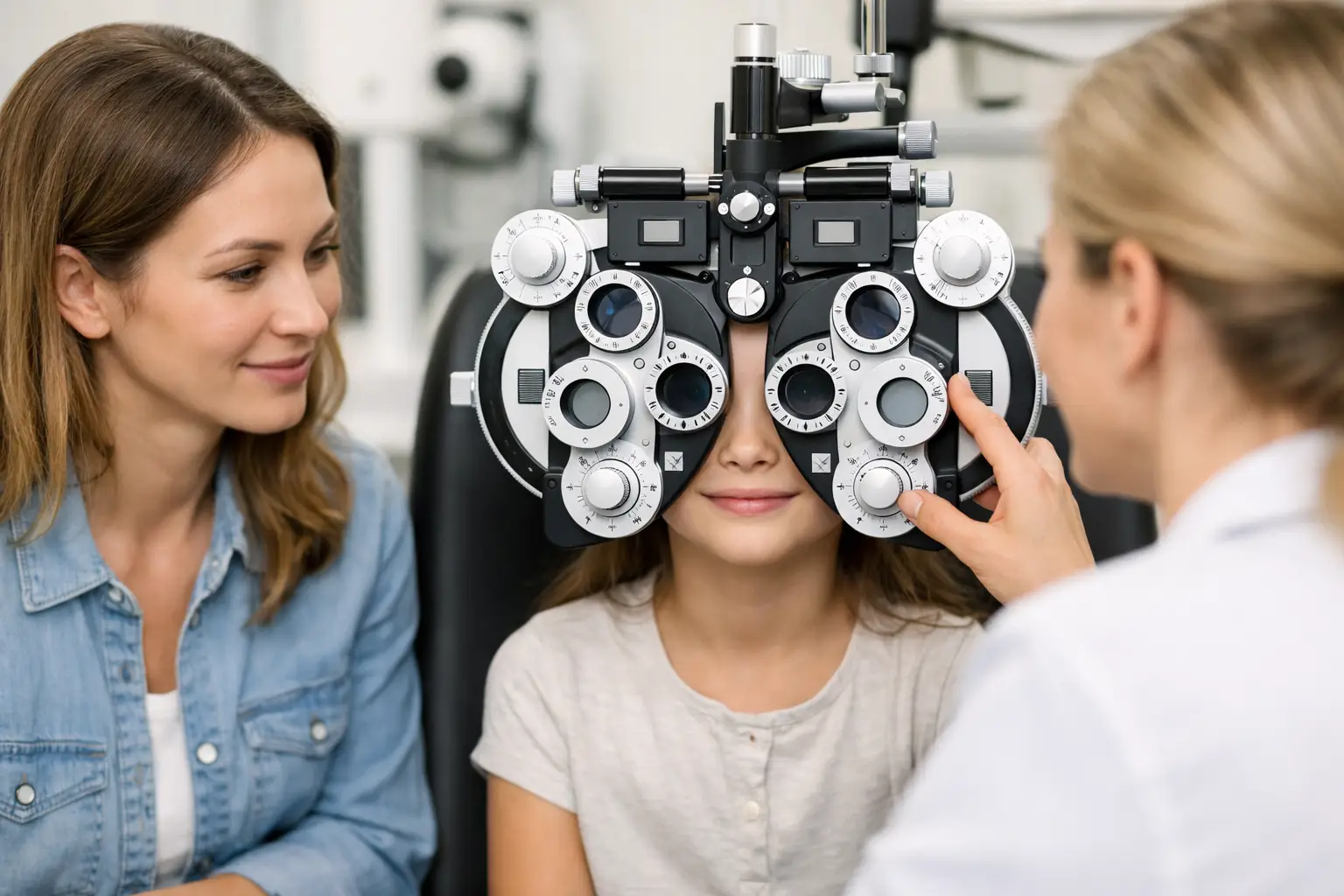
A pediatric eye exam is designed around the child’s age, comfort level, and ability to participate. For infants and toddlers, testing often looks like play. The doctor may use lights, pictures, moving targets, and instruments that allow the eyes to be evaluated without requiring the child to read letters.
For preschoolers and school-age children, the exam may include visual acuity testing, a check of eye alignment and movement, focusing ability, depth perception, color vision when appropriate, and a prescription measurement. The doctor also evaluates the front and back of the eye to look for signs of disease or developmental concerns.
Advanced diagnostic technology can add valuable detail when it is clinically appropriate. Retinal imaging, for example, helps document the health of the retina and optic nerve. These tools do not replace the doctor’s examination, but they can support more complete monitoring over time.
Parents can help by framing the visit positively. Let your child know they will look at pictures, lights, or letters and that there are no “right” answers to guess. If your child is anxious, mention that when scheduling. A patient-first clinic can make adjustments that help the experience feel calm and manageable.
Myopia: Why Regular Exams Matter More Than Ever
Nearsightedness, also called myopia, is increasingly common in children. A child with myopia can often see close-up work clearly but struggles to see the board at school, road signs, or distant faces. Because changes can happen gradually, children may not report a problem until it affects schoolwork or activities.
Regular exams do more than identify whether glasses are needed. They allow the doctor to track how quickly a prescription is changing and discuss myopia control when appropriate. Myopia control strategies may help slow progression for eligible children, but the right approach depends on age, prescription, eye health, lifestyle, and family history.
More time outdoors and regular breaks during sustained near work are healthy habits for many children. They are not a substitute for professional care, and they cannot reverse a prescription, but they can be part of a practical long-term plan.
If Your Child Needs Glasses or Contact Lenses
Glasses should fit well, feel comfortable, and suit a child’s everyday routine. A frame that slips down constantly or pinches behind the ears is less likely to be worn consistently. Durable materials, proper bridge fit, and impact-resistant lenses are often sensible considerations for active children.
For some older children and teens, contact lenses can be a safe and convenient option when they are motivated and able to follow cleaning and wear instructions. They can be especially useful for sports, but they require maturity and consistent hygiene. Sleeping in lenses unless specifically approved, topping off old solution, or wearing lenses while eyes are red or painful can increase the risk of infection.
The best choice is not always the most expensive frame or the newest lens option. It is the option your child can wear comfortably and safely, with a prescription that supports clear vision in the settings that matter most.
A Practical Plan for Parents
If your child has never had a comprehensive eye exam, now is a good time to schedule one rather than waiting for a failed screening or a complaint. Bring any relevant family eye history, note symptoms you have observed, and ask the doctor how often your child should return.
For Hamilton families, Mountain Eye Care provides comprehensive exams that assess both vision and long-term eye health, along with guidance on children’s eyewear, contact lenses, and myopia management when needed. The goal is not simply to find a prescription. It is to help children see comfortably, learn confidently, and protect the vision they will rely on for years to come.
A child who sees clearly has one less barrier between curiosity and confidence. Regular eye care gives parents a dependable way to protect that advantage as their child grows.