Glaucoma can cause permanent vision loss before it causes noticeable symptoms. That is why a glaucoma screening guide should begin with one clear point: a quick eye-pressure check alone is not enough to rule glaucoma out. A comprehensive eye examination gives your doctor a much fuller picture of your eye health and can identify early changes when treatment is most effective.
Often called the “silent thief of sight,” glaucoma damages the optic nerve, the structure that carries visual information from the eye to the brain. The damage usually begins at the edges of your vision, so central vision may remain clear until the condition has advanced. Regular screening gives patients the opportunity to protect vision they may not realize is at risk.
A Glaucoma Screening Guide Starts With Risk
Anyone can develop glaucoma, but some people have a higher likelihood of developing it or experiencing vision loss from it. Risk rises with age, particularly after age 40, and it increases further for those with a close family history of glaucoma. If a parent, sibling, or child has glaucoma, share that information during your eye exam.
Other factors can include diabetes, significant nearsightedness or farsightedness, thin corneas, eye injuries, and long-term steroid use. Certain racial and ethnic backgrounds are also associated with a higher risk of particular types of glaucoma. For example, open-angle glaucoma is more common and may progress more quickly in Black adults, while angle-closure glaucoma is more common in people of Asian ancestry.
Risk factors guide how closely your eyes should be monitored, but they do not tell the whole story. People without any known risk factors can still develop glaucoma. This is one reason routine comprehensive eye exams matter even when your vision seems normal and your glasses prescription has not changed.
What a Comprehensive Glaucoma Screening Exam Checks
There is no single glaucoma test that provides every answer. Your eye doctor combines several findings to assess the health of the optic nerve, measure risk, and look for changes over time. Each test adds useful information.
Eye pressure measurement
Tonometry measures intraocular pressure, or the pressure inside the eye. Elevated pressure is a major risk factor for glaucoma because it can place stress on the optic nerve. However, high pressure does not always mean a person has glaucoma, and normal pressure does not always mean the optic nerve is safe.
Some patients develop normal-tension glaucoma, where damage occurs despite pressure readings within a typical range. Others have higher pressure for years without detectable nerve damage. Your doctor interprets pressure as one important part of a larger clinical picture, not as a stand-alone diagnosis.
Optic nerve evaluation and retinal imaging
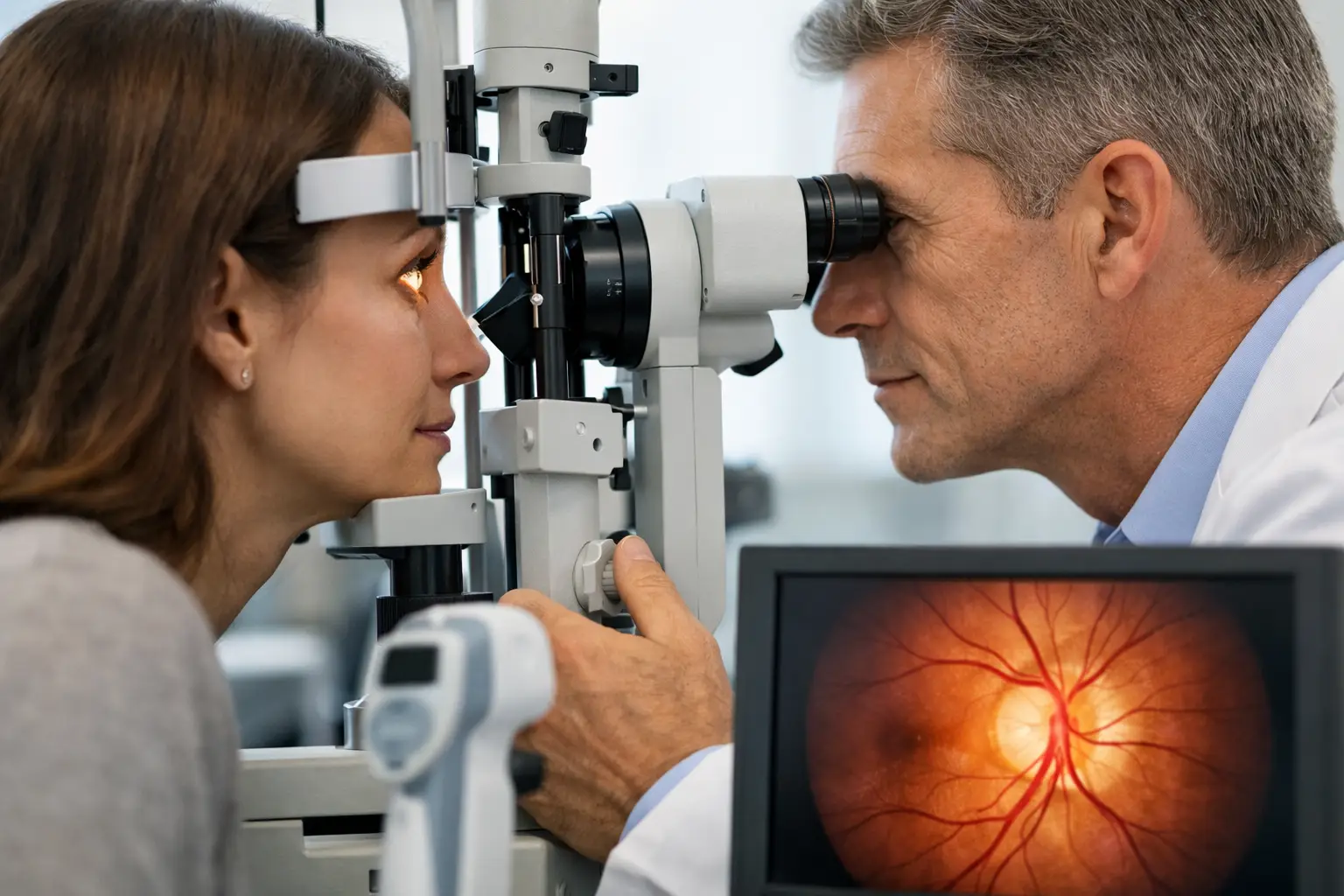
During a dilated eye exam, your doctor examines the optic nerve at the back of the eye for changes in its shape, color, or appearance. Comparing the two optic nerves and monitoring them over time can reveal early signs that are easy to miss without detailed records.
Retinal imaging creates a high-quality record of the optic nerve and retina. It helps your care team track subtle changes from one visit to the next and supports more informed decisions about follow-up testing or treatment.
OCT scans
Optical coherence tomography, commonly called OCT, uses light to create detailed cross-sectional images of the optic nerve and retinal nerve fiber layer. This technology can identify thinning in the nerve fiber tissue, sometimes before a patient notices any visual changes.
OCT results are especially valuable when compared over time. One scan is useful, but a series of scans can show whether a change is stable or progressing. That trend is often more meaningful than any individual test result.
Visual field testing
Visual field testing checks how well you see across your full field of vision, including the peripheral areas. During the test, you look straight ahead and respond when small lights appear in different locations. It is painless, though it requires concentration.
Glaucoma-related vision loss frequently begins in peripheral vision. A visual field test can identify patterns of missing vision that may not be obvious in daily life. If a result is unclear, the test may need to be repeated. Fatigue, dry eyes, distraction, and the learning curve of the test can all affect performance.
Corneal thickness and angle assessment
Pachymetry measures corneal thickness. Corneal thickness can influence pressure readings and helps your doctor interpret them more accurately. A thinner cornea, for example, may be associated with a higher glaucoma risk and can lead standard pressure measurements to underestimate actual pressure.
Your doctor may also assess the drainage angle of the eye. This determines whether fluid can leave the eye normally and helps distinguish between open-angle and angle-closure concerns. Narrow angles can sometimes place a patient at risk for a sudden pressure increase, which needs prompt medical attention.
How Often Should You Be Screened?
The right schedule depends on your age, eye health, family history, and previous test results. Adults with no symptoms and no known risk factors should still have regular comprehensive eye exams based on their doctor’s recommendation. Those with higher risk, suspicious optic nerve findings, elevated eye pressure, or a glaucoma diagnosis may need exams more often.
Children and younger adults can also benefit from routine eye care. Although glaucoma is less common in these groups, comprehensive exams do more than check prescription needs. They provide a baseline for eye health and can identify concerns that may require monitoring.
If you have been told you are a glaucoma suspect, do not assume that means you have glaucoma. It means one or more findings deserve closer observation. You may have elevated pressure, a family history, a particular optic nerve appearance, or test results that need confirmation. Follow-up appointments are how your doctor determines whether the condition is stable or needs treatment.
Symptoms That Need Prompt Attention
Most open-angle glaucoma develops without pain, redness, or sudden vision changes. Waiting for symptoms is not a safe screening strategy. Still, some forms of glaucoma can cause urgent symptoms, especially acute angle-closure glaucoma.
Seek urgent eye care if you experience sudden eye pain, severe headache, blurred vision, halos around lights, nausea, vomiting, or a red eye. These symptoms can have several causes, but a sudden increase in eye pressure is one possibility that requires immediate evaluation.
For less urgent concerns, schedule an eye exam if you notice gradual peripheral vision changes, difficulty adjusting to dim light, a new difference between your eyes, or frequent changes in your glasses prescription. These signs do not automatically indicate glaucoma, but they deserve professional assessment.
If Your Screening Results Are Abnormal
An abnormal screening result is a reason for careful follow-up, not panic. Your doctor may repeat a visual field test, monitor eye pressure at different visits, obtain OCT imaging, or recommend further evaluation. Glaucoma is generally diagnosed by looking at the full pattern of optic nerve health, eye pressure, visual function, and change over time.
If treatment is needed, options may include prescription eye drops, laser procedures, or surgery. The best choice depends on the type and stage of glaucoma, your pressure goals, other health conditions, and how reliably drops can be used. Treatment cannot restore vision already lost to glaucoma, but it can often slow or stop further damage.
At Mountain Eye Care, comprehensive eye exams use advanced diagnostic technology to evaluate eye health beyond a routine vision check. Patients who need glaucoma monitoring benefit from clear explanations, careful records, and a follow-up plan tailored to their individual risk.
Protecting your sight starts with showing up before you feel a problem. Schedule a comprehensive eye exam on the interval your doctor recommends, bring your family eye-health history, and ask what your results mean for your long-term vision.