
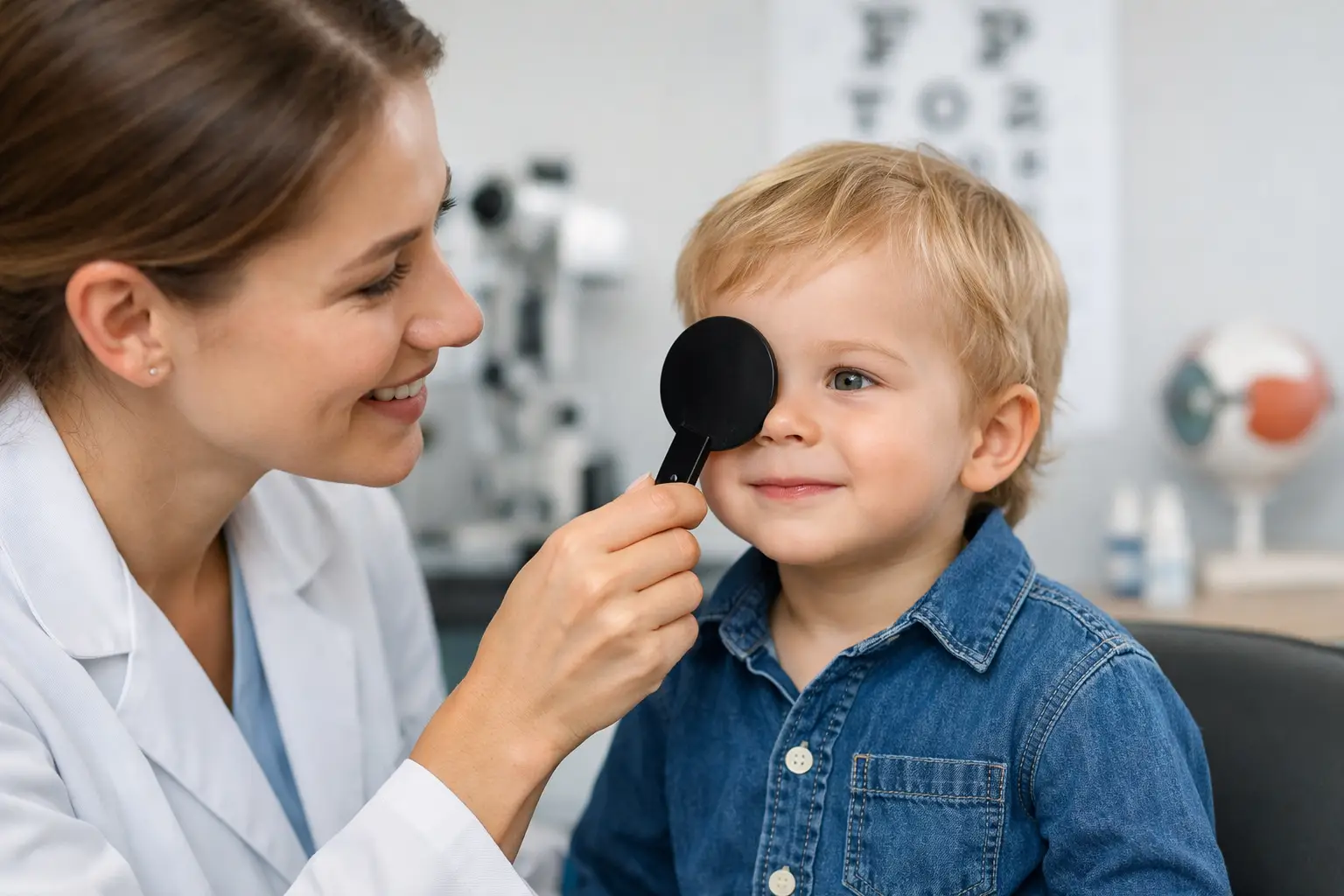
A child can pass a classroom eye chart and still have a vision concern that affects reading, depth perception, eye coordination, or long-term eye health. Pediatric vision screening is an early checkpoint, not simply a test of whether a child can read small letters. It helps identify concerns while a child’s visual system is still developing and treatment can make a meaningful difference.
Many children do not realize their vision is different from anyone else’s. They may sit very close to screens, avoid books, lose their place while reading, or complain of headaches. Others show no obvious signs at all. That is why routine screening and comprehensive eye care both have an important role in protecting a child’s sight.
What Pediatric Vision Screening Can Find
Vision screening is designed to flag children who may need a full eye examination. Depending on a child’s age and the screening method used, it may check visual acuity, eye alignment, how the eyes work together, and risk factors for refractive errors such as nearsightedness, farsightedness, and astigmatism.
Screening can also help identify amblyopia, often called lazy eye. Amblyopia occurs when the brain begins favoring one eye because the two eyes are not seeing equally clearly or are not properly aligned. It is not always visible to parents. Early treatment may involve glasses, patching, or other care recommended by an eye doctor.
Strabismus, or an eye turn, is another concern that deserves prompt attention. An eye that consistently turns inward, outward, upward, or downward should be evaluated, even if it appears only at certain times. Infants can have occasional eye wandering in the first months of life, but persistent misalignment should not be dismissed as something a child will outgrow.
Screening Is Helpful, but It Is Not a Complete Eye Exam
A school, daycare, or pediatric office screening is valuable because it can catch problems that might otherwise go unnoticed. Still, a passed screening does not guarantee that every aspect of a child’s vision and eye health is normal.
Screenings are usually brief and focused. They may not fully assess focusing ability, binocular vision, eye movement skills, early signs of eye disease, or the health of internal eye structures. A child can also compensate well enough to pass a screening despite symptoms that interfere with schoolwork or comfort.
A comprehensive pediatric eye exam gives the doctor time to evaluate the whole visual system. This includes how clearly each eye sees, whether the eyes align and track together, whether the child focuses appropriately, and whether the front and back of the eye appear healthy. When appropriate, advanced diagnostic technology can provide a closer look at ocular structures and help guide care.
The right schedule depends on a child’s age, development, family history, symptoms, and previous exam findings. Children with a parent who has significant nearsightedness, a history of eye turns, developmental concerns, premature birth, or medical conditions that affect vision may need earlier or more frequent examinations.
When Should Children Have Their Vision Checked?
Vision development begins long before a child can identify letters on a chart. Infants should have their eyes checked as part of routine pediatric care, including an assessment for a normal red reflex and healthy-looking eye alignment. Formal vision screening is commonly performed in early childhood and repeated during school-age years.
For many families, a comprehensive eye exam before a child begins school is a practical benchmark. That first school year places new demands on vision: looking from a board to a desk, sustaining attention to near work, tracking lines of text, and participating in active play. A child who struggles visually may be labeled inattentive or behind when the real issue is that seeing clearly is difficult or tiring.
After that, the recommended frequency can vary. A child with normal findings and no symptoms may need routine follow-up based on the doctor’s guidance. A child with glasses, a diagnosed binocular vision concern, rapidly changing prescription, or myopia control needs may require more frequent monitoring.
Signs Parents and Teachers Should Take Seriously
Children rarely use clinical language to describe a visual problem. More often, the clues show up in habits, behavior, or school performance. Pay attention if a child regularly:
- Squints, tilts their head, or closes one eye to see
- Holds books, tablets, or games unusually close
- Loses their place, skips lines, or avoids reading
- Complains of headaches, tired eyes, or double vision
- Rubs their eyes often when they are not simply tired
- Has trouble catching a ball, judging steps, or navigating unfamiliar spaces
These signs do not automatically mean a child needs glasses. Headaches can have many causes, and reading challenges can involve learning, attention, or language factors. However, a comprehensive eye examination is a sensible first step when vision may be contributing.
Parents should seek care promptly if they notice a white or unusual pupil reflection in photographs, constant tearing, marked light sensitivity, a drooping eyelid, sudden vision change, or an eye turn that is new or persistent. Those symptoms call for timely professional evaluation.
The Growing Role of Myopia Management
Nearsightedness often begins during the school years and can progress as a child grows. A child with myopia may see nearby objects clearly but struggle to recognize faces at a distance, read the board, or see signs during sports and outdoor activities.
Standard glasses or contact lenses can correct blurry distance vision, but correction and myopia management are not the same thing. For children whose prescription is progressing, an eye doctor may discuss options intended to slow that progression. The best approach depends on the child’s age, prescription, eye health, lifestyle, and ability to follow treatment instructions.
Outdoor time and regular breaks from sustained near work are sensible habits for all children, but they are not replacements for individualized care. Families should be cautious about assuming that less screen time alone will stop myopia progression. It may help support healthy visual habits, yet a child with changing vision still needs monitoring.
How to Make an Eye Exam Easier for Your Child
Parents do not need to prepare children to “pass” an eye exam. In fact, honest responses help the doctor make the best recommendations. Explain that the visit is a chance to check how their eyes work and that there are no grades or wrong answers.
Bring current glasses, contact lens information if applicable, and any notes from a teacher or pediatrician. It is also helpful to share family eye history and specific observations, such as when headaches occur or whether one eye seems to drift when the child is tired.
For younger children, the examination may use pictures, matching games, lights, or age-appropriate instruments instead of letters. A skilled pediatric-focused exam adapts to the child rather than expecting the child to behave like an adult patient.
What Happens If a Screening Finds a Concern?
A referral after pediatric vision screening is not a diagnosis. It means the child needs a more complete evaluation. Sometimes the follow-up exam confirms a need for glasses or treatment. Other times, the screening result is affected by fatigue, shyness, testing conditions, or a child’s difficulty understanding instructions.
If glasses are recommended, frame fit matters as much as prescription accuracy. Children need frames that sit securely, align properly with their eyes, and remain comfortable through school, play, and daily wear. Durable lens options and practical fit adjustments can make it easier for a child to actually wear their glasses consistently.
For families in Hamilton, Mountain Eye Care can provide comprehensive eye examinations, guidance on children’s eyewear, and follow-up care when vision needs change. The goal is not just to help a child see a chart more clearly, but to support comfortable, confident vision for learning and everyday life.
A child’s visual needs can change quietly and quickly. Keeping routine vision checks on the family calendar gives parents one less thing to guess about and gives children the clear view they deserve as they grow.