A bottle of lubricating drops can bring welcome relief after a long day on screens. But when that relief lasts only minutes, or your eyes still burn, water, or feel gritty every morning, the question becomes more specific: IPL vs eye drops – which treatment addresses what is actually causing your dry eye?
The answer is often not one or the other. Eye drops can protect and lubricate the eye’s surface, while intense pulsed light, or IPL, may help improve the eyelid gland function behind a common form of dry eye. The right approach depends on your symptoms, tear quality, eyelid health, medical history, and the findings of a comprehensive dry eye evaluation.
IPL vs Eye Drops for Dry Eye
Dry eye is not a single condition. Some people do not make enough tears. Others make tears that evaporate too quickly because the oil layer of the tear film is weak. Many patients have a combination of both.
Artificial tears are typically the first tool people try because they are accessible and can provide fast comfort. IPL is an in-office treatment generally considered when dry eye is linked to meibomian gland dysfunction, eyelid inflammation, or ocular rosacea. The meibomian glands along the eyelid margins produce oils that slow tear evaporation. When these oils become thick, blocked, or poor in quality, the tears can evaporate before they adequately protect the eye.
That distinction matters. Reapplying drops throughout the day may soothe the surface, but it may not correct blocked glands or chronic lid inflammation. On the other hand, IPL is not designed to replace lubrication in every case. Many patients do best with a plan that uses both treatments for different jobs.
What eye drops can do
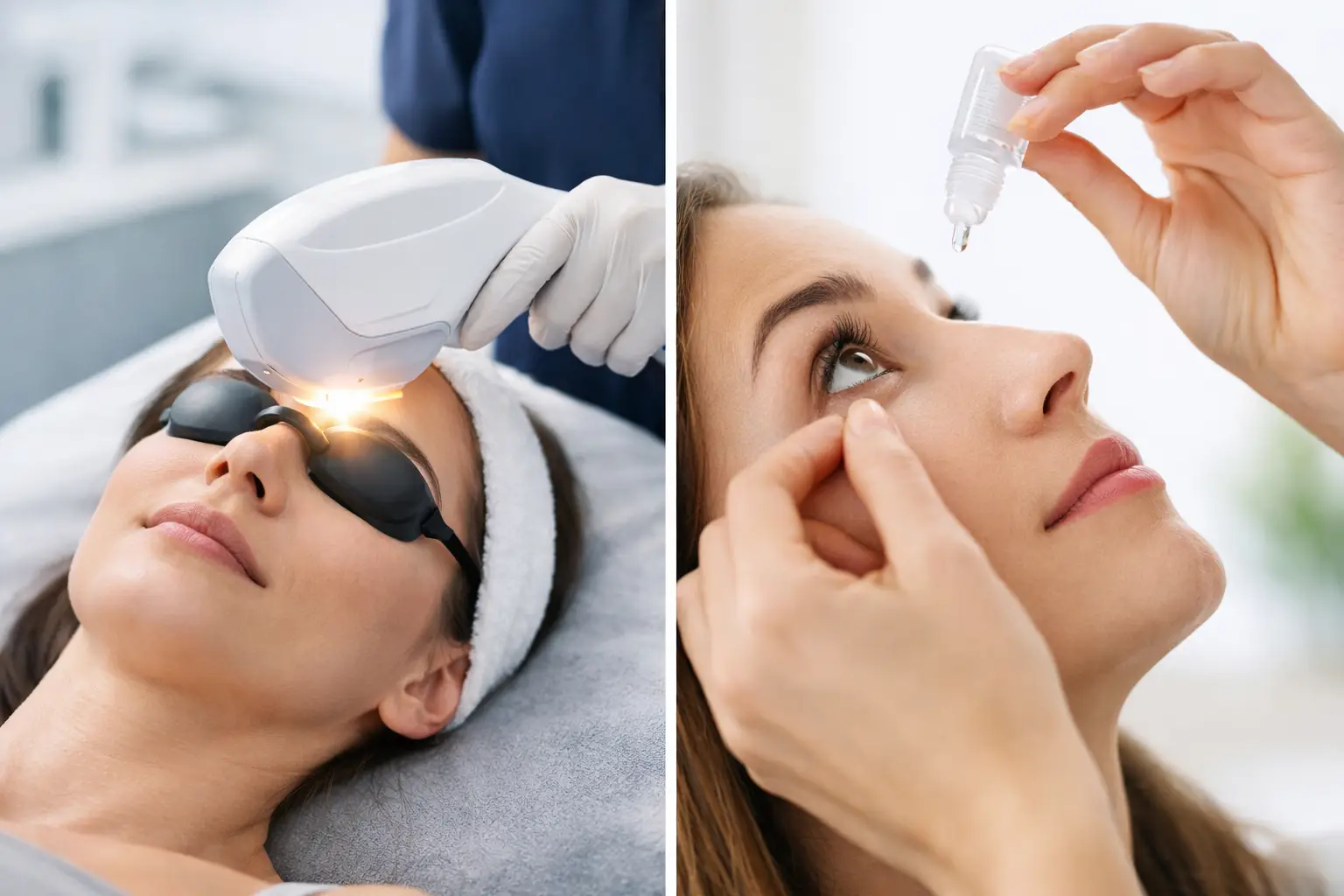
Over-the-counter artificial tears supplement the natural tear film. Depending on the formulation, they may focus on watery lubrication, longer-lasting gel-like coverage, or support for the tear film’s oil layer. Preservative-free drops are often preferred when someone needs frequent use, since some preservatives may irritate sensitive eyes with repeated exposure.
Eye drops can be especially useful for occasional dryness from wind, heating or air conditioning, long periods of reading, contact lens wear, or temporary irritation. They are also often part of a broader dry eye plan after an eye care professional identifies the underlying cause.
Prescription drops are different from basic lubricating drops. Some are intended to manage inflammation associated with chronic dry eye, while others may support tear production. They require an examination and follow-up because the best medication depends on the condition being treated.
The limitation is simple: drops are usually a surface-level treatment. If the main concern is rapid tear evaporation from meibomian gland dysfunction, relief can be incomplete or short-lived unless the eyelid glands are addressed as well.
What IPL can do
IPL treatment uses carefully controlled pulses of light applied to the skin around the eyes. Protective shields are used during treatment. In appropriate patients, IPL may reduce abnormal small blood vessels and inflammation around the eyelids, helping create better conditions for healthier meibomian gland function.
Treatment is often paired with eyelid gland expression, in which an eye care professional clears thickened oils from the glands. This combination can help improve the quality of the oil layer in the tear film, reduce evaporation, and lessen symptoms such as fluctuating vision, stinging, redness, and the feeling that something is in the eye.
IPL is usually delivered as a series of office visits rather than a single treatment. The number and timing of sessions vary based on gland health, symptoms, skin type, and response to care. Some patients need periodic maintenance as part of long-term dry eye management.
It is not a cosmetic shortcut or a one-size-fits-all cure. IPL is a medical dry eye treatment that should follow a thorough assessment of the tear film, eyelids, and ocular surface.
When Drops May Be Enough
For mild, occasional symptoms, eye drops may be all that is needed. Someone whose eyes feel dry only during allergy season or after a flight may benefit from using the right preservative-free artificial tear and making practical changes, such as taking screen breaks, improving humidity, and avoiding direct airflow toward the face.
Drops may also be appropriate while the source of symptoms is still being evaluated. Dryness, redness, and discomfort can be caused or worsened by allergies, contact lens issues, certain medications, incomplete blinking, eyelid conditions, or an unstable prescription. An exam helps prevent treating every irritated eye as routine dry eye.
The choice of drop matters. Redness-relief drops may make eyes look less red temporarily, but they are not the same as lubricating tears and may not be suitable for regular dry eye use. Likewise, thicker nighttime ointments can be helpful for some patients but may blur vision and are not always convenient during the day.
When IPL May Be Worth Considering
IPL may be worth discussing if you rely on drops several times a day without lasting improvement, have recurrent styes or eyelid inflammation, or have been told you have meibomian gland dysfunction or ocular rosacea. It can also be a useful option for people whose symptoms return quickly after using tears, especially when dryness comes with burning, eyelid redness, or unstable vision that clears after blinking.
People who wear contact lenses often notice evaporative dry eye as end-of-day lens discomfort. Improving the tear film’s oil layer may make lens wear more comfortable for some patients, although contact lens fit, material, replacement schedule, and cleaning habits should also be reviewed.
IPL is not appropriate for everyone. Skin conditions, certain medications that increase light sensitivity, active skin infections, pregnancy considerations, and individual medical history can affect eligibility. Your eye care provider will also consider the severity of gland loss. Treatment may improve function in remaining glands, but it cannot restore glands that have permanently disappeared.
The Trade-Offs: Convenience, Cost, and Long-Term Care
Eye drops are convenient, relatively low-cost, and easy to begin. They can be an effective part of care, particularly for mild symptoms or temporary flare-ups. Their trade-off is that they may need to be used repeatedly and may not treat the root cause of evaporative dry eye.
IPL requires an office-based commitment and carries a higher upfront cost than a bottle of drops. It can also involve a treatment series and maintenance visits. In return, the goal is to address eyelid inflammation and meibomian gland dysfunction more directly, which may reduce a patient’s dependence on frequent lubrication.
Neither option should be judged only by how quickly it works. A drop can feel soothing almost immediately. IPL-related improvements are usually gradual because eyelid and gland health take time to respond. Patients with significant dry eye may need a layered plan that includes home care, prescription therapy, warm compresses when recommended, eyelid hygiene, dietary guidance, and in-office treatment.
A Dry Eye Assessment Gives You a Clearer Answer
Before choosing IPL or changing your eye drop routine, a dry eye assessment can identify what is happening with your tears and lids. The exam may evaluate tear stability, the quality of meibomian gland secretions, eyelid inflammation, corneal surface changes, and other factors that can mimic or contribute to dryness.
At Mountain Eye Care, dry eye treatment decisions are based on those findings rather than a generic recommendation. That approach matters because a patient with aqueous tear deficiency may need a different plan than someone with significant gland blockage, and both may describe their symptoms simply as “dry eyes.”
Seek prompt eye care if discomfort is severe or sudden, light sensitivity is significant, vision changes persist, or there is discharge, injury, or intense redness. Those symptoms may point to a problem that should not be managed with over-the-counter drops alone.
If your eyes feel better only until the next drop, that is useful information, not a failure. It may be time to look beyond temporary lubrication and ask what your tear film and eyelid glands need to stay comfortable over the long term.