Reading the thermostat from across the kitchen, recognizing a neighbor’s face, managing prescription labels, or seeing road signs before it is too late can become frustratingly difficult when standard glasses no longer provide enough help. If you are searching for a low vision assessment near me, the right appointment can move the conversation beyond “Can you make my glasses stronger?” and toward practical ways to use your remaining vision more effectively.
What a Low Vision Assessment Is Designed to Do
Low vision is reduced eyesight that interferes with everyday tasks and cannot be fully corrected with regular eyeglasses, contact lenses, medication, or surgery. It can result from conditions such as macular degeneration, glaucoma, diabetic eye disease, cataracts, retinal disorders, stroke-related visual changes, or significant vision loss from other causes.
A low vision assessment is not simply a standard eye exam with a different name. The purpose is to understand how vision affects your life and to identify strategies, devices, and optical solutions that may help you maintain independence. The focus is functional vision: what you can see while reading, moving through your home, cooking, working, using technology, shopping, or traveling.
Vision loss is different for every patient. Someone with central vision loss may struggle with faces and print but still notice objects to the side. Someone with peripheral vision loss may read clearly yet have trouble navigating crowded spaces or driving safely. A personalized assessment recognizes those differences instead of offering a one-size-fits-all answer.
What Happens During a Low Vision Assessment Near Me
The visit begins with a conversation about the moments that have become difficult. Be specific. “My vision is blurry” is useful, but “I cannot read my mail unless I use a bright lamp” or “I lose my place when reading a book” gives the doctor a clearer picture of the support you need.
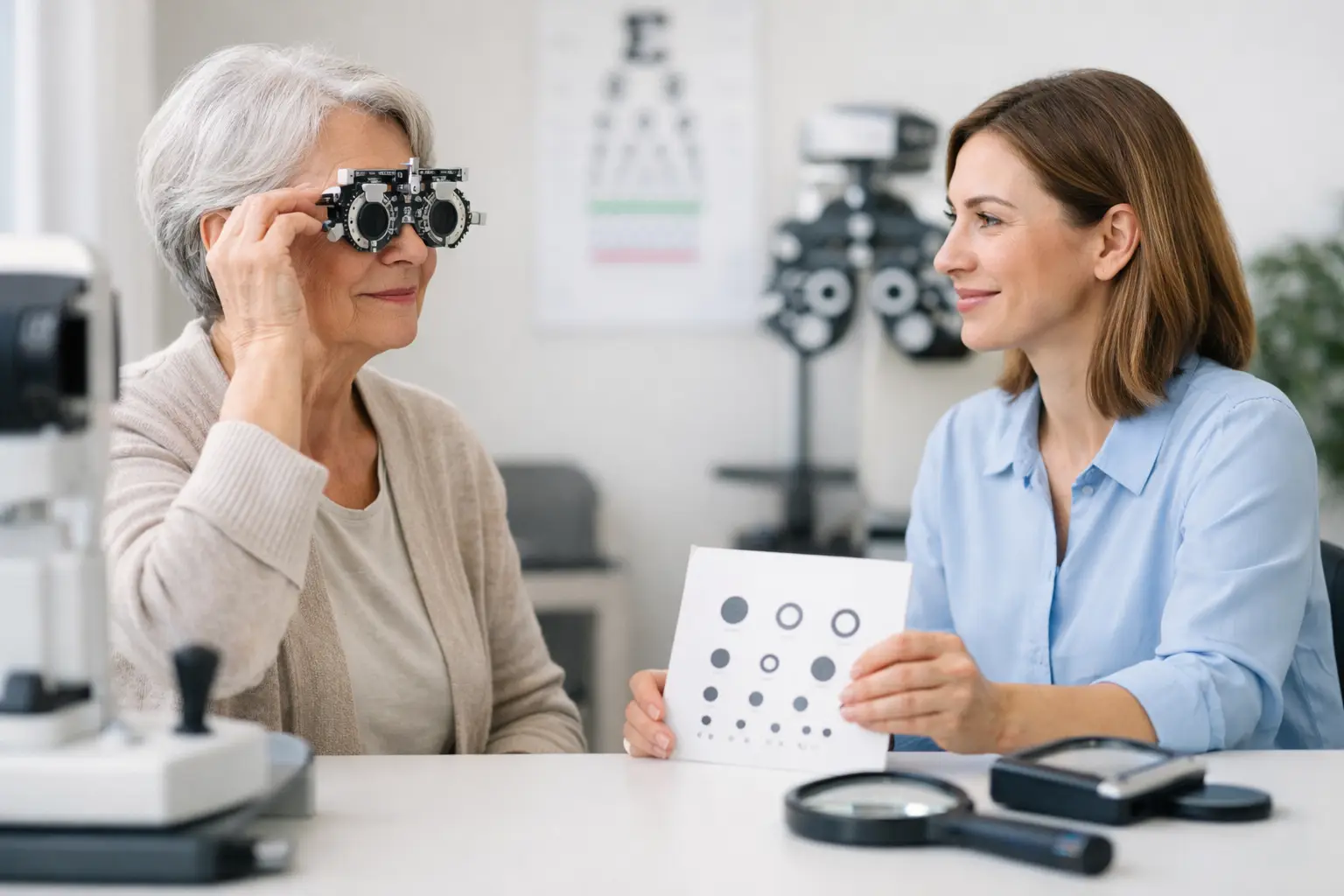
Your eye care professional may review your eye health history, current diagnoses, medications, previous treatments, and the glasses or magnifiers you already use. Testing may include distance and near visual acuity, contrast sensitivity, visual field evaluation, refraction, retinal imaging, and other diagnostic testing based on your symptoms and medical history.
The assessment may also explore how lighting, glare, print size, viewing distance, and contrast affect performance. A person who sees reasonably well in a bright exam room may still struggle with a dim restaurant menu, glossy paperwork, or stairs with low-contrast edges. Those real-world details matter.
Based on the results, the doctor may discuss a combination of options, including:
- High-powered reading glasses, handheld magnifiers, stand magnifiers, or electronic magnification
- Specialized filters, tinted lenses, glare control, and improved task lighting
- Telescopic systems or bioptic telescopes for selected distance tasks
- Strategies for contrast, organization, reading posture, and safer movement at home
- Referrals for rehabilitation services or additional medical care when appropriate
Not every device is right for every task. A stronger magnifier offers a larger image, but it often requires you to hold reading material closer and may show less of the page at once. Telescopic devices can assist with certain distance details, but they require careful fitting, instruction, and realistic expectations. The best solution is the one that works reliably for your daily routine.
When to Schedule an Assessment
Do not wait until vision changes have completely disrupted your independence. An assessment may be appropriate when you notice that ordinary correction no longer supports activities you value, even after a recent eye exam.
Common signs include needing brighter light to read, increasing difficulty recognizing faces, trouble seeing curbs or steps, glare that makes outdoor travel uncomfortable, difficulty following lines of print, or losing confidence with hobbies that once felt easy. Family members may also notice changes first, especially when a loved one begins avoiding errands, reading, cooking, or social events.
A sudden change in vision, flashes of light, new floaters, a dark curtain in your field of view, eye pain, or abrupt distortion needs prompt medical attention. A low vision assessment supports long-term function, but urgent symptoms should be evaluated without delay.
How to Choose the Right Provider
A search for a low vision assessment near me should lead to more than the nearest office. Look for an optometry practice that can evaluate both eye health and functional vision, explain findings in plain language, and take time to discuss real solutions. Advanced diagnostic technology is valuable because it helps clarify what may be causing vision changes and supports informed recommendations.
Ask whether the practice provides low vision evaluations, specialized optical devices, and guidance on how to use prescribed aids. It is also helpful when your provider can coordinate routine eye care, medical monitoring, eyewear, and specialty care in one setting. This can reduce the need to repeat your history at multiple offices and makes follow-up more straightforward.
For patients in Hamilton and surrounding communities, Mountain Eye Care offers low vision assessments alongside comprehensive eye exams, retinal imaging, visual field testing, and specialty optical solutions. The goal is not to promise a cure where one may not be possible. It is to help patients find useful, medically informed ways to see and function better.
Prepare for a More Useful Appointment
Bring your current glasses, magnifiers, and a list of medications. If you have reports from an ophthalmologist or other eye care provider, bring those as well. A family member or caregiver can be helpful, particularly if they have observed situations that are difficult or will assist with using new devices at home.
Before your appointment, think about your three most important goals. You may want to read books again, see a phone screen more comfortably, manage medications independently, enjoy crafts, or feel more secure walking in unfamiliar places. Clear priorities help guide the assessment and prevent the visit from becoming focused only on chart measurements.
It can also help to bring a sample of the material that gives you trouble, such as a newspaper, recipe card, mail, tablet, or hobby project. Testing with familiar items often provides a more meaningful picture than testing with standard eye charts alone.
Low Vision Care Is About Staying Connected to Daily Life
Low vision care does not always mean relying on one device. Many patients benefit most from a thoughtful combination of appropriate eyewear, magnification, lighting changes, and new habits for specific tasks. Needs can change over time, particularly when an eye condition progresses or treatment affects vision.
The most valuable assessment is one that respects what matters to you. Whether your goal is reading to a grandchild, maintaining hobbies, handling personal paperwork, or moving through the community with greater confidence, practical support starts with an evaluation built around your life. Schedule care when daily vision begins asking more of you than ordinary glasses can provide.